The 2020s Weren't Supposed to Be Cinema's Best Decade. They Might Be Anyway.
Between streaming wars, a pandemic that shut theaters, and endless obituaries for the big-screen experience, nobody expected the 2020s to produce anything worth remembering. But YouTube-native directors, public domain horror, and audiences who refuse to behave are quietly making this the most unpredictable stretch in film history.
Editorial Notes
BucketMovies Editorial covers classic cinema, repertory discoveries, and context-rich film criticism with an emphasis on source-backed reporting and careful editorial review.
If you read enough film journalism, you have seen the same headline for roughly six years now: cinema is dying. Streaming is winning. Theaters are empty. Nobody cares about movies anymore.
It is a tidy story, easy to write and easier to believe. But a closer look at what has actually happened in the 2020s tells a messier and more interesting one. The decade has produced YouTube creators who out-earn studio veterans, public domain slasher movies starring Winnie-the-Pooh, audience-driven phenomena that no marketing department could have planned, and a hedgehog redesign that may have saved an entire franchise.
The consensus says decline. The receipts say reinvention.
The YouTubers who took over the box office
Here is a fact that would have sounded like parody in 2019: the seventh and eighth biggest films of 2026 were directed by people who learned their craft making YouTube videos and TikToks.
Obsession, which pulled in $442 million worldwide, was directed by Curry Barker, a 26-year-old who dropped out of film school to build an audience online. His previous experience consisted of short horror-comedy sketches uploaded to YouTube and TikTok, where he amassed millions of followers who showed up for his feature debut the same way fans show up for a Marvel opening. Backrooms, at $384 million, came from Kane Parsons, who was 20 when he started uploading short horror videos to YouTube in 2022. Those shorts were themselves inspired by creepypasta — internet-born horror lore that has been circulating since 2019 — and the feature film extends that world rather than rebooting it for a mainstream audience that does not know the lore.
The difference between this and every previous attempt to monetize internet fame is that the creators were actually in charge. A decade ago, a studio optioning a YouTube series would have handed the IP to a veteran director, hired a committee of writers, and sanded every edge off until the final product resembled nothing the original audience recognized. That is how you get David After Dentist: The Motion Picture with Michael Bay and Rihanna — a hypothetical that sounds like a joke but captures exactly how Hollywood used to think about online culture.
Obsession and Backrooms worked because Barker and Parsons made the films themselves. They knew what their audiences wanted because they had spent years talking to those audiences directly, in comments sections and livestreams, building trust that no focus group could replicate. The financial returns — nearly a billion dollars between the two films — are the kind of number that changes how studios allocate greenlight budgets. Steven Spielberg is now producing The Mandela Catalogue, based on an analogue horror series that has run on YouTube since 2021, and more such projects are in development than anyone is counting.
This is not a fluke. It is a structural shift in where directing talent comes from, and it happened because the barrier between “internet creator” and “feature filmmaker” finally collapsed.
Winnie-the-Pooh is a slasher now, and that’s just the beginning
In 1998, the US passed the Copyright Term Extension Act, freezing new works from entering the public domain for two full decades. When the freeze finally thawed in 2019, the dam broke.
First out of the gate was Winnie-the-Pooh: Blood and Honey in 2023, a low-budget slasher whose entire creative premise was “what if the beloved children’s character murdered people.” It was not a good movie. But it made money, which is its own kind of argument in Hollywood.
What followed was a wave of copyright expiry horror: The Mouse Trap and Screamboat, both built around the version of Mickey Mouse that appeared in Steamboat Willie, which entered the public domain in 2024. Popeye the Slayer Man. Bambi: The Reckoning. These films are cheap, exploitative, and creatively exhausted long before the credits roll. And more are coming.
Next year brings Poohniverse: Monsters Assemble, which will star Winnie-the-Pooh, Tigger, Bambi, Peter Pan, Tinker Bell, Pinocchio, Sleeping Beauty, and the Cheshire Cat in what can only be described as the Avengers of childhood trauma. King Kong enters the public domain in 2029, at which point someone will almost certainly make a low-budget horror movie about an unusually large gorilla.
Whether you find this trend depressing or darkly amusing, it is genuinely new. No previous decade has had a public domain goldrush quite like this one, because no previous decade had a 20-year copyright freeze thawing all at once. The films themselves are mostly terrible — no one is arguing that Bambi: The Reckoning belongs in the Criterion Collection — but they exist because a specific legal window opened, and a generation of scrappy independent filmmakers walked through it before the major studios could figure out how to shut the door.
It is not high art. But it is innovation, born from a specific legal and cultural moment that could not have existed before. And with King Kong, Superman, and a wave of additional characters approaching their public domain dates over the next several years, this genre is only going to grow — for better or worse.
When audiences hijack the marketing plan
Some of the biggest box office stories of the 2020s were not engineered by marketing departments. They were engineered by audiences who decided to make the moviegoing experience their own.
The most famous example is Barbenheimer: the day Barbie and Oppenheimer opened simultaneously, audiences organically decided to see both, dressing in pink and black and turning a release-date coincidence into a cultural event. Nobody at Warner Bros. or Universal planned this. The studios simply got out of the way and watched the receipts climb.
Then there is the Gentleminions phenomenon, in which groups of teenagers bought tickets to Minions: The Rise of Gru specifically so they could attend in suits and babble nonsense at the screen. It was stupid and it was glorious, and it drove ticket sales among a demographic that had no organic interest in a children’s animated film about yellow pill-shaped creatures. Theaters had to post signs asking attendees not to throw bananas.
The dark twin of this is the Morbius re-release. After the film became the subject of widespread ironic mockery online, Sony mistook the irony for genuine demand and put it back on a thousand screens. Almost nobody showed up — the second weekend grossed less than $300,000 total. The audience had made their point already. They just weren’t saying what Sony thought they were saying.
These moments share a common thread: audiences are no longer passive consumers sitting quietly in the dark. They are active participants who can make or unmake a film’s reception in real time, and studios are still figuring out how to read the room.
The hedgehog whose face launched a thousand tweets
In April 2019, Paramount released the first trailer for Sonic the Hedgehog. The character had bizarrely human proportions, tiny unsettling eyes, and teeth that looked borrowed from a stranger. The internet responded with immediate and overwhelming disgust.
In any previous era, the studio would have taken the hit, released the film quietly, and written it off as another failed video game adaptation. But this time, something different happened. The trailer dropped on a Tuesday. By Thursday, the director had tweeted that Sonic would be completely redesigned. Six months later, a new, fan-approved Sonic was unveiled, and the film became a genuine hit that spawned sequels, spin-offs, and a renewed faith in video game movies as a viable category.
The lesson was clear and would have been unthinkable a decade earlier: sometimes listening to the loudest voices on the internet is the right call. Not always — the Morbius lesson cuts the other way, proving that not every online reaction translates to ticket sales — but the Sonic moment established a new fact on the ground. Fans had veto power over creative decisions, and a studio that ignored them did so at its own risk.
The same dynamic now plays out across the industry in smaller ways. Casting announcements get real-time fan feedback. Trailer edits are scrutinized frame by frame within hours of release. Test screening leaks shape marketing strategy before a film even has a release date. The audience is no longer waiting until opening weekend to make its voice heard. It is weighing in at every stage of production, and studios are learning — unevenly, sometimes painfully — to listen.
What this all adds up to
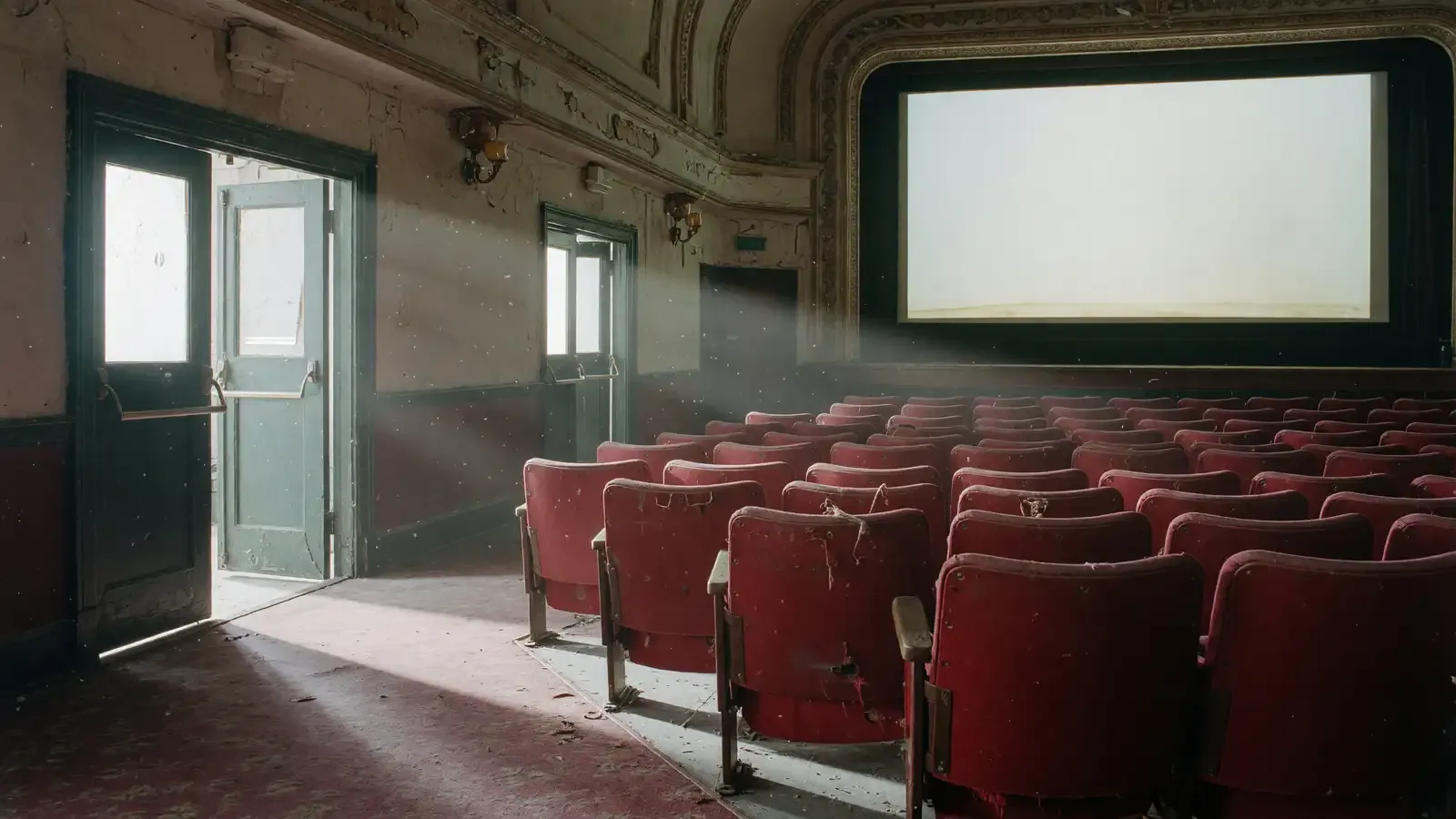
None of this means cinema is in perfect health. Theaters are still recovering from COVID closures. Mid-budget dramas — the kind that used to fill multiplexes with something other than franchise sequels — have largely migrated to streaming, where they compete for attention against algorithmic feeds and an endless scroll of content that costs nothing to access. The economics of making movies remain punishing for anyone not operating at blockbuster scale, and the gap between the films that make money and the films that break even has widened into a chasm.
But if you define innovation as the industry doing things it has genuinely never done before, the 2020s are overdelivering. YouTube-native directors are topping the box office with films that traditional studios would have focus-grouped into irrelevance. Copyright law is spawning entire new horror subgenres faster than anyone can track them. Audiences are co-creating cultural moments that marketing departments could not have bought with a blank check. And a hedgehog redesign — a single character model, changed because thousands of strangers on the internet said it was ugly — showed that the power dynamic between creators and consumers has flipped, possibly for good.
There is a version of film history that treats every change as a loss. The death of celluloid, the death of the mid-budget drama, the death of the monoculture. But that version misses what is actually happening. Cinema is not dying. It is shape-shifting into forms that no one predicted and that the previous generation of gatekeepers — studio executives, film critics, festival programmers — does not yet have the vocabulary to describe.
The consensus narrative about this decade has been wrong from the start. The question is not whether movies will survive. It is what they will look like on the other side.
Share This Article
Comments