Bunker: A Marriage, a Zoom Client, and Venice Splitting
Zeller's Venice competition film puts Bardem and Cruz in a London house and Paul Dano on a screen. Variety liked it. Film Stage did not. The Golden Lion vote is still open.
Editorial Notes
BucketMovies Editorial covers classic cinema, repertory discoveries, and context-rich film criticism with an emphasis on source-backed reporting and careful editorial review.
Florian Zeller brought Bunker into Venice competition on 8 September and the room did what Venice rooms do: it split. Variety called Bardem and Cruz brilliant in a riveting, slightly overstated thriller. The Film Stage called the same movie bad melodrama and curiously anti-art. Both saw the same 126 minutes. Both are useful.
The film also has a TIFF Gala slot, so this is not a Lido-only object. We already mapped the Venice prize race through Clooney, Boyle, and McDonagh. Bunker is the marriage movie in that pile, not the newsroom movie and not the standing-ovation dare. Maggie Gyllenhaal’s jury still speaks on 12 September. This is a review of what screened, not a prediction.
The house is the argument
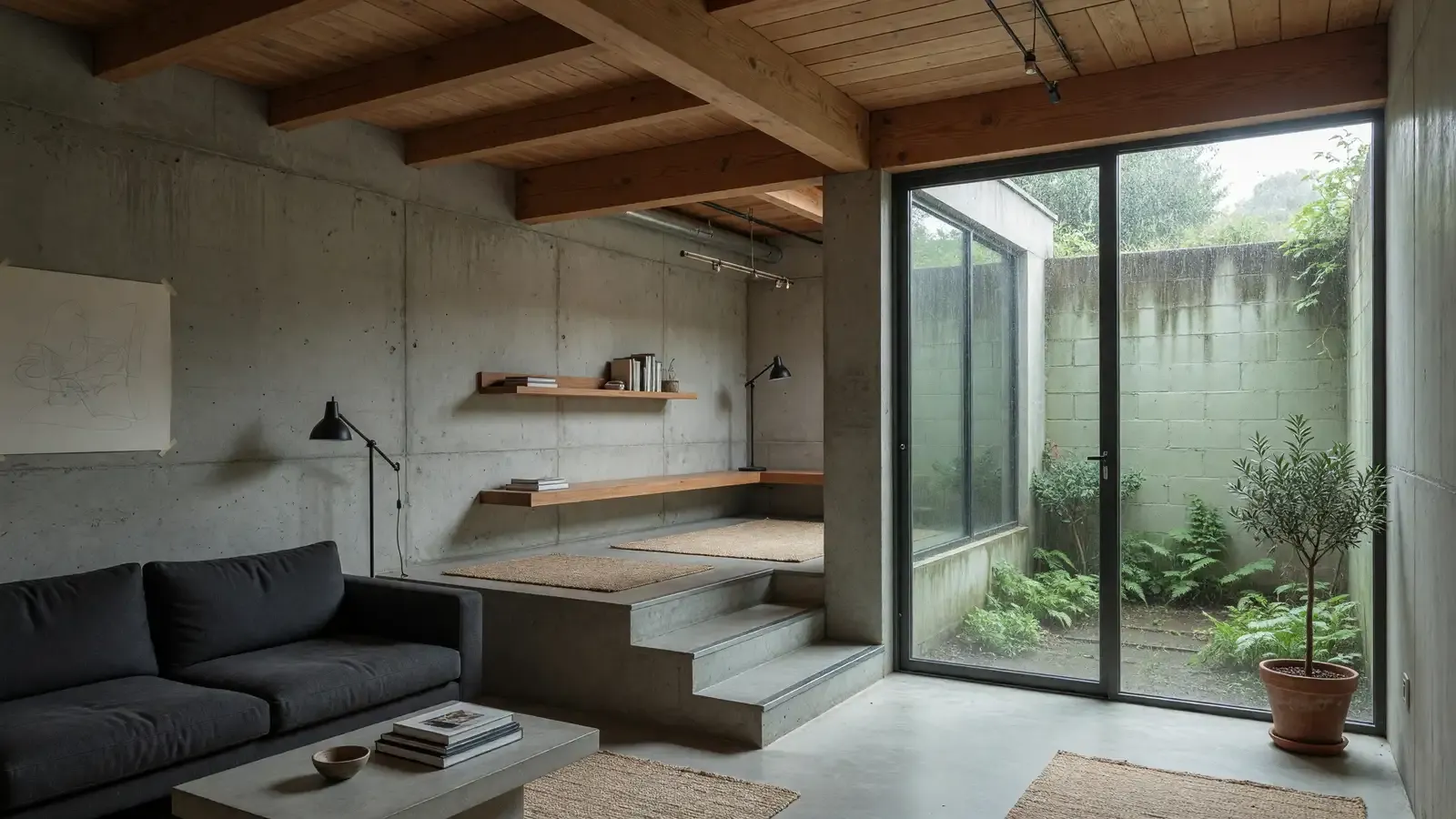
Variety’s location work is the part I trust. Miguel and Sofia Moreno live in London’s East End in a Victorian shell that opens into a vast modernist interior: concrete, timber, glass, split levels, a walled garden a realtor would oversell as a sanctuary. The joke is architectural. The outside says old money texture. The inside says we rebuilt the marriage in poured floors and hoped the layout would hold.
Miguel is an architect in demand. Sofia has been with him for 17 years. Screen Daily puts the setup cleanly: he is offered a lucrative job designing a survivalist bunker for a paranoid tech billionaire; she finds the whole concept obscene. France and Spain co-produced. Zeller wrote and directed. Runtime 126 minutes.
Deadline fills in the client. Andrew exists entirely on a computer screen, played by Paul Dano. Zeller has said the part grew out of reporting on Mark Zuckerberg building something similar. Dano does the boyish close-up that makes a terrible offer sound like a puzzle. ICS Film’s Venice note is more specific on the brief: a self-sustaining bunker for a couple dozen people, locked in for at least a year. That is not a panic room. That is a small country with a door.
Sofia reads the commission as the marriage in miniature. Another project that will eat the calendar. Another rich man whose money is made by taking the floor out from under everyone else. Deadline says she has been pushing, quietly or not, toward Spain. Miguel takes the Zoom anyway after promising he would not. ICS has that beat. It is the oldest plot in the architect-movie binder and it still works when the actors can hold a silence.
Two temperatures in the same screening
I am not going to pretend the Venice audience was of one mind. Variety is in the tank for the performances and willing to admit the thesis is a little loud. “Slightly overstated” is a critic telling you Zeller underlined the moral in Sharpie. After The Father, which won him an Oscar for the screenplay, that is a known risk. He likes a closed system. A house that lies. A mind that will not stay in one time. Bunker moves the closed system from dementia to climate dread and billionaire exit plans.
Deadline treats the marriage as the on-ramp to a pile of 2020s anxieties: environmental threat, inequality, individualism, post-pandemic isolation. That list is the review’s weakest paragraph because it sounds like a festival catalog. The movie is better when it stays in the kitchen. Cruz, in the opening dinner that several outlets describe, listens to Bardem tell the story of how they met. Film Stage, which otherwise hates the picture, still calls that close-up a masterclass. Believe the hostile witness. If even the pan admits Cruz is doing real work, she is.
Film Stage’s objection is not “I wanted more plot.” It is that Zeller sets up visual rhymes and then pays them off like a TED Talk. Early on, the couple snickers at an art opening in front of three uniformly black paintings, canvases that used to be still lives before someone painted over them. Later a neighbor covers a hole he knocked in their garden wall with black tarpaulin. For a second the film lets you feel a pattern. Then, per Film Stage, the answer is dull. They also name Cruz’s character Julia, which is a useful reminder that even a full review can scramble a name. Variety, Deadline, Screen, and ICS all say Sofia. I am going with Sofia.
ICS has a neighbor named Toby and a hole in the wall that Miguel talks him into closing. That subplot is the small-scale version of the bunker: who gets to punch through someone else’s boundary and call it a renovation.
Dano on a laptop is the right cheap trick
Casting Paul Dano as a man who will not enter the room is the one choice that feels like 2026 instead of like Ibsen with a smart home. Deadline says he is eerily effective. ICS hears Musk and Zuckerberg in the mix of charm and social vacancy. I do not need the roman à clef. The point is that the client is a rectangle. Miguel’s job is to make a physical world for a person who prefers not to share air.
That is funnier and colder than a third act where the billionaire arrives in a helicopter. If Zeller had put Dano in the garden, the movie would become a class-confrontation play. Keeping him on a call preserves the insult: Sofia has to live with the consequences of a man her husband only meets as pixels.
Is it anti-art, as Film Stage says, because the black paintings are a gag at abstraction? Maybe. It is also a director who came from theatre telling you that a blank surface can be a cover-up. The Father did that with walls that would not stay put. Here the walls are expensive and the cover-up is moral. I buy the performances more than I buy the metaphor. That seems to be Variety’s position too, even if they liked the ride.
Where it sits on the Lido, and in Toronto
Venice competition is a claim. It says this film wants the Golden Lion conversation, not a sidebar pat on the head. Our mid-fest piece already treated Ink and Wild Horse Nine as the temperature of the first stretch. Bunker is a different bet: movie stars, a marriage, a timely villain who never shows up in person. Juries sometimes reward that. They also punish timely villains.
TIFF booking it as a Gala Presentation is the commercial tell. Variety logged the dual festival path in the same review header. A Gala is where you put a movie you think civilians will buy a ticket for. Bardem and Cruz will sell that ticket. Whether the bunker brief still feels like news by December is a different problem. Survival architecture has been a magazine feature for years. The marriage has to carry the film when the op-ed goes stale.
If you are stacking fall screeners against Telluride’s Oscar weather or the TIFF slate we already previewed, put Bunker in the acting-and-craft column, not in Best Picture math. A 126-minute domestic drama with a Zoom antagonist can win a cup at Venice and still land as a winter streamer that people argue about at dinner.
What I am taking from the split
I have not sat in Sala Grande. I am reading five reviews that disagree on quality and agree on the bones: London house, 17-year marriage, bunker commission, Dano on a screen, 126 minutes, competition plus Toronto.
The version I want to see is Variety’s, where the acting outruns the thesis. The version I fear is Film Stage’s, where every object is a caption. Zeller has made both kinds of movie. The Father was the first. Some of the follow-ups were the second.
For now the useful public fact is that Venice did not receive Bunker as filler. It received it as an argument. That is more than you can say for half the competition on paper in a year people kept calling thin. Whether Gyllenhaal’s jury cares about a marriage in a nice house while the world burns is a question for Saturday. The reviews already told you the movie thinks it does.
ICS Film’s neighbor subplot is the small-scale version of the bunker: who gets to punch through someone else’s boundary and call it a renovation. Toby wants a hole. Miguel wants the wall back. The billionaire wants a year underground. Sofia wants a life that is not a floor plan. That is the whole movie if you strip the festival language.
Zeller’s filmography is the extra context the trades assume you have. The Father was a closed apartment that would not stay in one geometry. The Son took the same theatrical spine and got punished for it. Bunker puts the closed system in a house that looks like a design magazine and then invites a client who never crosses the threshold. That is either growth or a man repeating the only trick he trusts. Venice putting it in competition says they are willing to find out in public.
Screen Daily’s “elegant drama” and Film Stage’s “bad melodrama” can both be true in different rows of the same theatre. Elegance is the camera in the split-level. Melodrama is Sofia having to say out loud that a bunker for a man who sells collapse is obscene. Some audiences need that line. Some hear it as the director tapping the microphone.
TIFF’s Gala slot will flatten the argument. Galas are for clothes and a plot you can describe in a car. “Bardem builds a bunker, Cruz wants to go home” will travel. The neighbor’s hole in the wall will not. If the movie has a second life after Venice, it will be as a star vehicle that happens to be mad about billionaires, not as a treatise on black paintings.
The Golden Lion is still unclaimed until 12 September. A marriage film can win if the jury is tired of history pictures. It can also look small next to a newsroom movie and a 14-minute ovation. I would not bet a bracket on Bunker. I would bet a ticket on Cruz’s close-up, and I would walk in knowing Dano might be the only joke that still works in February.
See it for Cruz if you only have one reason. See it for the Dano call if you have two. Do not see it because a tech billionaire’s bunker is a fresh idea. It is not. The fresh part, if there is one, is watching two people who already know each other decide whether a floor plan is a life.
Share This Article
Comments