Cannes 2026 Preview: The Films, Directors, and Controversies That Will Define This Year's Festival
From Lynne Ramsay's return to potential blockbuster premieres, here's what to expect when the 79th Cannes Film Festival kicks off in May.
Editorial Notes
BucketMovies Editorial covers classic cinema, repertory discoveries, and context-rich film criticism with an emphasis on source-backed reporting and careful editorial review.
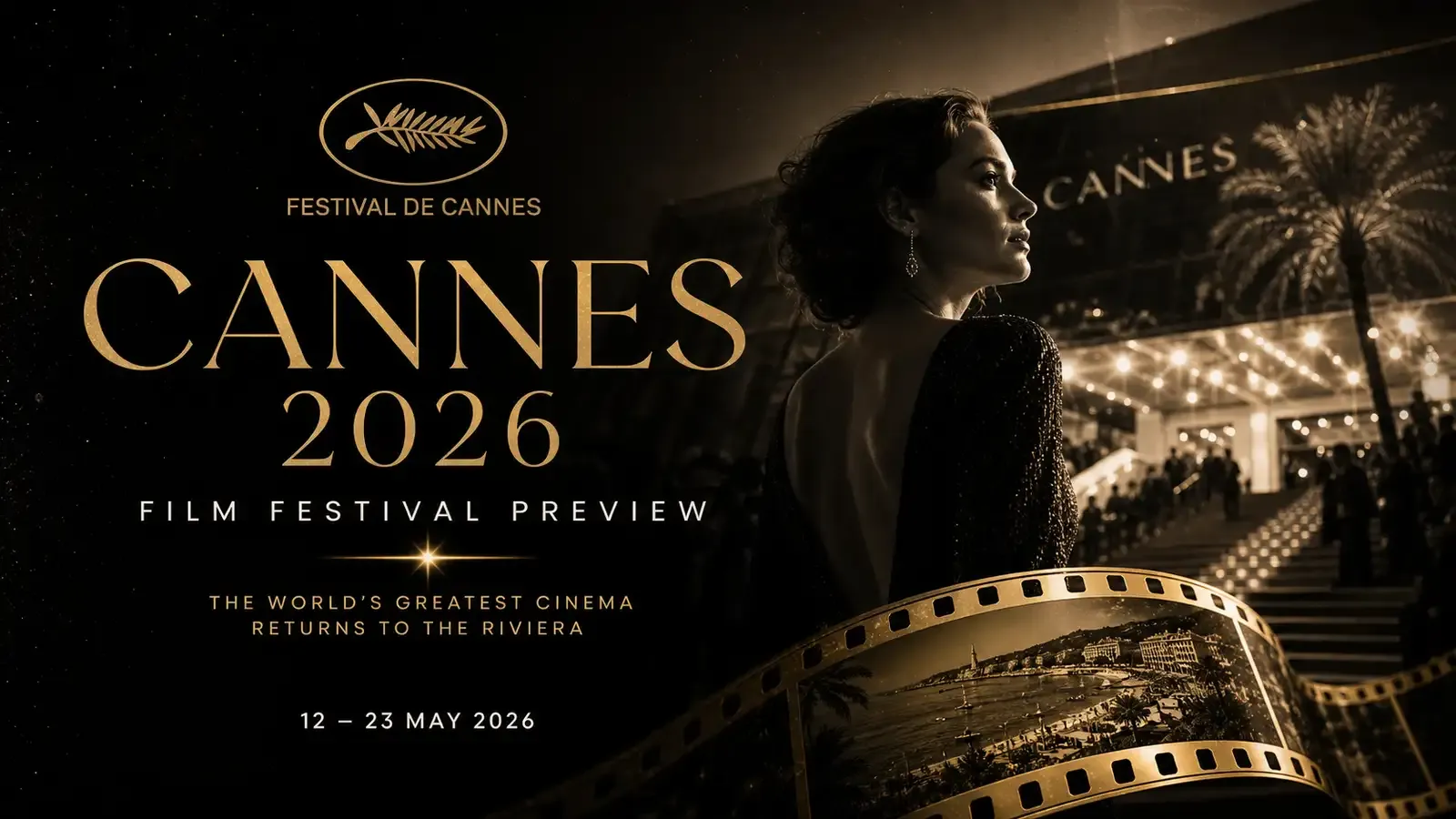
The 79th Cannes Film Festival opens its doors on May 13, and for all the predictable rituals—the red carpet gauntlet, the standing ovations timed with stopwatches, the annual argument about whether Netflix should be allowed in Competition—the 2026 edition is shaping up to be genuinely unpredictable. The official selection announcement comes mid-April, but festival watchers and sales agents have already pieced together a rough picture of what to expect. Some familiar names are returning. Some new ones are about to become very famous. And at least one film will generate the kind of walkout-to-standing-ovation whiplash that defines Cannes at its best.
The Competition Heavyweights
Lynne Ramsay’s Die, My Love is the title everyone in the Croisette cafés has been whispering about. The Scottish director hasn’t released a feature since 2017’s You Were Never Really Here, and this adaptation of Ariana Harwicz’s novel—about a woman unraveling in rural France after childbirth—stars Jennifer Lawrence and Robert Pattinson in what early reports describe as career-best work. Ramsay has never competed for the Palme d’Or, and the combination of her formal rigor with Lawrence’s rawest performance since Winter’s Bone makes this the presumptive frontrunner before a single frame has screened.
Joachim Trier is also expected in Competition with Sentimental Value, his follow-up to The Worst Person in the World. The Norwegian director brings back Renate Reinsve for a story about a father-daughter relationship complicated by the father’s terminal illness. Trier’s previous Cannes entry, in 2021, earned Reinsve the Best Actress prize and launched her international career—expect the festival to give him a prime slot.
Brazilian director Kleber Mendonça Filho, whose Bacurau was a jury prize winner in 2019, returns with The Secret Agent, a period thriller set during Brazil’s military dictatorship. The political context—Brazil’s ongoing reckoning with its authoritarian past—gives this one extra weight, and Mendonça Filho’s ability to blend genre tension with historical specificity should make for a potent combination.
Other likely Competition titles include Alice Rohrwacher’s La Chimera follow-up (the Italian director has become a Cannes favorite), and a new film from Japanese director Ryusuke Hamaguchi, whose Drive My Car won Best Screenplay at Cannes before going on to Oscar success. Hamaguchi’s project has been shrouded in unusual secrecy, which at Cannes only intensifies expectation.
Out of Competition and the Blockbuster Question
The festival’s relationship with Hollywood blockbusters has evolved. Top Gun: Maverick premiered at Cannes in 2022 and became the template for how a studio tentpole can use the festival as a prestige launching pad. This year, rumors persist that Warner Bros. will premiere James Gunn’s Superman out of competition. The optics are complicated—Cannes artistic director Thierry Frémaux has publicly wrestled with how much studio product the festival should accommodate—but a Superman premiere on the Croisette would generate the kind of global media coverage no Cannes entry has matched since Indiana Jones and the Kingdom of the Crystal Skull debuted there in 2008.
More likely is a splashy midnight screening of one of the year’s major auteur blockbusters. Paul Thomas Anderson’s One Battle After Another has been mentioned, though the film will have already screened widely by May. The safer bet is something from the fall slate—perhaps an early look at Denis Villeneuve’s next project, or a surprise from a filmmaker Cannes has historically championed.
Who’s Running the Jury?
The jury president announcement typically comes with the official selection in mid-April, but speculation has centered on a few names. Cate Blanchett has been mentioned repeatedly, and she’d bring serious credibility—she’s a two-time Oscar winner, a former Venice jury president, and a vocal advocate for gender parity in the industry. Other possibilities include Mexican director Alfonso Cuarón, whose Roma won the Golden Lion at Venice but has never had a film in Cannes Competition, and French actor Isabelle Huppert, who has appeared in more Cannes selections than any performer in history and whose elevation to jury president would feel like a coronation.
The Market and What It Means
Behind the screenings and the red carpet, the Marché du Film—Cannes’ massive film market—will be the real engine of the festival. International sales agents are bringing a stronger package of films than they have in recent years, partly because the streaming acquisition frenzy has cooled and traditional theatrical distributors are buying again.
The French cinema industry enters Cannes 2026 in a complicated moment. New regulations requiring streamers to invest a percentage of revenue in French production have reshaped the financing landscape. The CNC, France’s national film board, has also tightened eligibility rules around festival selections—a bureaucratic move that will affect which films qualify for French production support. These policy shifts may seem esoteric, but they directly shape which films get made and which filmmakers get to work.
The Sidebars: Directors’ Fortnight and Critics’ Week
While Competition grabs the headlines, the parallel sections are where Cannes does its most important work as a discovery engine. Directors’ Fortnight, now operating independently of the French Directors’ Guild after a structural split, has signaled it will program more aggressively than in recent years. The section’s new artistic director has indicated a preference for formally adventurous work from emerging filmmakers, and the 2026 lineup is expected to feature a significant contingent from Sub-Saharan Africa and Southeast Asia—regions that have historically been underrepresented at the festival.
Critics’ Week, the smallest and often most influential sidebar, celebrates its 65th edition this year. The section has launched careers from Bernardo Bertolucci to Wong Kar-wai, and its focus on first and second features makes it the purest expression of Cannes’ commitment to new voices. Early buzz centers on a debut feature from a Tunisian filmmaker that premiered in-work-progress at a regional lab and reportedly left the room in stunned silence.
The Croisette Experience
For everyone not attending black-tie premieres, Cannes is a fundamentally different experience. The festival’s public screenings, the Cinéma de la Plage beach screenings, and the various sidebar events make the event accessible in ways the red carpet imagery obscures. The beach cinema, which runs nightly and is free to the public, will screen a mix of classic restorations and family-friendly premieres. The 2026 program includes a restored print of Wim Wenders’ Paris, Texas to mark its 40th anniversary, and a late-night screening of John Carpenter’s The Thing that will probably draw more genuine enthusiasm than half the black-tie premieres.
For industry attendees, the real action happens in the Palais basement, where the market unspools thousands of screenings for buyers, and in the cafés along the Croisette, where deals get done over rosé that costs more than some of the films being sold. The market is reportedly healthier than it’s been since 2019, with Asian buyers especially active. Several completed films that didn’t make the official selection will use the market to secure distribution, and at least one will emerge as a fall awards contender that nobody saw coming.
What to Watch For
Cannes always produces an unlikely breakout. In 2024, it was Payal Kapadia’s All We Imagine as Light, which won the Grand Prix and launched a major new voice. In 2025, a debut feature from a first-time Senegalese director stunned critics and sparked a bidding war. The 2026 edition will have its own discovery—it always does—and part of the festival’s enduring value is that nobody knows which film it will be until the lights go down in the Lumière.
The other unanswerable question: how many standing ovations will clock in at over ten minutes? The Cannes standing ovation is a ritual the rest of the world finds baffling and participants find indispensable. Expect at least one to break fifteen minutes, followed immediately by a wave of tweets arguing that the ovation length doesn’t correlate with quality, followed by a rebuttal thread arguing that actually it does, followed by everyone moving on to the next screening.
Cannes 2026 runs May 13 through May 24. We’ll be covering the lineup announcement as soon as it drops, with reviews from the Croisette starting opening night.
Share This Article
Comments