Google DeepMind and A24's $75 Million AI Deal: What It Means for Independent Cinema
Google DeepMind's $75 million investment in an AI partnership with A24 could change how independent filmmakers use artificial intelligence in production workflows.
Editorial Notes
BucketMovies Editorial covers classic cinema, repertory discoveries, and context-rich film criticism with an emphasis on source-backed reporting and careful editorial review.
When Google DeepMind announced its $75 million AI partnership with independent studio A24 on June 22, 2026, the film industry paid attention. TechCrunch reported the deal as a development that could reshape how mid-budget and independent films are produced.
This isn’t the AI takeover that Hollywood unions have spent the last two years fighting. It’s something subtler, and potentially more consequential.
What the $75 Million Actually Buys
The DeepMind-A24 partnership focuses on developing specialized AI tools for production workflows. Not for writing scripts or replacing actors, but for the infrastructure that makes filmmaking possible at scale. When a technology company commits $75 million to a single studio partnership, the scope is substantial. The investment targets several areas:
Pre-visualization and storyboarding. AI-assisted tools help directors and cinematographers visualize scenes before shooting. A24 has always been known for its distinctive visual language. Films like Everything Everywhere All at Once and The Zone of Interest relied on meticulous pre-production planning. The visual precision that defined The Lighthouse or Midsommar requires exhaustive preparation. Faster pre-vis tools could give smaller productions access to that level of preparation without spending weeks in storyboarding.
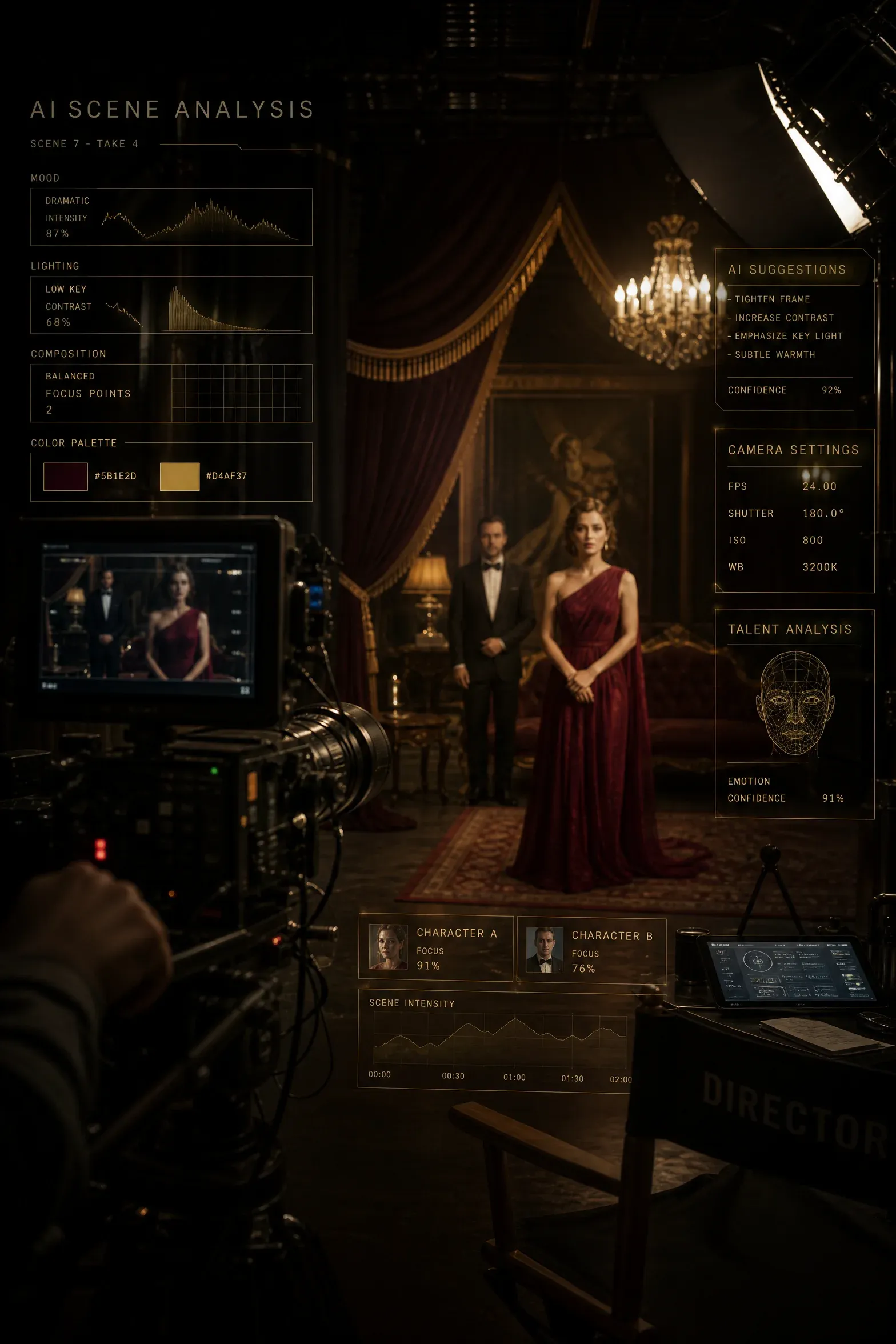
Post-production automation. Editing, color grading, sound design. The labor-intensive work that eats up post-production schedules and budgets. The tools aim to accelerate these workflows without removing creative decisions from human hands. Think of it as a more powerful editing suite, not a replacement editor. An AI system that rough-cuts a scene based on the director’s preferences still leaves the director making the final call on every frame.
VFX pipeline optimization. A24’s films have increasingly pushed into genre territory that demands visual effects work. The cosmic horror elements in Talk to Me, the surreal action choreography in Everything Everywhere All at Once. These ambitions require technical capabilities that traditionally come with a hefty price tag. The partnership includes developing AI systems for rendering, compositing, and effects iteration, bringing down costs for ambitious visual storytelling.
A24: The Studio That Makes the Leap Make Sense
A24 has never been a studio that plays it safe. From its founding in 2012 by Daniel Katz, David Fenkel, and John Hodges, the company built its reputation on identifying and amplifying bold creative visions, often from directors who would have struggled to find backing at traditional studios. The company’s early bets on Spring Breakers, The Witch, and Lady Bird established a pattern: find distinctive voices, give them room to work, and trust that audiences will follow.
The studio’s willingness to experiment extends beyond creative choices into its business practices. The theatrical-then-streaming hybrid rollout for Civil War. The unconventional marketing campaigns for Hereditary and Midsommar. The surprise premiere strategies that turned A24 releases into cultural events. All of this demonstrates a company that sees technology and distribution innovation as part of its competitive advantage, not a threat.
What makes this partnership particularly interesting is the audience A24 serves. The studio’s films attract viewers who care about craft, about the decisions behind the camera as much as the performances in front of it. A24 fans dissect color palettes, debate aspect ratios, and attend Q&As with cinematographers. If A24 can integrate AI tools into its workflow while maintaining the creative integrity that defines its brand, it could establish a blueprint for how the broader independent film community approaches artificial intelligence without alienating the audience that has made the studio a cultural force.
A traditional studio making this same deal would carry a different weight. When a company like Warner Bros. or Universal integrates AI into its pipeline, the industry assumes cost-cutting and risk reduction. When A24 does it, the assumption is different: this is about expanding what filmmakers can do, not reducing what they need to pay people to do.
The Broader Industry Context
The announcement landed in the middle of an already heated debate about AI in Hollywood. Just days earlier, the Los Angeles Times published an in-depth report examining how the industry’s guilds and unions are negotiating the terms of AI adoption. The central question isn’t whether AI will be used — it’s who benefits financially when it is.
SAG-AFTRA and the Writers Guild of America secured significant protections around AI-generated likenesses and writing assistance in their recent contracts. These agreements established guardrails: actors must consent to the use of digital replicas, and writers must be credited and compensated when AI tools assist in script development. But those agreements primarily cover the major studios operating under the Alliance of Motion Picture and Television Producers umbrella.
Independent productions like those at A24 operate under different contractual frameworks. They have more flexibility in how they structure their agreements with creative talent, which is precisely why the DeepMind partnership carries such weight. It could establish new norms for AI integration outside the traditional union framework — norms that might eventually influence the broader industry’s approach.
The question of likeness rights is particularly thorny. As the LA Times piece highlighted, actors are fighting not just against digital replicas of themselves, but against the broader commercialization of their performances by AI systems trained on their work. A24 has consistently championed actor-driven storytelling — the studio’s breakout hits have been built on career-defining performances from actors like Florence Pugh, Paul Mescal, and Michelle Yeoh. How A24 navigates these protections within its AI workflow will be closely watched by performers across the industry, not just those working on independent films.
AI Creativity Is Already Here
The cultural conversation around AI in film isn’t happening in a vacuum. The technology has already crossed several thresholds that would have seemed science fiction just a few years ago.
In mid-June 2026, Variety reported that the Hugo Award-nominated novelette “I AM AI” was optioned for feature film adaptation — a meta-narrative that blurs the line between AI as creative subject and AI as creative tool. The novelette itself, written by a human author exploring AI consciousness, represents one layer of the conversation. The fact that it’s being adapted for the screen while AI technology is simultaneously being integrated into production workflows creates a feedback loop that the industry has never had to navigate before.
Meanwhile, AI-generated short films were drawing standing audiences at screenings organized by Runway, suggesting that the technology has already crossed from experimental curiosity to genuine audience interest. These aren’t novelty acts — they’re short films with coherent narratives, visual consistency, and emotional resonance that audiences responded to in real theatrical settings.
Even Google’s own Laura O’Connell spoke recently about what she calls “the new language of AI in creativity”, framing AI not as a replacement for human imagination but as an expansion of the creative toolkit available to filmmakers, artists, and storytellers. Her argument mirrors what many working directors have said privately: the technology is most powerful when it’s treated as a collaborator rather than a competitor.
What This Means for Independent Filmmakers
The most immediate impact of the DeepMind-A24 deal may not be on A24’s own films but on the broader independent film ecosystem. When a major technology company invests $75 million in AI tools designed for independent production workflows, those tools will eventually become available to filmmakers working far outside A24’s budget range. Technology partnerships like this have a spillover effect — the tools get refined, the costs come down, and the capabilities become accessible to a wider range of productions.
Consider what happens when a $2 million independent film gains access to post-production tools that previously required a $20 million VFX budget. The barrier to ambitious visual storytelling drops significantly. More directors can attempt projects that were previously financially impossible. A filmmaker who once had to choose between a practical effect they couldn’t afford and a cheap-looking digital substitute might now have access to AI-assisted tools that deliver credible results at a fraction of the cost.
That’s the promise — and the disruption — that this partnership represents. But there are legitimate concerns that the independent film community needs to grapple with.
Independent film has always been a space where resource constraints breed creativity. Some of cinema’s most innovative techniques emerged from filmmakers working with limited budgets and finding workarounds that became stylistic signatures. The French New Wave jumped into production because lightweight cameras made it possible. Dogme 95 emerged from deliberate restrictions on what filmmakers could use. If AI tools become ubiquitous, does the playing field level, or does it tilt toward productions with the best AI infrastructure and the teams who know how to use it most effectively?
The filmmakers who succeed in an AI-augmented landscape may be those who learn to use these tools as creative collaborators rather than cost-cutting machines. The difference matters enormously for the final product. An editor who uses AI to quickly assemble three different cuts of a scene is making a creative choice about which version to pursue. A producer who uses AI to eliminate the editing position entirely is making a financial choice that has creative consequences.
The Union Response
It’s worth noting that the major guilds haven’t been silent about developments like this. While the DeepMind-A24 deal involves a production company that operates outside the AMPTP framework, the principles at stake — compensation, consent, credit — are the same ones that drove the 2023 writers’ and actors’ strikes. Union representatives have already signaled that they’ll be watching how independent productions navigate AI integration, and that their findings will inform future contract negotiations.
The SAG-AFTRA National Board has been particularly vocal about the need for consistent standards across all production types, not just those covered by existing agreements. If A24’s AI partnership results in practices that unions view as exploitative or precedent-setting in a negative way, it could trigger a push to extend existing protections to independent productions through new bargaining frameworks.
Looking Ahead
The DeepMind-A24 partnership is still in its early stages. The tools being developed will take time to reach production environments, and it’s impossible to predict exactly how they’ll change the films A24 produces. Early testing is likely already underway on one or two upcoming projects, but the full integration of these tools into A24’s pipeline will probably take eighteen months to two years.
But the investment itself sends a clear signal: artificial intelligence is no longer a speculative future for the film industry. It’s a present-day business decision backed by real capital and a real production partner with a proven track record of finding the intersection between creative ambition and commercial viability.
For independent cinema, the question isn’t whether to adopt AI tools. The tools will exist regardless, and they will become accessible to independent filmmakers whether A24 leads the way or someone else does. The real question is how to adopt them in a way that strengthens — rather than replaces — the human creativity that makes films worth watching in the first place.
A24 has built its brand on trusting filmmakers to tell their stories. If this partnership succeeds, it won’t be because AI told a better story. It’ll be because AI gave a filmmaker a better way to tell theirs. And if that model proves out, it could become the standard by which the entire independent film community evaluates the technology — not as a threat to creative work, but as a tool that makes creative work more possible for more people.
Share This Article
Comments