Insidious: Out of the Further Review — The Franchise Finally Finds New Ground
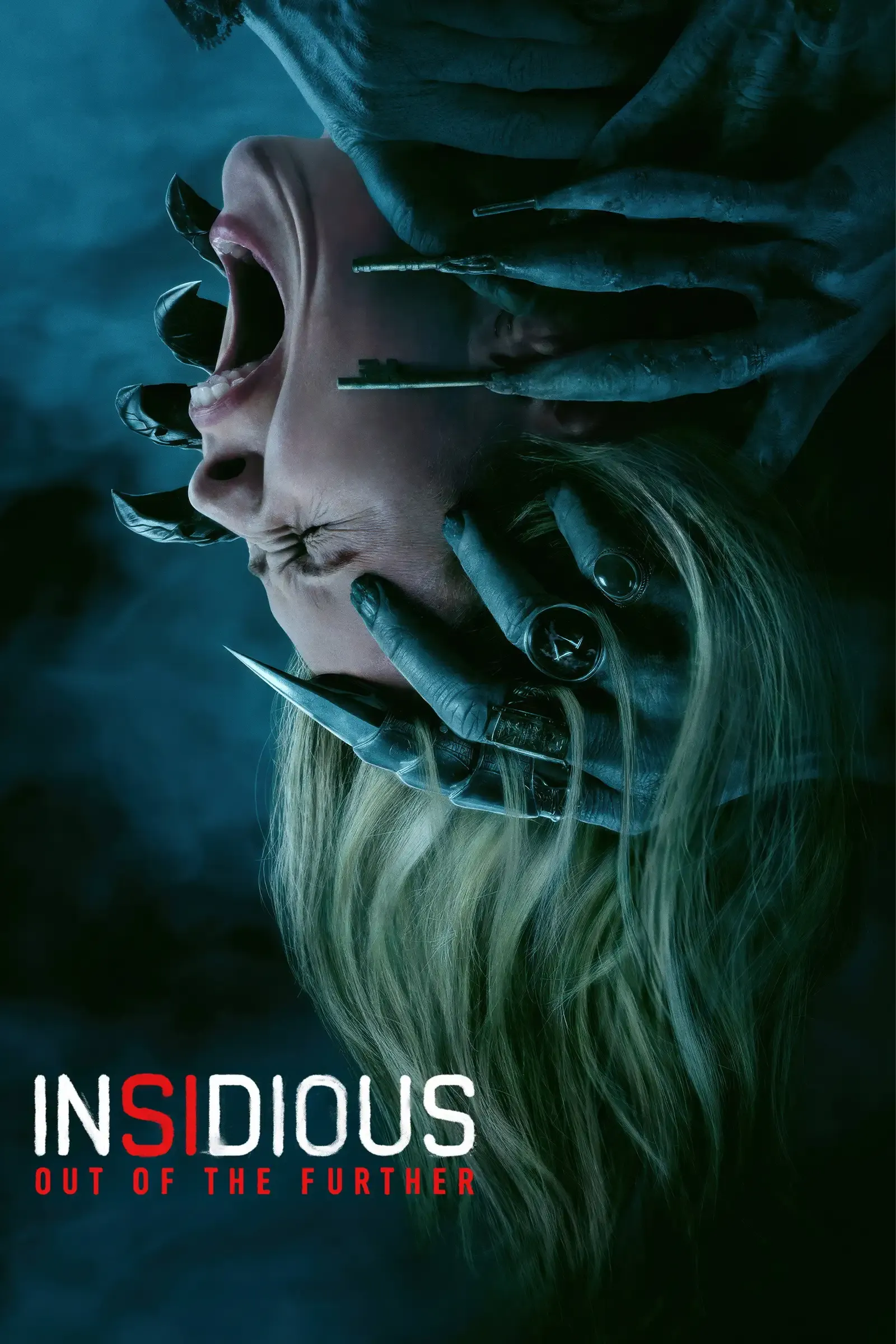
Lin Shaye returns as Elise Rainier in Insidious 6, directed by Jacob Chase. It's the first sequel in years that justifies its existence, thanks to a fresh cast and a genuinely unsettling premise.
Editorial Notes
BucketMovies Editorial covers classic cinema, repertory discoveries, and context-rich film criticism with an emphasis on source-backed reporting and careful editorial review.
The Insidious franchise has been running on fumes for a while. After the original trilogy wrapped up in 2015, the prequel “Insidious: The Red Door” brought back Patrick Wilson and Ty Simpkins in 2023, but it felt more like a contractual obligation than a creative necessity. By the time “Insidious: Out of the Further” was announced, the reasonable expectation was another retread — same ghosts, same jump scares, same formula.
What Jacob Chase delivers instead is something the series hasn’t managed since Leigh Whannell’s original: a horror movie that earns its scares by making you care about the people inside them.
A new family, a new angle
The setup is familiar enough to feel like home. Amelia Eve plays Gemma, a dentist raising her young daughter in the house where Gemma grew up. The house has history — her mother lived there, and so did the things that followed the family through the Insidious films. When Gemma begins experiencing visions of a purgatorial realm called the Further, she realizes the ability to travel there isn’t just a curse. It might be the only way to save her daughter from something that’s been waiting in the walls for decades.
The plot works because Chase doesn’t over-explain the mythology. The Further is established quickly, the rules are simple, and the movie moves. There are no long expository sequences where characters sit around explaining what they already know. The film trusts the audience to follow along, and it trusts the imagery to do the heavy lifting.
What makes Gemma’s situation different from previous Insidious protagonists is the specificity of her predicament. She’s not a parent whose child gets kidnapped by ghosts — that was the first film’s premise, and it’s been done. Gemma’s problem is more layered: the house remembers her childhood, and the things that haunted her as a kid have been growing stronger while she was away. Her daughter, who has no knowledge of the family’s supernatural history, starts seeing things that Gemma recognizes from her own past. The threat isn’t just supernatural. It’s inherited.
Lin Shaye earns her return
Lin Shaye’s Elise Rainier has been the emotional anchor of every Insidious film, and “Out of the Further” gives her more to do than just show up and sense ghosts. She’s older now, more weary, and the film acknowledges the toll of spending a lifetime bridging the gap between the living and the dead. There’s a scene halfway through where Elise sits in a car with Gemma and explains what the Further actually feels like from the inside — not as a villain or a danger, but as a place of genuine sorrow. Shayes plays it with a restraint that’s rare in franchise horror, and it’s the best acting the series has produced.
The film also gives Elise a personal stake that goes beyond professional obligation. She knew Gemma’s mother. She was there when the original haunting happened. The guilt she carries about not being able to save that family — and the determination to make it right this time — gives Shaye material she hasn’t had since the first film. There’s a moment near the end where Elise makes a choice that could cost her everything, and Shaye plays it with a quiet resolve that hits harder than any jump scare.
Brandon Perea, as Gemma’s neighbor who gets drawn into the supernatural chaos, provides the comic relief the film needs without turning it into a joke. He’s funny in the way real people are funny — nervous, deflecting, making dumb observations to cope with terror — and his chemistry with Eve keeps the first act grounded before the horror escalates. Perea has the kind of natural screen presence that makes you believe someone would actually stick around when things get dangerous, which is more than most horror sidekicks can claim.
Maisie Richardson-Sellers rounds out the cast as a paranormal researcher who’s been tracking the Further’s activity across different families. Her character could have been pure exposition — the expert who shows up to explain the rules — but Chase gives her enough personality and backstory that she feels like a real person rather than a plot device. The scenes where she and Elise disagree about the best approach to dealing with the Further add a layer of human conflict that keeps the middle section from sagging.
Jacob Chase knows how to scare you
Chase, making his feature debut after the well-regarded short “Come to Daddy,” understands something that the later Insidious sequels forgot: horror works best when the threat feels specific and personal. The ghosts in “Out of the Further” aren’t generic specters. They’re tied to the house, to Gemma’s childhood, to the specific trauma this family carries. When the scares come — and they come hard in the third act — they land because they feel earned rather than manufactured.
The film’s visual design helps. Chase uses negative space and practical lighting in ways that recall James Wan’s work on the original, but with a more grounded, less stylized approach. The Further sequences look genuinely alien — pale, washed-out, with depth that makes the screen feel deeper than it should. There’s a shot of Gemma walking through a fog-covered version of her own house that’s going to be the image people remember from this movie. The production design team deserves credit for making the Further feel like a real place rather than a green screen effect — the textures are wrong, the proportions are slightly off, and the silence is oppressive.
The sound design deserves special mention too. Chase and his team use silence as a weapon. Several of the film’s most effective moments involve long stretches of nothing — no music, no ambient sound, just a character standing in a room while the audience waits for something to happen. When the payoff comes, the contrast between silence and noise makes the scare land harder. It’s a technique that Wan used in the original, and Chase deploys it with confidence.
The PG-13 question
Horror fans will note the PG-13 rating, and yes, the film is less gory than its predecessors. But Chase compensates with atmosphere and tension. The scariest moments in “Out of the Further” aren’t violent — they’re the slow realization that something is wrong, followed by the worse realization that you can’t look away. The film earns its rating by being genuinely unsettling rather than relying on red paint.
For fans who want the full Insidious experience, the restraint actually works in the film’s favor. The PG-13 forces Chase to be creative, and the result is a movie that lingers longer than a more explicit version would. The horror comes from what you don’t see, from the things lurking at the edges of the frame, from the knowledge that the Further is always just a step away from breaking through.
The rating also opens the film to a wider audience, which matters for a franchise that’s always had strong teen viewership. The first Insidious built its audience partly through word of mouth among younger horror fans, and “Out of the Further” has the same potential. It’s scary enough to satisfy genre veterans and accessible enough to bring in first-timers who might be curious about the series after hearing the positive buzz.
How it fits in the franchise
“Out of the Further” works as both a sequel and a standalone entry. You don’t need to have seen the previous films to follow the story — Chase fills in just enough backstory to make Gemma’s situation clear. But for fans of the series, there are connections that reward attention. Elise’s arc across all six films becomes more coherent after this one, and the mythology of the Further gets its most interesting expansion yet.
The film also sets up a potential continuation that doesn’t feel forced. Without spoiling the ending, Chase leaves enough threads open for a seventh film while still providing a satisfying conclusion to Gemma’s story. It’s the kind of ending that respects both the character and the audience.
There’s a sequence near the end where the film flashes back to the events of the original Insidious, recontextualizing a scene we’ve seen before through Gemma’s perspective. It’s not a nostalgia grab — it adds genuine meaning to both the old film and the new one, and it’s the kind of smart franchise filmmaking that makes you wish more sequels were this thoughtful.
The production credits tell their own story. Jason Blum, James Wan, Leigh Whannell, and Oren Peli are all back as producers, which means the creative DNA of the original is present even with a new director at the helm. Chase clearly had collaborators who understood what made Insidious work and gave him the freedom to put his own stamp on it. The result is a film that feels both familiar and fresh — a rare balance in franchise horror.
Worth your time?
Yes. “Insidious: Out of the Further” is the best entry in the franchise since the original, and it’s one of the better horror films of 2026 so far. Jacob Chase brings fresh energy to a series that was starting to feel stale, and the combination of Lin Shaye’s quiet gravitas with Amelia Eve’s grounded performance gives the film more emotional weight than the formula usually allows.
If you’ve been burned by the last few Insidious sequels, this one is different. It’s not just another haunted house movie with the Insidious name attached. It’s a horror film that knows what it wants to be and commits to it fully. That’s rarer than it should be in franchise horror, and it’s worth showing up for.
The film opens wide on August 21, 2026. At 106 minutes, it’s the shortest Insidious film, and it doesn’t waste a minute of that runtime. Chase has made a horror movie that respects your time, your intelligence, and your ability to be scared without being insulted. That’s enough recommendation for anyone who’s ever loved a haunted house story.
The box office tracking suggests strong opening weekend numbers, which makes sense given the franchise’s built-in audience and the positive response from early screenings. Horror fans have been waiting for an Insidious film that feels like more than a cash grab, and Chase has delivered exactly that. Whether the film spawns another sequel or not, it stands on its own as a well-crafted piece of genre filmmaking that reminds you why the original Insidious worked in the first place.
Share This Article
Comments