Lanterns Finally Brings Green Lantern to TV — And It's Not What You'd Expect
DC Studios' Lanterns premieres on HBO Max with a grounded, detective-driven take on Green Lantern that defies superhero conventions. Aaron Pierre and Kyle Chandler lead an ambitious new chapter in the DC Universe.
Editorial Notes
BucketMovies Editorial covers classic cinema, repertory discoveries, and context-rich film criticism with an emphasis on source-backed reporting and careful editorial review.
The Green Lantern has finally arrived on television, and after decades of failed attempts to bring the Emerald Knight to screens, DC Studios has taken the boldest possible approach: they’ve made it a murder mystery set in a small town. Lanterns, which premiered Sunday night on HBO and HBO Max, is unlike anything you’d expect from a superhero show — and that’s precisely the point.
A Grounded Start to a Cosmic Story
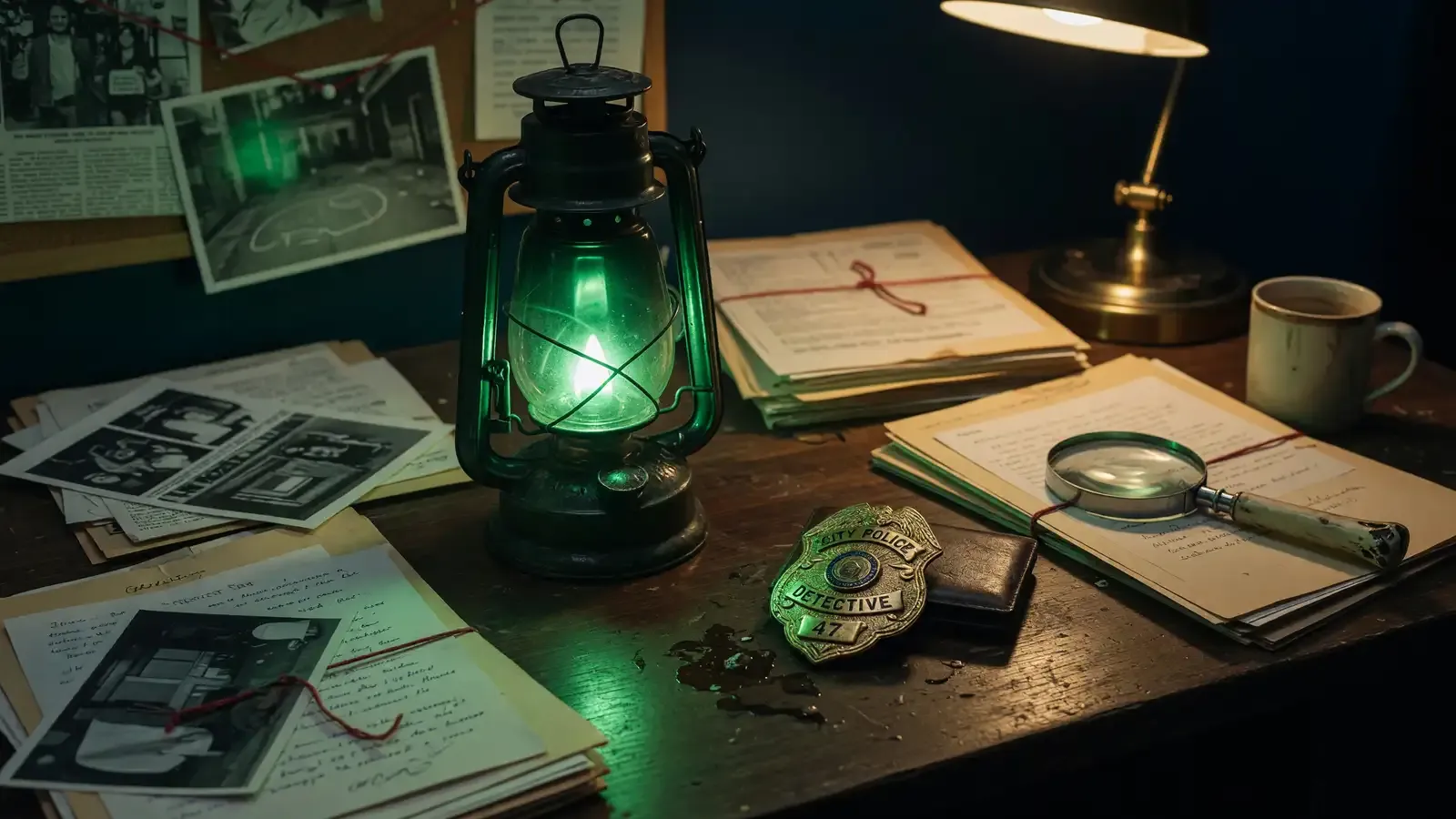
The series opens not with sweeping space battles or intergalactic councils, but with a body. In Rushville, a quiet Midwestern town where nothing exciting ever seems to happen, something deeply unsettling has been unearthed. When Hal Jordan, played by Kyle Chandler, arrives to investigate, he’s not greeted as a hero. He’s greeted with suspicion, confusion, and the kind of small-town wariness that knows when an outsider doesn’t belong.
Enter John Stewart, portrayed by Aaron Pierre, a younger Lantern whose methodical approach immediately clashes with Hal’s more instinct-driven style. Their dynamic isn’t the typical buddy-cop formula audiences might expect. There’s tension rooted in ideology — Hal believes in trust and improvisation, while John relies on discipline and analysis. The murder investigation forces them to navigate not just a mystery with cosmic implications, but their own philosophical differences about what it means to wield a power ring.
This is the kind of character-driven storytelling that sets Lanterns apart from the superhero shows that have come before it. The Green Lantern mythology has always been rich with cosmic lore — the Guardians of the Universe, the various colored corps, the emotional spectrum — but the show wisely chooses to ground all of that in human relationships and earthly stakes first. The cosmic elements emerge gradually, almost reluctantly, as the investigation peels back layers that no one in Rushville was prepared for.
The Creative Team Behind the Curtain
What makes Lanterns particularly intriguing is the caliber of talent assembled behind the camera. Chris Mundy, who served as showrunner on Ozark, brings his expertise in crafting morally complex characters and slow-burn tension to the DC Universe. Mundy’s work on Ozark demonstrated his ability to sustain audience interest through character psychology rather than action set pieces, and that sensibility is clearly present in every frame of Lanterns.
Joining Mundy is Damon Lindelof, the visionary behind Lost, The Leftovers, and HBO’s Watchmen. Lindelof’s involvement signals that DC Studios is willing to embrace the kind of ambitious, thematically layered storytelling that made Watchmen one of the most critically acclaimed limited series of the past decade. Lindelof has always been drawn to stories about legacy, power, and the gap between what heroes claim to be and what they actually are — themes that resonate deeply with the Green Lantern mythology.
Rounding out the creative team is Tom King, the acclaimed DC Comics writer known for his runs on Batman and Mister Miracle. King’s comic work is celebrated for its emotional depth and its willingness to deconstruct superhero archetypes without dismissing them entirely. His influence on Lanterns is evident in the way the series treats its characters as real people burdened with extraordinary responsibility, rather than as symbols or archetypes.
This combination of talent — a prestige drama showrunner, a visionary genre storyteller, and one of the most respected voices in modern comics — creates a creative foundation that few superhero adaptations have ever achieved.
Aaron Pierre and Kyle Chandler: An Unexpected Pairing
The casting of Aaron Pierre as John Stewart and Kyle Chandler as Hal Jordan is one of the most inspired choices in recent superhero television history. Pierre, who has steadily built a reputation through compelling performances in various projects, brings an intensity and gravitas to John Stewart that feels both fresh and deeply respectful of the character’s comic book legacy. John Stewart, as created by Dennis O’Neil and Neal Adams, has always been defined by his discipline, his architectural background, and his refusal to be intimidated by cosmic authority. Pierre embodies all of these qualities while adding a vulnerability that makes the character feel fully human.
Kyle Chandler, meanwhile, brings a weathered authenticity to Hal Jordan that grounds the character in reality. Chandler is an actor who has always excelled at playing men who carry the weight of responsibility without complaint — his work in Friday Night Lights remains some of the finest television acting of the 21st century. As Hal Jordan, Chandler channels that same quiet determination, but with an edge that suggests a man who has seen things he can’t fully explain and has learned to live with the uncertainty.
Their chemistry on screen is immediate and compelling. The generational gap between the two Lanterns — Hal as the veteran, John as the newcomer — creates natural tension that the show exploits brilliantly. Neither character is presented as entirely right or entirely wrong. Hal’s experience gives him insight, but it also makes him complacent. John’s fresh perspective is valuable, but it also makes him blind to complexities that only time can reveal.
Why Television Was the Right Choice
For years, Warner Bros. struggled to make Green Lantern work as a film property. The 2011 Green Lantern film starring Ryan Reynolds remains one of the most notorious superhero failures — a movie that tried to do everything and ended up doing nothing particularly well. The film’s problem wasn’t just its execution; it was the fundamental mismatch between Green Lantern’s mythology and the constraints of a two-hour movie.
Green Lantern is a story about willpower, fear, and the infinite possibilities of imagination. It’s a story that involves cosmic politics, alien civilizations, and the very nature of consciousness. Trying to compress all of that into a single film was always going to be problematic. Television, with its ability to unfold slowly and develop characters over hours rather than minutes, is a far more natural fit for this kind of storytelling.
DC Studios clearly learned from the 2011 film’s mistakes. By choosing to tell this story on HBO Max, they’ve given the creative team room to breathe. The eight-episode first season allows for the kind of character development and world-building that would be impossible in a film. The small-town setting forces the story to earn its cosmic elements gradually, which makes them feel more impactful when they finally arrive.
This approach also aligns with DC Studios’ broader strategy under James Gunn and Peter Safran. Following the success of Superman in 2025, the new DC Universe has been built on a foundation of character-first storytelling. Superman worked because it remembered that Superman is, at his core, a story about hope and kindness — not just about punching bad guys. Lanterns appears to be applying the same philosophy to Green Lantern: before he’s a cosmic hero, John Stewart is a man trying to solve a murder in a town that doesn’t trust him.
The Rushville Setting: Small Town, Big Mysteries
The choice to set Lanterns in Rushville is perhaps the show’s most audacious decision. Rushville isn’t Metropolis or Gotham — it’s not a city defined by its relationship to heroism or villainy. It’s a place where people mind their own business, where secrets are kept out of pride rather than malice, and where the arrival of two men with glowing rings is met with more confusion than awe.
This setting allows the show to explore themes that superhero stories rarely touch on. What does it mean to be a hero in a place that doesn’t need saving — at least, not in the traditional sense? What happens when the tools of cosmic justice are applied to the messy, ambiguous reality of small-town life? How do you investigate a murder when your primary suspect might be something that defies human understanding?
Rushville also serves as a mirror for the characters themselves. Both Hal and John are, in their own ways, outsiders — men who have dedicated their lives to something larger than themselves but who struggle to connect with the ordinary world they’re supposed to be protecting. The town’s residents, with their suspicion and their carefully guarded secrets, force both Lanterns to confront the gap between their cosmic mission and their human limitations.
The Murder Mystery as Superhero Framework
Using a murder investigation as the framework for a superhero show is a clever structural choice. It gives the series a clear narrative engine — there’s a crime, there are suspects, there are clues — while allowing for the kind of character exploration and world-building that makes Lanterns feel like more than just a procedural with superpowers.
The murder in Rushville is the kind of inciting incident that pulls characters out of their comfort zones and forces them to confront uncomfortable truths. For Hal, the investigation is a reminder that experience doesn’t always equal wisdom. For John, it’s a test of whether his training and discipline are enough to handle a situation that defies his understanding of how the universe works.
As the investigation unfolds over the eight-episode season, the show gradually expands its scope. What begins as a seemingly straightforward crime in a small town慢慢 (gradually) reveals connections to larger forces — forces that threaten not just Rushville but the fabric of reality itself. This slow expansion from local to cosmic is one of Lanterns’ most effective storytelling techniques. By the time the cosmic elements fully emerge, the audience is so invested in the characters and their relationships that the stakes feel personal, not just epic.
A New Chapter for DC Television
Lanterns represents more than just another superhero show — it represents a new chapter in DC’s television legacy. For decades, DC has been the dominant force in superhero television, from the campy charm of the 1960s Batman series to the grounded realism of Christopher Nolan’s Dark Knight trilogy to theArrowverse’s sprawling interconnected universe. But Lanterns feels different from all of these predecessors.
Where the Arrowverse prioritized connections and crossover events, Lanterns prioritizes character and atmosphere. Where Nolan’s films treated superheroism as a metaphor for post-9/11 anxiety, Lanterns treats it as a metaphor for the very human experience of carrying power you don’t fully understand. Where the 2011 Green Lantern film tried to be everything to everyone, Lanterns is content to be a quiet, deliberate, and deeply human story about two men trying to solve a murder in a town that would rather they left.
This confidence in its own identity is what makes Lanterns feel so refreshing. In an era when superhero fatigue is a real and growing concern, Lanterns proves that the genre still has stories worth telling — as long as those stories are willing to take risks and trust their audience’s intelligence.
What Comes Next
With seven more episodes to go in its first season, Lanterns has the opportunity to establish itself as one of the defining superhero television series of the decade. The creative team behind the show has the talent, the vision, and the source material to create something truly special — something that honors the rich legacy of Green Lantern while pushing the mythology in bold new directions.
The premiere of Lanterns is not just a win for DC Studios — it’s a win for anyone who believes that superhero stories can be more than spectacle. It’s proof that the genre can be intelligent, emotionally resonant, and artistically ambitious without losing the sense of wonder that makes these stories worth telling in the first place.
The ring has been passed. The light is shining. And for the first time in Green Lantern’s long screen history, the story feels like it’s in exactly the right hands.
Share This Article
Comments