Obsession and Backrooms: YouTube's Box Office Takeover
Obsession and Backrooms have earned $294 million domestic combined for two YouTube-trained directors. Here's what that means for how Hollywood finds hits.
Editorial Notes
Anna edits BucketMovies criticism and essay packages, with a steady interest in classic Hollywood, literary adaptations, and repertory programming.
Leah Carter
Research Editor
Leah handles source checks, release-date verification, awards coverage, and the reporting framework behind BucketMovies news and industry pieces.
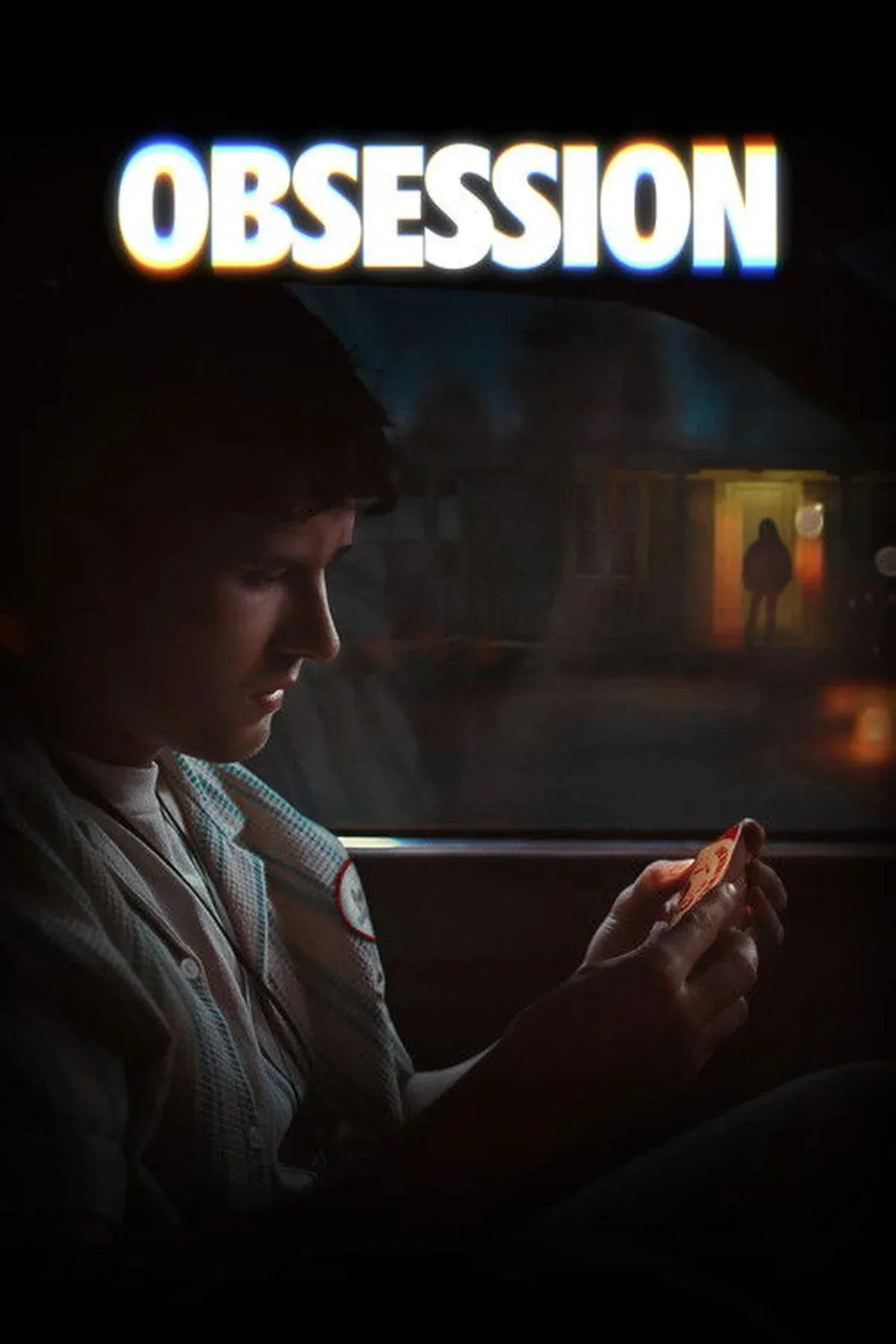
On Monday, June 8, the number one film in America was a horror movie made for less than $1 million by a director who taught himself filmmaking on YouTube. Per Deadline’s daily chart, Curry Barker’s Obsession took $4.2 million in its fourth week, edging out the brand-new Scary Movie at $4.1 million. Third place went to Backrooms, directed by 20-year-old Kane Parsons, another filmmaker who built his career on YouTube. Amazon MGM’s Masters of the Universe, the kind of franchise play that used to anchor a summer, limped to fourth with $2.1 million.
Obsession and Backrooms have now pulled in roughly $294 million domestic between them. Both became the highest-grossing films in their studios’ histories within weeks of each other. You could file all this under box office trivia if the same pattern hadn’t been holding for a month straight. The economics of who gets to make movies, and how those movies find an audience, have moved under Hollywood’s feet.
Three Weeks That Flipped the Chart
Start with the scoreboard. Fortune notes that Scary Movie’s $55 million win ended three straight weekends in which low-budget indie horror sat on top of the domestic chart. Here is where the three films at the center of this story stood as of June 8, per Deadline:
| Film | Studio | Domestic total (June 8) | Where it stands |
|---|---|---|---|
| Obsession | Focus Features | $156.1M | Focus’s highest-grossing film ever; $229.3M+ worldwide |
| Backrooms | A24 | $138M | A24’s highest-grossing film ever |
| Masters of the Universe | Amazon MGM | $31.6M | $54M worldwide opening |
Read that middle column again. Focus Features has been releasing films since 2002. A24’s catalog includes Hereditary, Moonlight, and Everything Everywhere All at Once. Both companies just watched their all-time records fall to directors whose previous “studio” was a webcam and an editing timeline.
NPR’s review coverage framed the pairing as two young directors striking big, and the ages matter less than the training ground. Barker and Parsons did not come up through film school, festival shorts, or commercials, the standard feeder routes. They came up by posting work where the audience could find it for free, and the audience followed them into theaters.
Horror pulling new talent in from the margins is an old story. The genre has always been cinema’s cheapest point of entry, something we traced in our look at how Scream rewired horror. What is new is the size of the margins. A YouTube subscriber base is not a cult following discovered after the fact. It is a measurable, pre-sold audience, and it is starting to function like a minor league system the studios can scout.
What Obsession and Backrooms Share
The two films look nothing alike on screen. Obsession is a contained story about romantic fixation that Deadline describes as a horror romance. Backrooms is liminal-space dread at feature length, with Chiwetel Ejiofor as a furniture store owner who wanders into an endless yellow maze, per NPR.
What they share is sequencing. In the traditional model, a studio greenlights a film, then spends nine figures convincing people to care. Barker and Parsons inverted that. The caring came first. Parsons started posting his Backrooms shorts as a teenager and turned a creepypasta image into one of the most-watched horror properties on the internet before A24 ever got involved. Barker built a channel of short-form horror that trained both his craft and his following. By the time each film hit theaters, the marketing problem that sinks most original films had already been solved, for free, over years.
The budget side completes the picture. Forbes calculates that Obsession has returned more than 330 times its production cost, a multiple that exists nowhere else in the modern business. No tentpole can touch it.
Obsession Is Running a 1980s Playbook Better Than the Studios
Focus also did something unfashionable with the release. Instead of saturating 4,000 screens on opening weekend, Deadline reports the studio opened Obsession in 2,615 theaters in mid-May and let it breathe, expanding to about 2,900 as smaller markets discovered it. Deadline compares the rollout to how theatrical releases worked in the 1980s.
The result is a demand curve nobody has seen in years. The film’s grosses went up in its second weekend, then up again in its third. By weekend four it dipped just 7%, which Forbes reports is the best-holding fourth weekend in horror history. Deadline says it is currently pacing 16% ahead of Get Out, which finished its domestic run at $176 million, and projects it will soon pass The Blair Witch Project as the highest-grossing festival acquisition of all time.
There is also a live-event quality to the run that box office math struggles to capture. Deadline describes screenings where audiences shout back at the screen, Rocky Horror style. You cannot get that on a couch, which is precisely the argument theaters have been trying to make for five years.
The Blair Witch comparison runs deeper than the record books. In 1999, that film pioneered using the internet to market a movie. Obsession and Backrooms are the next stage: the internet built the filmmakers themselves, audience included, before the movies existed.
Backrooms Spent Its Fandom Fast
Parsons’ film traced a completely different curve to a similar destination. Backrooms detonated on arrival with an $81.4 million opening from 3,442 theaters, roughly double what projections had forecast. Then gravity arrived. Forbes reported a second-weekend drop of about 67%, the kind of fall normally associated with franchise fatigue.
But context matters. A 67% drop from $81.4 million still leaves a horror film at $138 million in under two weeks, and the Los Angeles Times notes it has already passed the Timothée Chalamet vehicle Marty Supreme to become A24’s biggest earner ever. A steep fall was probably baked in from the start. Fandom-driven demand has a shape: the faithful show up immediately, all at once, and the film’s fate then rests on whether anyone else follows.
Two films, two curves. Obsession built word of mouth from a modest base; Backrooms cashed in years of accumulated anticipation in a single weekend. Both ended up rewriting their studios’ record books, which suggests the underlying force, an audience that pre-dates the film, is robust to release strategy.
He-Man Is the Control Group
Every thesis needs a counterexample, and Amazon MGM supplied a painful one. Masters of the Universe opened the same June 5 weekend as Scary Movie and managed $54 million worldwide, a figure Kotaku ranks among 2026’s biggest box office bombs. This was not a reviews problem. Forbes notes the film landed a respectable 69% on Rotten Tomatoes. People simply did not come.
Quality wasn’t the issue, and neither was nostalgia. Brand recognition just turns out to be a different asset than an audience. Millions of people remember He-Man; far fewer were actively waiting for a He-Man movie. Compare Scary Movie, whose $55 million domestic and $105 million worldwide debut set a franchise record, per the Associated Press, on the back of a fanbase that had spent two decades asking the Wayans brothers to come back. One property had dormant demand. The other had a trademark.
That is the uncomfortable lesson for every studio sitting on a vault of recognizable IP: recognition without appetite is just licensing paperwork.
The Studios Have Noticed
If two hits were a coincidence, the industry is now at three and counting. Last weekend, the Los Angeles Times reports, Fathom Entertainment put the series finale of The Amazing Digital Circus, a YouTube animated show from Australia’s Glitch Productions whose pilot has nearly 440 million views, into more than 2,200 theaters. It delivered Fathom’s biggest opening weekend ever and a top-five chart finish. The Times’ verdict on YouTube-native content at the box office: it is “batting a thousand.”
The exhibition side is feeling the same wind. AMC just postponed an interactive concert series it had planned for its auditoriums, because the theaters are too busy showing movies people want to see. Remember that this chain spent the lean years filling screens with anything available.
The creator wave is also landing on an already strong year. We covered the first-quarter recovery when domestic grosses ran 23.5% ahead of 2025, powered by The Super Mario Galaxy Movie, which Newsweek reports has since become 2026’s first billion-dollar film, with the Michael Jackson biopic Michael second at $888 million. The tentpoles are doing tentpole work. What changed is where the surplus is coming from: films that were never supposed to carry a summer.
For Focus and A24, the strategic logic is hard to argue with. Acquiring or developing a creator-driven film costs a fraction of a tentpole, and the downside is capped at numbers that would round to zero on Amazon’s ledger. The upside, as this month proved, is your company’s all-time record. View counts and subscriber growth are scouting reports, and unlike test screenings, they measure years of sustained interest rather than one evening’s reaction.
What This Doesn’t Prove
A few caveats before anyone declares a revolution.
Survivorship bias is real. Two breakouts and a strong Fathom event do not mean the pipeline reliably produces hits. Plenty of creator-led projects will translate poorly to features, and the failures will be quieter than the successes. Digital Circus, for all its record-setting, finished fifth, not first.
Fandom demand is front-loaded. Backrooms’ 67% second-weekend drop is a warning label. A studio that overpays for a creator property expecting tentpole legs may relearn some expensive lessons about ceilings.
Theatrical still runs on four-quadrant fuel. Mario’s billion is the load-bearing wall of 2026. Creator horror is the high-margin garnish, not the meal.
Nobody saw this coming, including us. Neither film appeared in our February horror preview, which tells you how invisible this lane was to people who watch the genre professionally. Forecasting models built on stars, IP, and tracking surveys had no slot for a 20-year-old whose entire filmography lived on YouTube.
Final Thought
Twenty-seven years ago, The Blair Witch Project used a website to convince audiences its footage was real, and Hollywood spent a decade chasing viral marketing. The lesson everyone took was that the internet could sell movies. The lesson Barker and Parsons just taught is different: the internet can now grow filmmakers, complete with an audience attached, and the resulting films can outdraw franchise tentpoles that cost several hundred times more.
Studios will respond the way they always do, by writing checks. The interesting question is whether the next wave of creators still needs them. This summer, the answer was yes, for distribution and screens if nothing else. Ask again when the first one decides to keep the whole pie.
Sources and Further Reading
- Obsession Beats Scary Movie & He-Man On Monday; Pic Will Soon Become Top Grossing Fest Acquisition Of All-Time - Deadline
- The Amazing Digital Circus continues win streak for digital-native stories at the box office - Los Angeles Times
- 2 young directors strike big at the box office with Backrooms and Obsession - NPR
- Obsession Has Made 330x Its Budget And Breaks A Different Record - Forbes
- Backrooms Projected To Drop 67% In Business At Weekend 2 Box Office - Forbes
- Scary Movie tops box office, slaying Masters of the Universe and adding to low-budget streak - Associated Press
- AMC postpones its interactive concert series as summer box office soars - Los Angeles Times
- New He-Man Movie Is One Of 2026’s Biggest Box Office Bombs - Kotaku
- Another low-budget film crushes an expensive action movie at the box office - Fortune
- The Super Mario Galaxy Movie Just Broke a Rare Box Office Record - Newsweek
Share This Article
Comments