Every Pixar Movie, Ranked by Audience Consensus
With Toy Story 5 in theaters and Pixar turning 30, we revisit how listeners and audiences have ranked the studio's entire filmography — from beloved masterpieces to divisive entries.
Editorial Notes
Anna edits BucketMovies criticism and essay packages, with a steady interest in classic Hollywood, literary adaptations, and repertory programming.
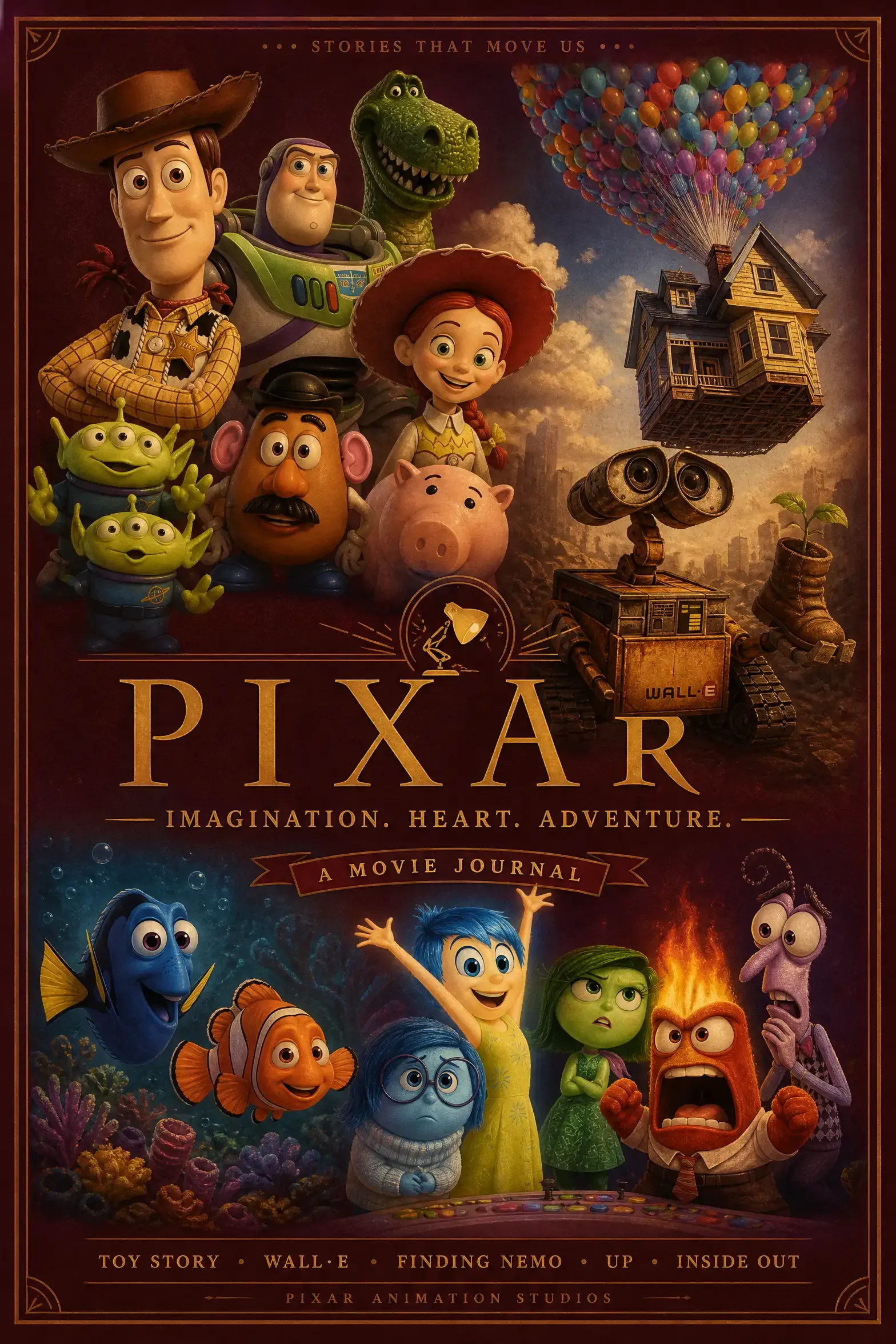
Pixar Animation Studios turns 30 this year. Three decades. Twenty-nine feature films (thirty if you count the two Toy Story sequels that arrived within the anniversary window). And in June 2026, the studio’s most profitable franchise returns yet again with Toy Story 5, which opened to strong box office numbers and a wave of nostalgic headlines.
The timing felt too perfect not to revisit an older experiment. Last summer, NPR’s Pop Culture Happy Hour invited listeners to vote on the greatest Pixar films of all time. Thousands responded. The results offered something rare: a genuinely crowd-sourced ranking shaped not by critics’ scores or Rotten Tomatoes aggregates, but by the people who actually grew up with these movies, brought their kids to them, and rewatched them long after the credits rolled.
What emerged wasn’t a simple “best to worst” list. It was a map of collective emotional memory. Some films everyone agrees on. Others divide audiences sharply. A few have shifted dramatically in public opinion since their original release.
Here’s every Pixar feature film, ranked by audience consensus — combining listener voting data, audience polling, and the broader cultural conversation that has followed each title since its premiere.
The Universal Consensus — Films Almost Everyone Agrees On
1. Toy Story (1995)
The original. The blueprint. Nearly every audience poll puts Toy Story at or near the very top, and for good reason. It isn’t just that the film launched CGI animation as a commercial medium — it’s that the story still works, 31 years later. The friendship between Woody and Buzz, the anxiety of being replaced, the quiet devastation of being left behind at a gas station: these are human feelings, rendered in plastic and painted vinyl.
Audience consensus has never really wavered on Toy Story. It’s the rare film that improves with age precisely because its technology no longer matters. What remains is the writing, the voice performances, and Randy Newman’s score. NPR’s listener vote placed it in the top three without controversy. It’s the foundation everything else was built on.
2. The Incredibles (2004)
Brad Bird’s superhero family film arrived at a cultural moment that couldn’t have been more perfect: post-9/11 America, exhausted by irony, ready to believe in heroes again. But The Incredibles wasn’t just a feel-good superhero movie. It was a meditation on midlife crisis, the erosion of individual purpose, and what happens when extraordinary people are asked to be ordinary.
Audience polling consistently places The Incredibles in the top tier. It’s one of the few Pixar films that adults actively claim as “theirs” — not a kids’ movie they tolerated, but a film they genuinely love on its own terms. The sequel, while commercially successful, never matched this one’s emotional precision.
3. Ratatouille (2007)
“Not everyone can become a great artist, but a great artist can come from anywhere.”
Anton Ego’s monologue at the end of Ratatouille remains one of the most quoted passages in modern animation. And for good reason: it articulates something that Pixar itself embodied — the idea that creativity has no pedigree, no prerequisite, no gatekeeper. A rat. Cooking. In a French kitchen. On paper, it shouldn’t work. And yet it did, magnificently.
Ratatouille consistently ranks in the top five of audience consensus polls. It’s a film about passion, taste (literal and metaphorical), and the courage to create despite every voice telling you that you don’t belong. In an era increasingly skeptical about who gets to tell stories and why, Ratatouille’s message has only sharpened.
4. WALL·E (2008)
Andrew Stanton’s post-apocalyptic love story is the most formally ambitious film Pixar ever made. The first forty minutes contain almost no dialogue. The second half, set aboard a consumerist space ark, swings into satire so sharp that it’s easy to forget how tender the central romance is.
Audience opinion on WALL·E is interesting: critics gave it near-universal praise, but audiences split more sharply on the second half. Still, the film consistently lands in the top five of listener rankings. The image of WALL·E holding hands with EVE as they float through space remains one of Pixar’s most iconic. It’s a film that trusted its audience to sit with silence and still feel everything.
5. Up (2009)
The first ten minutes of Up contain arguably the most efficient storytelling in Pixar history. A marriage. A lifetime. A loss. All without a single word of dialogue. Then the rest of the film, which some critics argue becomes a fairly conventional adventure, unfolds around a grieving widower and a relentlessly enthusiastic Boy Scout.
Audience consensus firmly places Up in the top tier. The “Married Life” sequence alone has cemented the film’s cultural immortality. It’s a film about the weight of memory and the unexpected ways that people — and dogs — pull us back into the world after we’ve decided to step out of it.
The Beloved Tier — Films With Strong, Widespread Support
6. Toy Story 3 (2010)
If Toy Story was the blueprint, Toy Story 3 was the emotional crescendo. The incinerator scene. The conveyor belt. The final handoff from Andy to Bonnie. This is the film that proved Pixar could make a sequel that didn’t just extend a franchise but completed it. (That was before Toy Story 4, of course.)
Audience polling shows something interesting: Toy Story 3 consistently ranks high — often in the top five — but it’s usually placed just behind the original Toy Story. The consensus seems to be that it’s a masterpiece, but one that benefits enormously from thirty minutes of prior emotional investment. Still, its ending remains one of the most devastating in any animated film.
7. Inside Out (2015)
Pete Docter’s exploration of the emotional interior of an eleven-year-old girl arrived with a premise that sounded like a psychology textbook and delivered something that made adults cry in movie theaters. The moment when Bing Bong fades from existence — “Take her to the moon for me, okay?” — became a cultural touchstone for grief, memory, and the things we lose simply by growing up.
Inside Out consistently ranks in the upper third of audience consensus rankings. Its sequel, released in 2024, was a massive commercial success, but the original still holds a special place. It’s a film that managed to make the abstract concrete and the internal visible — a trick that shouldn’t work but does, perfectly.
8. Finding Nemo (2003)
Andrew Stanton’s underwater odyssey was Pixar’s first real global phenomenon. “Just keep swimming” entered the cultural lexicon. The film was a box office monster. And yet, in retrospective audience rankings, Finding Nemo tends to land in the “beloved but not quite top tier” zone.
Why? Partly because the ocean adventure feels, in retrospect, more straightforward than Pixar’s later emotional complexity. But also because Nemo benefits enormously from rewatchability — it’s a comfort food film, warm and familiar, that audiences return to not for narrative revelation but for the feeling it gives them. That’s not a knock. It’s a different kind of greatness.
9. Coco (2017)
Lee Unkrich and Adrian Molina’s Day of the Dead masterpiece was a cultural event. It won the Academy Award for Best Animated Feature. It grossed over $800 million worldwide. And in audience polls, it consistently ranks as one of Pixar’s most emotionally powerful films — often cited as the film that made viewers cry hardest.
The consensus is clear: Coco is a film about family, memory, and the way we keep the dead alive through the stories we tell about them. Its musical numbers are genuinely excellent. Its animation of the Land of the Dead is staggering. And its ending — “Remember Me,” recontextualized from a vanity song to a lullaby — is Pixar at its most emotionally devastating.
10. Toy Story 4 (2019)
Controversial when it was announced. Still somewhat controversial among fans who felt Toy Story 3 was the perfect ending. And yet Toy Story 4 earned its place in the audience consensus top half by doing something unexpected: it turned the franchise from a story about growing up into a story about letting go.
Woody’s choice at the end — to stay with Bo Peep rather than return to Bonnie’s room — divided audiences. Some found it a betrayal of everything Woody stood for. Others found it a deeply adult choice about self-definition. The consensus, however, seems to be settling on appreciation: it’s a brave, strange, beautiful film that earned its existence.
The Solid Middle — Films That Earned Their Place
11. Monsters, Inc. (2001)
Pixar’s second film after Toy Story 2 proved the studio could build an entirely new world from scratch. Monstropolis was rich, funny, and surprisingly heartfelt. The relationship between Sulley and Boo remains one of Pixar’s great emotional cores.
Audience consensus places Monsters, Inc. in the solid middle-to-upper tier. It’s beloved, but it doesn’t reach for the emotional heights that define Pixar’s very best. That said, the reveal that a child’s laugh is more powerful than a scream remains one of the studio’s most elegant thematic inversions.
12. The Incredibles 2 (2018)
Arriving fourteen years after the original — a gap so long that audiences had almost forgotten how much they loved the first film — The Incredibles 2 faced an impossible standard. It responded by being a solid, entertaining, action-packed sequel that didn’t quite reach the thematic depth of its predecessor.
Audience polling shows a clear split: most people enjoyed it, but very few would place it alongside the original. The consensus is that it’s a very good superhero movie that happens to be made by Pixar, rather than a great Pixar movie that happens to be about superheroes.
13. Inside Out 2 (2024)
The highest-grossing animated film of all time (a title it claimed and held for a while) is not necessarily the highest-loved. Inside Out 2 was a commercial juggernaut that introduced Anxiety as a new emotion and found a massive audience among teenagers who felt seen by her frantic energy.
The audience consensus is warm but measured. It’s a worthy sequel that extends the original’s emotional vocabulary, but it doesn’t surprise us the way the first film did. We know the rules of this world now. The sequel plays within them confidently but doesn’t transcend them.
14. A Bug’s Life (1998)
Pixar’s second feature film arrived with enormous expectations and delivered a solid, if somewhat conventional, adventure. John Lasseter’s ant colony fable was technically impressive and narratively familiar — the David-and-Goliath story dressed in insect clothing.
Audience consensus has aged A Bug’s Life kindly but not enthusiastically. It’s remembered fondly as a product of its era — a time when the novelty of CGI animation was still fresh enough to carry a film. It’s a good movie. It’s not a great one. And that’s okay.
15. Monsters University (2013)
The prequel nobody asked for turned out to be better than expected. Dan Scanlon’s film about how Sulley and Mike met was charming, visually inventive, and anchored by strong voice work. The ending — where Mike accepts that he won’t be the scarer he dreamed of being — carries genuine emotional weight.
Audience consensus places Monsters University squarely in the middle. It’s a film that exceeds low expectations without quite reaching the heights of the original. The “scare games” are fun. The character work is solid. It’s Pixar’s most comfortable sequel.
16. Cars (2006)
Here’s where the consensus starts to fracture. Cars was a box office hit and a merchandising empire. Lightning McQueen became a cultural phenomenon for young children. But among adult audiences and retrospective rankings, Cars consistently lands in the lower half.
The criticism is fair: the story is thin, the world-building, while visually impressive, doesn’t generate much narrative momentum, and the “slow down and appreciate life” message, while well-intentioned, doesn’t land with the precision that defines Pixar’s best work. Still, Paul Newman’s Doc Hudson and the Route 66 Americana give the film a genuine heart.
The Divisive Tier — Films That Split the Audience
17. Onward (2020)
Dan Scanlon’s fantasy adventure about two elf brothers arrived just before the pandemic shutdown, which may be the primary reason it underperformed. But even on its own merits, Onward is one of Pixar’s most divisive films.
The emotional core — Tom Holland’s Ian processing grief over his deceased father while Paul Rudd’s Barley tries to fill the gap — is genuinely moving. The third-act spell that brings Ian’s father back, only for Ian to sacrifice his chance at a real goodbye, is one of Pixar’s bravest narrative choices.
But audience polling shows a sharp split. Some viewers found the world-building delightful and the ending devastating. Others found the suburban fantasy setting underbaked and the emotional resolution too abrupt. The consensus seems to be: Onward is a good film that deserved a better release window.
18. Cars 2 (2011)
The lowest point in the Cars trilogy and, by many audience measures, one of Pixar’s weakest films overall. John Lasseter’s spy-themed sequel pivoted away from Lightning McQueen’s personal journey into a globetrotting adventure centered on Mater — a character whose comedic shtick doesn’t scale well to a full narrative.
Audience consensus is relatively uniform here: Cars 2 is Pixar’s most flawed theatrical release. It’s not without visual charm or genuine moments, but the tonal inconsistency and narrative confusion make it a difficult rewatch. Even fans of the franchise tend to skip this one.
19. Cars 3 (2017)
After the misfire of Cars 2, Pixar tried to bring the trilogy back to emotional earth. Cars 3 is a meditation on aging, obsolescence, and what it means to pass the torch — themes that resonate strongly in a studio that has spent thirty years watching its own technology become obsolete.
Audience consensus places Cars 3 slightly above Cars 2 but below the original. It’s a better film, emotionally honest and visually beautiful, but it can’t entirely overcome the franchise’s narrative limitations. Owen Wilson’s performance as an aging Lightning McQueen carries genuine pathos.
20. The Good Dinosaur (2015)
Pixar’s first critical and commercial disappointment. The film had a troubled production, with director changes and a rushed post-production schedule, and the results show. The premise — what if the asteroid that killed the dinosaurs missed? — had enormous potential. The execution, unfortunately, didn’t match.
Audience consensus places The Good Dinosaur near the bottom of the Pixar filmography. The animation of the natural landscapes is breathtaking. The relationship between Arlo and Spot has genuine sweetness. But the narrative is thin, the villains underdeveloped, and the film feels more like a first draft than a finished work.
The Soul (2020) — A Special Case
Pixar’s Soul doesn’t fit neatly into any tier, which is exactly where it belongs.
When Soul was released directly to Disney+ during the pandemic, it deprived itself of the communal theatrical experience that most Pixar films benefit from. Pete Docter’s meditation on purpose, passion, and what makes life worth living is arguably Pixar’s most philosophical film — and one of its most visually daring, with its rendering of the Great Before standing as one of the studio’s most inventive environments.
Audience consensus on Soul is the most complex in the entire Pixar filmography. Some viewers found it profound, life-changing, and the best Pixar film since WALL·E. Others found it too abstract, too preachy, or too focused on existential questions that feel distant from the emotional simplicity that makes Pixar’s best work so universal.
The split seems generational and experiential. Adults who have grappled with questions of purpose and meaning tend to connect with Soul deeply. Younger audiences, or those seeking the emotional warmth of a Coco or Up, sometimes find it cold or distant.
Placed in the middle-to-upper tier by most audience polls, Soul may well be the Pixar film whose reputation grows most with time. It’s a film that rewards patience and reflection — qualities that are often in short supply during a theatrical opening weekend but accumulate over years of revisiting.
What the Ranking Tells Us About Pixar at 30
Looking at the full picture of audience consensus, a few patterns emerge:
Pixar’s best work happens when technology serves emotion, not the other way around. The films that rank highest (Toy Story, The Incredibles, Ratatouille, WALL·E, Up) are the ones where the technical innovations are almost invisible because the story is doing so much heavy lifting. The films that rank lower (Cars 2, The Good Dinosaur) are often the ones where visual spectacle substitutes for narrative depth.
Pixar is at its strongest when it trusts its audience to handle complexity. WALL·E’s dialogue-free opening. Up’s wordless marriage montage. Soul’s abstract exploration of the afterlife. These are choices that could have backfired. Instead, they’re the very moments that audiences remember most vividly.
The Toy Story franchise is Pixar’s crown jewel — and its heaviest burden. Three Toy Story films rank in the top tier. A fourth sits comfortably in the upper middle. The fifth, arriving this summer, will be judged against an impossibly high standard. If audience consensus is any guide, Toy Story 5 will either join its siblings in the top tier or fall into the divisive category. There’s no middle ground for a franchise this beloved.
Thirty years in, Pixar’s legacy isn’t just the technology it pioneered or the box office records it set. It’s the emotional vocabulary it built — a shared language of joy, grief, wonder, and loss that audiences carry with them long after the screen goes dark. And whatever Toy Story 5 delivers, whatever the next thirty years bring, that vocabulary is Pixar’s most enduring creation.
The movies fade. The feelings don’t.
Share This Article
Comments