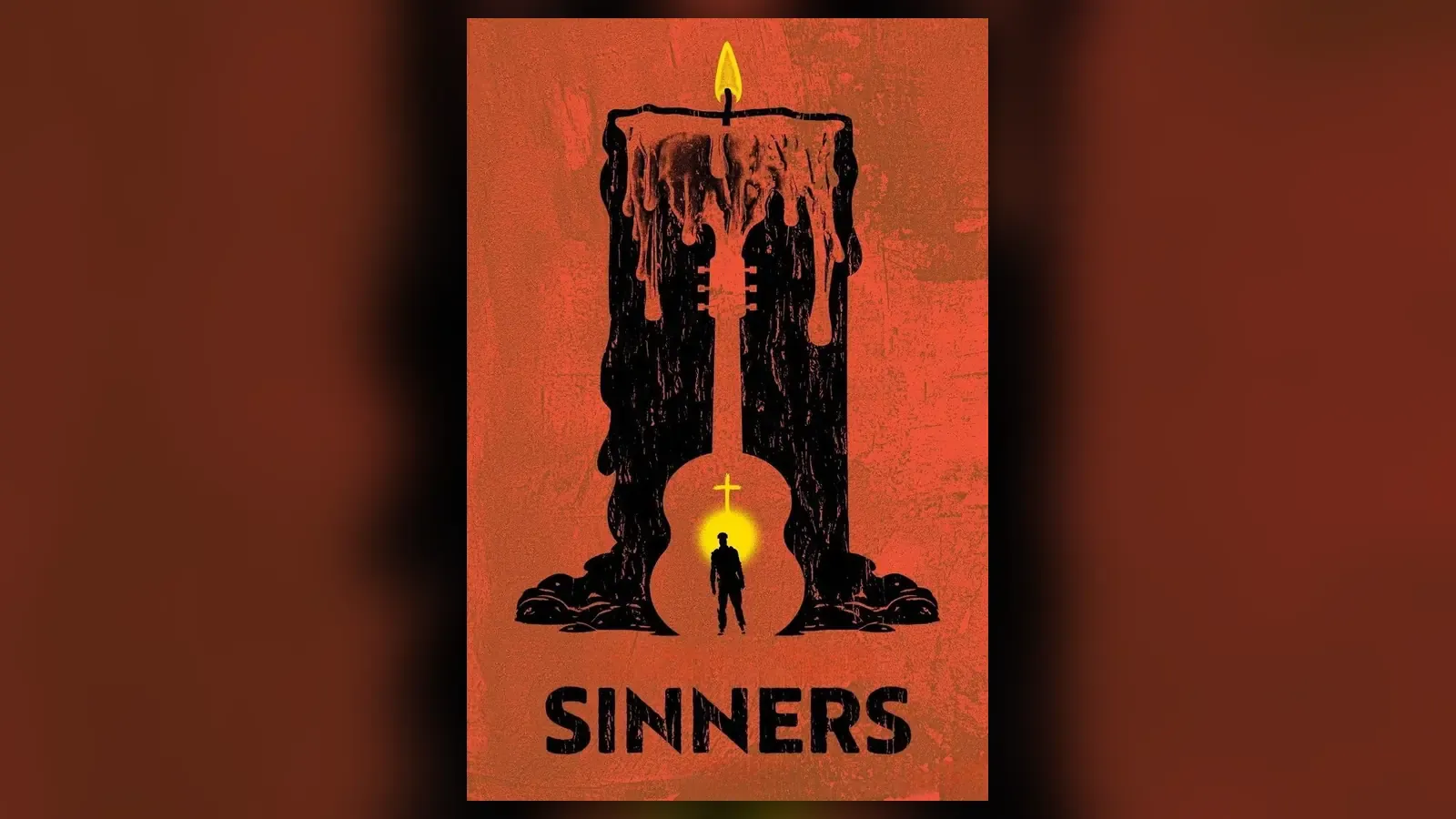
Sinners and the Evolution of Genre Cinema: How Ryan Coogler Redefines Vampire Mythology for Modern Audiences
An in-depth analysis of how Ryan Coogler's vampire epic transcends genre conventions to create a powerful meditation on identity, belonging, and historical trauma.
Editor’s note (November 10, 2026): We revised this analysis to replace general claims with specifics from the film and its production, cited to the sources linked below. We also updated the critical and awards figures. The film holds 97% on Rotten Tomatoes from 439 reviews and won four of its record 16 Oscar nominations.
Our angle: This is one of several Bucket Movies pieces on Sinners. It looks at the film as genre cinema: what Coogler keeps from vampire lore, what he changes, and why the changes matter. The other pieces are listed under Related coverage at the end.
Sinners is set in 1932 in the Mississippi Delta. Michael B. Jordan plays identical twins Elijah “Smoke” and Elias “Stack” Moore, World War I veterans who come home to Clarksdale after seven years working for the Chicago mob (plot and cast). With stolen money they buy a sawmill from a local landowner and open a juke joint for the Black community. On opening night, music from their young cousin Sammie (Miles Caton, in his film debut) draws a vampire to the door.
The film grossed over $371 million worldwide on a budget of about $90 million. It scores 97% on Rotten Tomatoes and 84 on Metacritic. At the 98th Academy Awards it earned a record 16 nominations and won four: Best Actor (Jordan), Original Screenplay, Cinematography and Original Score (accolades).
Deconstructing the vampire myth
Screen vampires mostly descend from European Gothic: Stoker’s aristocratic Count, then decades of romantic or decadent variations (Dracula). Sinners keeps the familiar rules. Its vampires need an invitation to enter, burn in sunlight, and are repelled by garlic. Annie (Wunmi Mosaku), a Hoodoo practitioner, works out what they are and teaches the survivors how to fight back.
What changes is who the vampire is and what he wants. Remmick (Jack O’Connell) is an Irish immigrant. When the story opens, he is fleeing Choctaw vampire hunters. He shelters with a married Klan couple and turns them into thralls. His vampires share a hive mind but keep their personalities. What Remmick wants is not just blood but Sammie’s music, which can summon spirits and might reunite him with a community he lost.
That reframes the genre’s usual central metaphor. Classic vampire stories are often about forbidden desire. Here the monster is an outsider offering belonging and freedom from the Jim Crow economy, at the price of absorption. In one scene he offers the juke joint money and music in exchange for being let in. In 1932 Mississippi, that offer is far from abstract.
History as the engine
The historical setting is not set dressing. The twins’ business plan collapses partly because their patrons are paid in company scrip, which makes it almost impossible for the joint to turn a profit. The local landowner who sold them the sawmill turns out to be the Klan’s local leader. Several characters weigh Remmick’s offer partly because the human alternatives are so bleak.
That ties Sinners to a lineage of American horror that uses the genre to talk about race. Romero’s Night of the Living Dead (1968) and Jordan Peele’s Get Out (2017) are the obvious reference points (Get Out). The difference is that Coogler’s film runs on history rather than allegory: the scrip, the Klan and the threat of the Delta’s economy are real, and the vampire is the fantastical element placed on top of them.
According to producer Sev Ohanian, the film is dedicated to Coogler’s uncle James, the eldest male in his family and a native of the region. That helps explain why its portrait of the Delta is affectionate as well as frightening.
Music as the supernatural force
The film’s biggest departure from vampire convention is its idea of the supernatural. Sammie’s pastor father warns him that the blues is sinful. On opening night, his playing calls up spirits of musicians from past and future and links the juke joint to Black music before and after it. Here music, not the vampire, is the film’s most powerful supernatural force. Remmick is drawn to it, and he wants to own it.
Ludwig Göransson, Coogler’s longtime collaborator, wrote the score and was an executive producer. The score won the Oscar. Within the story, Remmick’s vampires answer Sammie’s blues with music of their own. Music is the ground on which the two sides meet and compete.
How it looks
Cinematographer Autumn Durald Arkapaw shot the film on 65 mm film, combining IMAX 15-perf and Ultra Panavision 70 cameras. Scenes alternate between the two aspect ratios (production). Arkapaw became the first woman to shoot a film on large-format IMAX film, and later the first woman to win the Oscar for Best Cinematography. The release included 10 IMAX 70 mm prints and 5 standard 70 mm prints.
The formats suit the material. The wide Ultra Panavision frame takes in the cotton fields, the sawmill and the long Delta horizon, while the taller IMAX frame gives the juke joint and the music scene the scale of a set piece. Production designer Hannah Beachler built a church whose crossed beams form the “Wakanda Forever” gesture, a tribute to Chadwick Boseman, who starred in Coogler’s Black Panther.
Genre fusion
Sinners is a period gangster film for its first hour and a siege horror film for its second, with a musical sequence at the hinge. The ensemble supports this. Delroy Lindo’s Delta Slim, Li Jun Li and Yao as the Chinese shopkeepers Grace and Bo Chow, and Hailee Steinfeld as Mary, Stack’s ex-girlfriend, each have their own reasons to be at the joint and their own stake in surviving the night.
The coda extends this approach. In 1992, an aged Sammie, now a successful blues musician in Chicago, is visited by an ageless Stack and Mary. Stack offers to turn him so he can avoid death; Sammie declines. The ending reframes what the vampires were offering, and adds an unexpected note of grace to a horror film.
Why it matters for genre cinema
Three things stand out:
- Specificity scales. A film rooted in one place and year, with a mostly Black cast, grossed over $371 million worldwide. It also had the best third weekend ever for a horror film, $33 million after ceding premium screens to Thunderbolts*.
- Formats can serve stories. The IMAX and Ultra Panavision combination is not a gimmick; it is tied to how the film moves between landscape and community.
- Genre films can win the major awards. Wins for screenplay, cinematography, score and lead actor put a vampire film at the center of the Oscar conversation.
How this was compiled: plot, production, box office and awards facts come from the linked reference and review-aggregator pages. The interpretation is our editorial reading of the film. See how we work.
Related coverage
More on Sinners:
- Sinners Makes Oscar History With Record 16 Nominations at the 2026 Academy Awards — the record 16 Oscar nominations and how the race played out
- Why Sinners Marks a New Era for Black Filmmaking in Hollywood — industry context: what the film’s success means for Black filmmakers in Hollywood
worth a spot on the list?
Reader notes
Join the discussion
No account needed — leave your take on this film below.
Add these to your list
Why Sinners Marks a New Era for Black Filmmaking in Hollywood
Ryan Coogler's record-breaking Oscar success with Sinners signals a fundamental shift in Hollywood's embrace of Black storytelling.
Saturday Early Estimates for the November 20, 2026 Weekend
BoxOffice's Saturday list puts The Hunger Games: Sunrise on the Reaping at $120 million for November 20-22. The Numbers' Friday chart shows a $56 million opening day from 4,018 theaters and a wider field underneath.
November 13 Weekend Box Office Forecasts Across Six Wide Releases
Deadline's Friday update puts Ebenezer on a $20 million-plus pace after $7.1 million, with Cat in the Hat, Godzilla Minus Zero, and three other wide titles close behind.
Robert Pattinson's Primetime and the Fall Festival Awards Picture
Robert Pattinson's talk-show drama Primetime has emerged as an acting story of the fall festival season. What critics said and how it fits the awards race.
Loading comments...