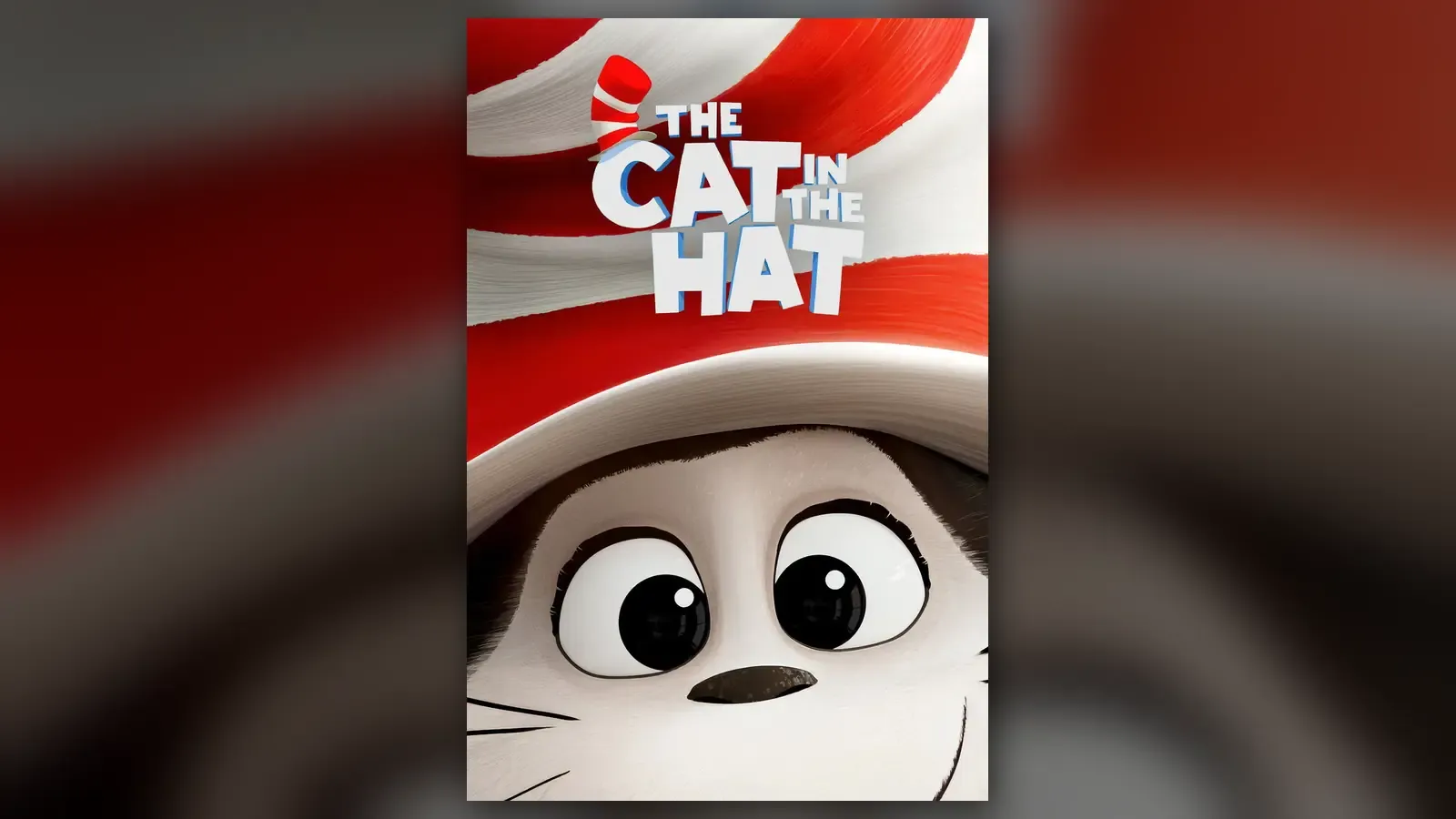
The Cat in the Hat (2026): Who It's For and What to Expect
Everything you need to know about The Cat in the Hat (2026), from Bill Hader's performance to runtime, age guidance, and box office stakes.
Warner Bros. Pictures Animation releases The Cat in the Hat into roughly 4,000 North American theaters on November 6, 2026. Arriving twenty-three years after the widely derided live-action take, this computer-animated interpretation seeks to rehabilitate Theodor Geisel’s most famous literary creation for modern family audiences. With Bill Hader voicing the feline protagonist and a directing duo consisting of Alessandro Carloni and Erica Rivinoja, the project attempts to balance classic storybook silliness with the scale expected of a studio theatrical release. Viewers deciding whether to purchase tickets this opening weekend will encounter a fast-moving, colorful adventure designed primarily for younger children, though one weighed down by extra corporate mythology that purists may find unnecessary.
The arrival of The Cat in the Hat also serves as the launchpad for a coordinated cinematic universe based on Dr. Seuss properties. Whether the film can overcome cautious pre-release buzz, polarized critical reviews, and a steep production budget depends on how well it connects with families looking for holiday entertainment in early November.
What to Know Before You Go
Before heading to the box office, parents and moviegoers should keep several practical logistical details in mind. The official film site confirms the North American theatrical and IMAX date of November 6, 2026, with international rollouts beginning November 4. The Cat in the Hat carries an official MPAA rating of PG for action, some peril, mild language, and rude humor. Unlike the 2003 film, which drew heavy criticism for crude adult innuendo, this animated edition keeps its humor family-appropriate, relying heavily on cartoon slapstick, physical pratfalls, and bathroom comedy suited for grade-schoolers.
The total theatrical runtime is 107 minutes, or one hour and forty-seven minutes. For a story that originated as a sixty-one-page primer written with a restricted vocabulary of 236 unique words, this length demands substantial additions to the core plot. Families bringing toddlers or preschool children should consider whether a running time approaching two hours might test shorter attention spans, especially during dialogue-heavy sequences in the second act.
Production services were handled by DNEG Animation, working under the creative leadership of directors Carloni, known for his work on Kung Fu Panda 3, and Rivinoja, an experienced comedy writer from The Addams Family and Cloudy with a Chance of Meatballs 2. The visual style avoids photorealism, choosing instead an elastic, bright aesthetic with bold pastel palettes and exaggerated character geometries that evoke the illustrations in the 1957 book.
Expanding the 61-Page Book into a Feature Narrative
Adapting Dr. Seuss’s original picture book poses an immediate structural challenge for any feature film. The 1957 text is tightly bounded: two children sit alone in a parlor on a cold, rainy day while their mother is away, and a chaotic visitor in a striped hat wrecks the house before putting everything back in order minutes before the mother returns. Because that premise cannot easily sustain a full-length feature without modification, the screenwriters chose to significantly widen the world.
In this 2026 adaptation, the human children are given names, distinct personal anxieties, and a new setting. Gabby, voiced by Xochitl Gomez, is an anxious older sister struggling with her family’s relocation to a quiet suburban town. Her younger brother Sebastian, voiced by Tiago Martinez, is an energetic boy eager to adapt but overwhelmed by his sister’s unhappiness. Their mother Carmen, voiced by America Ferrera, is a single parent balancing long work hours with the stress of settling into an unfamiliar neighborhood.
To justify the Cat’s arrival, the screenplay introduces an expansive institutional lore known as the Institute for the Institution of Imagination and Inspiration, LLC (I.I.I.I.). In this version, the Cat is not an unprompted mythological visitor who wanders out of the storm. He functions as a field operative for an eccentric bureaucratic agency tasked with monitoring childhood joy levels across the globe. Under pressure from his stern supervisor, Mr. Hoogeboom, voiced by Giancarlo Esposito, the Cat is dispatched on what is designated as a career-saving assignment: help Gabby and Sebastian find optimism in their new house or risk losing his magical hat.
This corporate apparatus extends to the Cat’s assistants. The film expands Thing 1 and Thing 2 into a larger community of numbered, blue-haired Things who look distinct from one another. In Cartoon Brew’s directors interview, Alessandro Carloni described their comedy as rhythmic communication rather than pure chaos, with the creatures speaking through squeaks, taps, and visual charades that can turn a kitchen into an obstacle course.
Vocal Performances and Character Energy
The strength of the film rests on its comedic voice cast, led by Bill Hader. In Cartoon Brew’s directors interview, Rivinoja and Carloni discussed building stakes and adult appeal around a book associated with early readers. On screen, Hader delivers the Cat with manic energy, shifting between elastic vocal acrobatics and bewildered soft-spoken observations. His performance avoids imitating past iterations, steering clear of both Mike Myers’ abrasive caricature and Allan Sherman’s musical delivery in the 1971 television special.
Matt Berry provides one of the film’s most reliable comedic elements as Waffles the pet fish. Serving as the anxious domestic guardian who warns the children against listening to the Cat, Berry uses his distinctive booming, theatrical voice to turn standard nagging dialogue into deadpan comedy. His exasperated reactions to the escalating household destruction provide an effective counterweight to Hader’s breathless momentum.
The supporting voice roster features familiar comedic talent throughout the institutional sequences. Quinta Brunson, Bowen Yang, and Paula Pell voice office workers inside the I.I.I.I. headquarters, exchanging workplace banter that will register primarily with parents in the audience. Tituss Burgess makes a brief appearance as an eccentric talking narwhal encountered during an imaginative suburban flood sequence. While these celebrity voices bring charm to individual scenes, their presence highlights how crowded the film’s narrative becomes whenever it steps away from the central house.
Critical Reception: Why the Reviews Are Split
Following its premiere at Warner Bros. Studios Burbank in late October, The Cat in the Hat has drawn mixed reactions from film critics. Early aggregated ratings on Rotten Tomatoes sit around 45% (11 of 24 reviews positive as of early November), with Metacritic reporting a Metascore of 47 out of 100 based on 11 reviews. This places the reboot in divided territory, satisfying reviewers focused on animation craftsmanship while frustrating critics who value storytelling economy.
Reviewers who like the film emphasize animation craft and Hader’s delivery. Coverage summarizing the first wave of notices, including a November 4 roundup, notes that Deadline called the movie a delightful animated debut with a Cat who has a hip edge, while other positive notices pointed to surprising heart beneath the chaos. IGN’s Eric Goldman praised the contrast between a muted household world and the Cat’s brighter, off-kilter realm.
Negative notices land hardest on identity and pacing. The Hollywood Reporter, as quoted in that same roundup, said the film captures Seussian silliness without the charm and reads more like a sequel than a straight adaptation because the Cat works as a beleaguered employee of the imagination institute. TheWrap argued the production is competent mainly at “regurgitating a brand.” Across skeptical reviews, frantic juvenile gags and institutional side plots leave less room for the quiet domestic mischief that made the 1957 book stick. Even so, the reboot largely sheds the crude adult innuendo that sank the 2003 live-action film.
Box Office Stakes and the Future Seuss Slate
The financial trajectory of The Cat in the Hat carries major implications for Warner Bros. Pictures Animation. Studio president Bill Damaschke has positioned the movie as the flagship release for a renewed theatrical animation strategy. Produced on an estimated budget of $70 million to $90 million, the film enters a competitive marketplace where family films must deliver sustained box office attendance to turn a profit.
Domestic tracking figures reported via ComingSoon (citing Variety) put the opening weekend in the $20 million to $25 million range across roughly 4,000 screens. An opening in that range would represent a modest debut, well below the $38.3 million opening weekend achieved by the 2003 film, even before adjusting for inflation. It also tracks behind other major animated titles from earlier in the season, as analyzed in our review of Animation’s Billion-Dollar Summer: How Cartoons Became Hollywood’s Only Sure Bet in 2026. The film also faces direct genre competition from alternative theatrical offerings, mirroring the high-stakes financial landscape examined in our coverage of Wildwood Box Office: $12.2M Launch Against $100M Budget.
Studio executives are counting on strong theatrical holds throughout November to build toward profitability, especially with the Thanksgiving holiday corridor approaching and minimal direct family animation entering theaters over the subsequent three weeks.
Beyond its immediate box office performance, the film serves as a proof of concept for several upcoming Dr. Seuss screen adaptations. Warner Bros. has also lined up an animated adaptation of Oh, The Places You’ll Go!, directed by Jon M. Chu and Jill Culton and currently dated for March 17, 2028, alongside a planned Thing One and Thing Two spin-off intended to share the same Seussiverse. If The Cat in the Hat fails to establish strong domestic momentum, those follow-up projects could face budget adjustments or shifts in release strategy.
The Structural Dilemma of Modern Picture-Book Adaptations
The artistic friction visible in The Cat in the Hat illustrates a broader structural dilemma facing contemporary animation studios when adapting literary picture books. Theodor Geisel wrote his stories to be read aloud in short, rhythmic sittings. The charm of his books lies in the deliberate containment of the narrative: the world outside the living room window remains gray and quiet, making the inside chaos feel vivid and transgressive. When a studio attempts to transform that sixty-one-page footprint into a major theatrical release budgeted in the tens of millions, the commercial pressure to justify ticket prices leads almost inevitably to world-expansion.
Modern theatrical economics demand scale, conflict, and multiple narrative threads. As theatrical release strategies evolve amid shifting viewing habits, studios often feel compelled to add institutional lore, multiple villains, and high-stakes missions, a dynamic discussed in our analysis of The Great Theatrical Window Revival: Why Studios Are Racing Back to Cinema Exclusivity in 2026. In the case of The Cat in the Hat, this manifests as an imaginary corporate agency with middle managers and performance reviews. While this machinery provides clear plot motivations and generates employment for a talented comedic ensemble, it inevitably dilutes the primal appeal of the original tale. A mischievous cat who turns a house upside down simply because it is fun has an elemental truth that a cat completing an assigned field evaluation for a supervisor named Mr. Hoogeboom can never quite match.
Despite this tension, the film solves the problem far better than the live-action attempt from two decades ago. By staying in the medium of animation, directors Carloni and Rivinoja keep the action feeling like drawings springing to life. Even when the script becomes tangled in institutional exposition, the sheer kinetic joy of the animation team pulls the movie through its slower passages.
Who Should Watch The Cat in the Hat (2026)
Determining whether to see The Cat in the Hat depends on the age of your group and what you expect from an animated feature.
Best For: Families with Elementary School Children
Young viewers between the ages of 5 and 10 represent the ideal audience for this film. The pacing is lively enough to hold their focus, the visual gags are frequent, and the percussive antics of the expanded Things provide constant amusement. Parents will appreciate that the humor remains clean and gentle, avoiding cynical double entendres while teaching straightforward lessons about sibling cooperation and adjusting to life changes.
Best For: Fans of Physical Slapstick and Expressive Animation
Animation enthusiasts who appreciate inventive character movement and expressive color styling will find plenty to enjoy in DNEG’s work. The fluid transitions between suburban reality and imaginative dreamscapes show genuine craft. Lorne Balfe’s orchestral score complements the frantic onscreen movement with playful horn sections and brisk percussion that keep the momentum moving forward.
Who Should Skip or Wait for Streaming: Literary Purists and Serious Animation Seekers
If you are looking for a faithful, understated reproduction of Theodor Geisel’s poetic cadence and quiet domestic mischief, this adaptation will likely test your patience. The non-stop barrage of corporate side plots, vehicular chases through suburban streets, and frantic pop-culture nods moves far away from the gentle rhythm of the 1957 book. Viewers without young children who are seeking deep, contemplative storytelling in the vein of top-tier independent animation can comfortably wait for the home streaming release to skip theatrical ticket costs.
For editorial questions or feedback regarding this guide, contact our desk at mybuke.com@gmail.com.
worth a spot on the list?
Reader notes
Join the discussion
No account needed — leave your take on this film below.
Add these to your list
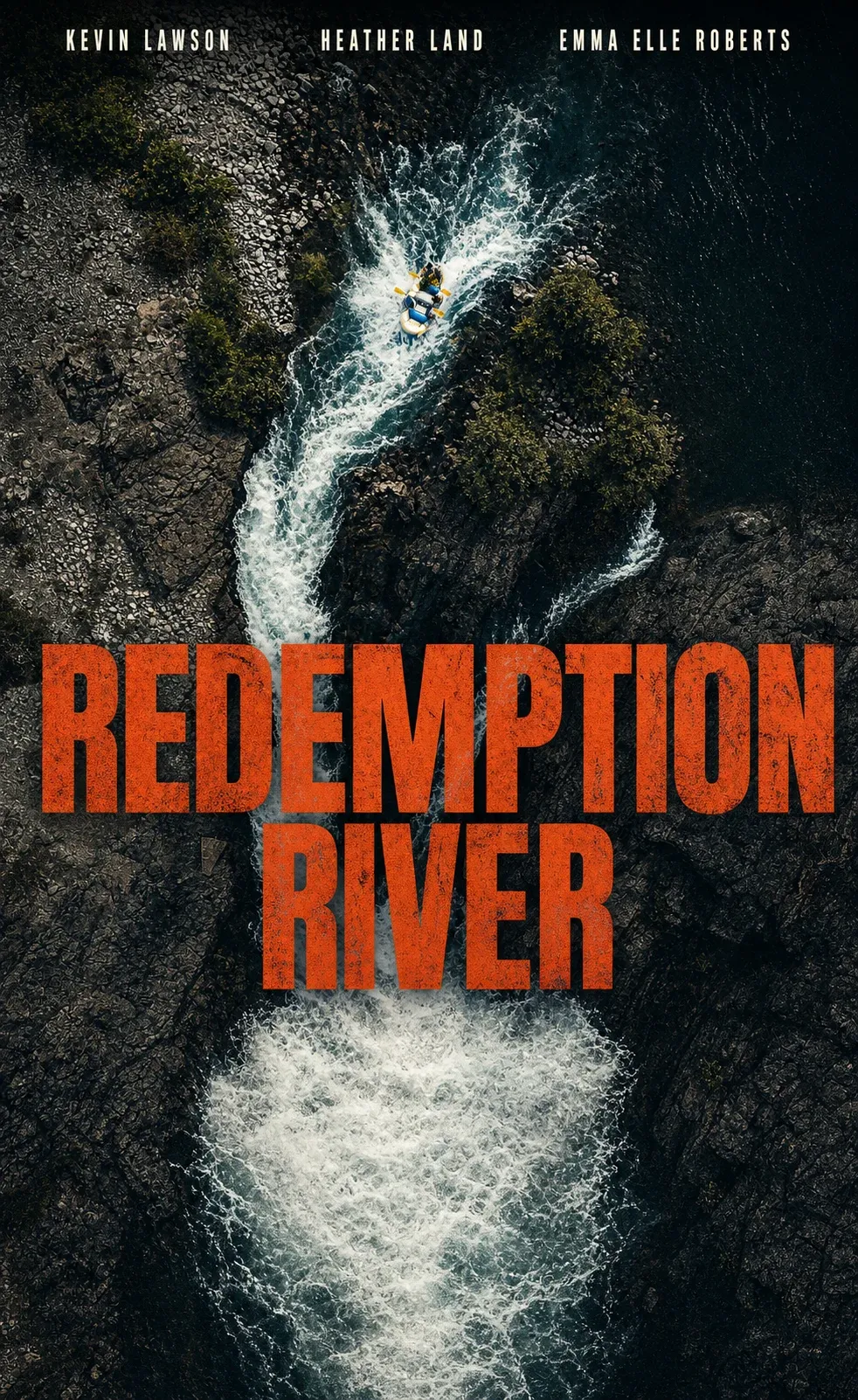
Redemption River: An 85-Minute Survival Thriller About Grief, Bad Water, and Faith
Directed by Zac Hersh and James Rich, Redemption River is an 85-minute faith-based survival thriller about a grieving couple stranded after a rafting accident on California's American River. A look at how it was shot practically, who it is actually for, and where to rent or buy it on Amazon Prime Video.
Supergirl, a French Agency Movie, and a Last Season of Colin
Mashable's Sept 11 list and Tom's Guide's Sept 10 drop put Alcock's Supergirl on Max, Call My Agent! The Movie on Netflix, and Colin From Accounts' final season on Paramount+. Here is what is actually new.
Toy Story 5, Backrooms, and Five Other September Streams
Disney+ gets Toy Story 5 on September 23 and HBO Max gets A24's Backrooms on the 25th. Here are the September 2026 streaming titles actually worth a night in.

5 Fall 2026 Movies Worth Your Time (Beyond the Blockbusters)
Dune 3 and Avengers: Doomsday will dominate the conversation, but these five fall releases — from a body horror DC film to a survival thriller set inside a whale — deserve your attention too.
Loading comments...