TIFF 2026 Lineup: Almodóvar, Rock, Hamaguchi, and a New Oscar Pathway
The Toronto International Film Festival's 51st edition brings world premieres from Chris Rock, Courteney Cox, and Sin Heder, plus a Platform competition that now guarantees a direct shot at the Oscars.
Editorial Notes
BucketMovies Editorial covers classic cinema, repertory discoveries, and context-rich film criticism with an emphasis on source-backed reporting and careful editorial review.
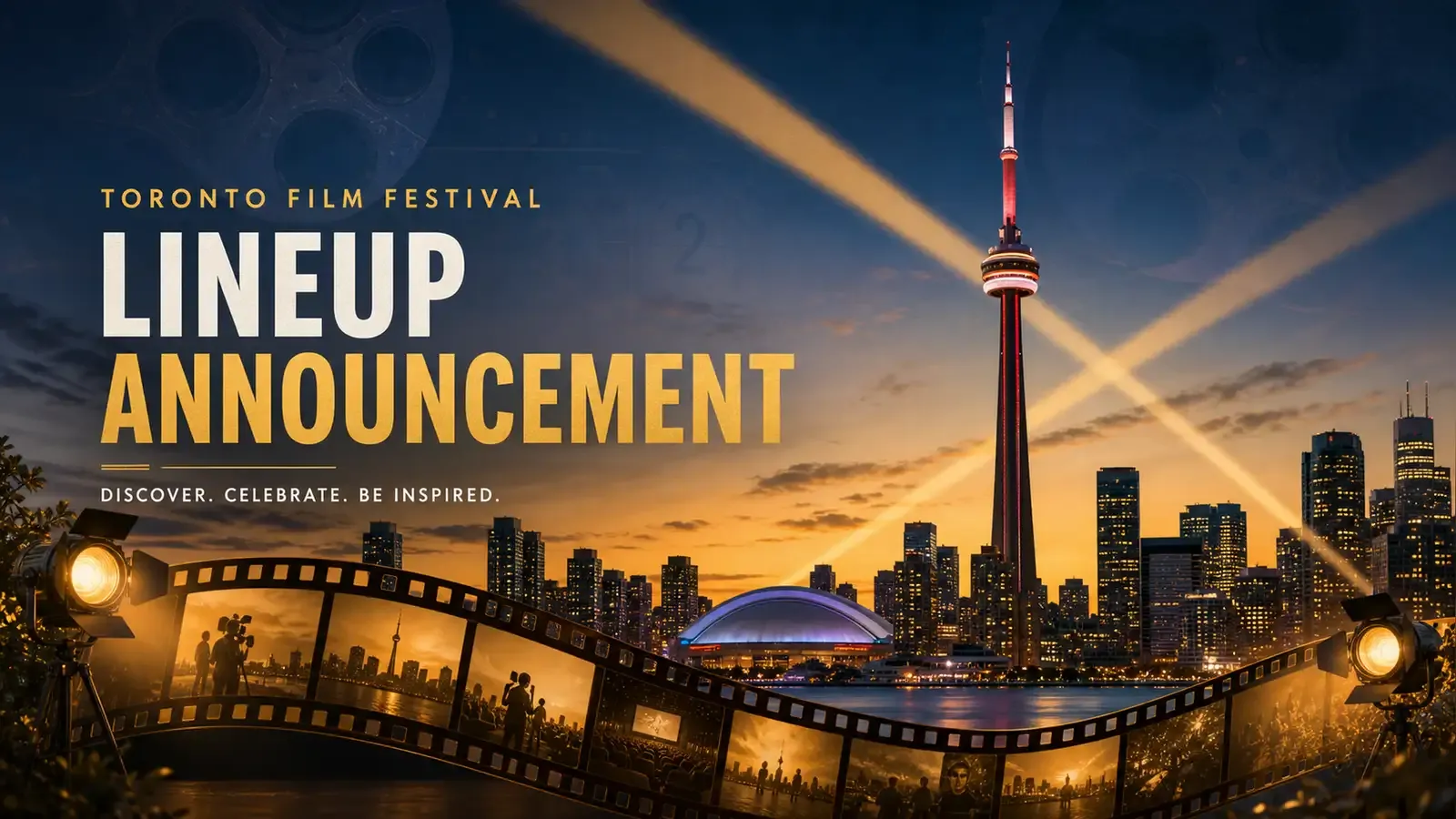
The Toronto International Film Festival dropped its first wave of programming for the 51st edition this week, and the Gala and Special Presentations slate reads like a who’s-who of contemporary cinema. Pedro Almodóvar. Lee Chang-dong. Ryûsuke Hamaguchi. Hirokazu Kore-eda. Cristian Mungiu. Andrey Zvyagintsev. Mike Leigh. All have films in the lineup, and that’s before you get to the names making their directorial debuts or pivots — Chris Rock, Courteney Cox, Rebel Wilson, Tim Blake Nelson.
TIFF runs September 10 through 20, and the festival is making two things clear with this year’s program: it still commands the kind of talent that can anchor a fall awards season, and it’s no longer content to be merely a launching pad for other people’s Oscar campaigns.
The Platform upgrade
The biggest structural change this year isn’t a film — it’s what happens to the winner of the Platform competition. Now in its 11th year, TIFF’s juried competition section has expanded from 10 to 12 films, and under new Academy rules, the Platform Award winner automatically qualifies for Best International Feature Film Oscar consideration. That’s a significant escalation. Previously, individual countries had to submit films through their own selection committees, a process that routinely left acclaimed festival favorites on the outside looking in. Now, if a film wins Platform, it’s in the conversation regardless of what its home country decides.
The mechanics are worth understanding. Under the old system, each country could submit exactly one film for International Feature consideration. That meant a film like A Sun (Taiwan, 2019) or Bacarau (Brazil, 2019) could clean up on the festival circuit and still miss the Oscar shortlist because their home country’s committee preferred a different title. The Platform shortcut removes that bottleneck. If a non-English-language film wins Platform, it bypasses the national committee entirely and lands directly on the Academy’s eligibility list. For filmmakers from countries with opaque or politically influenced selection processes, this is a genuine lifeline.
Argentinian director Pablo Trapero will serve as Platform jury president, joined by British-Ghanaian filmmaker Amma Asante and others. The competition’s alumni list already includes Barry Jenkins (Moonlight, which premiered at TIFF in 2016) and Darius Marder (Sound of Metal, 2019), so the track record for launching major awards players is there. The expanded field and Oscar shortcut should only accelerate the section’s reputation as a discovery engine.
This year’s Platform slate spans Turkey, Brazil, Sweden, the Philippines, South Africa, and beyond. Miwa Nishikawa’s Children Untold opens the section. Ferit Karahan, whose Brother’s Keeper made waves at Berlin a few years back, returns with Djinn Wedding. Amanda Kernell (Sami Blood) brings Brace Your Heart, John Trengove (The Wound) has The Smell of Apples, and Nyla Innuksuk (Slash/Back) presents In the Heart of the South. These are not household names — yet. That’s the point of Platform, and with an Oscar pathway now hardwired into the program, the stakes for these directors just got a lot more tangible.
The Gala premieres
TIFF’s Gala program is where the festival flexes its commercial muscle — big names, big expectations, the kind of films that need a splashy launch before their theatrical runs. This year’s lineup leans into star power in ways both expected and surprising.
The biggest headline might be Sin Heder’s Being Heumann, which opens the festival as the Opening Night Gala. Heder, coming off CODA’s historic Best Picture win, adapts the memoir of disability rights activist Judith Heumann. The combination of a hot director and a story with built-in emotional weight positions this as an early awards contender — and TIFF is clearly betting on it to set the tone for the entire festival.
Chris Rock directs and presumably stars in Misty Green, a project that’s been generating curiosity since it was announced. Rock hasn’t directed a feature since Top Five in 2014, and his presence in the Gala lineup signals a more dramatic register than audiences might expect. Courteney Cox makes her feature directorial debut with Evil Genius, while Rebel Wilson directs Girl Group, a UK-set project. Tim Blake Nelson — whose directorial work (Leaves of Grass, Anesthesia) has always been more interesting than its box office returns — brings The Life and Deaths of Wilson Shedd.
Heavier hitters populate the rest of the Gala slate. Florian Zeller follows The Father and The Son with Bunker, a France-Spain co-production. Anton Corbijn (Control, The American) directs A Talent for Murder, a UK-Italy production making its world premiere. Wayne Wang, the veteran behind The Joy Luck Club and Chan Is Missing, returns with Diary of a Mad Old Man. South Korea’s Hur Jin-ho (Christmas in August, A Single Rider) premieres The Assassin(s), which, given South Korea’s track record at international festivals, will be one to watch closely.
Also in the Gala program: Lauren Miller Rogen’s Babies, which, given her recent work blending comedy with genuine emotional stakes, could be a sleeper; Reed Van Dyk’s Atonement, arriving as a North American premiere; and Marc Fitoussi’s All About Corinne, a French production getting its North American bow. Vietnam gets a slot with Nguyen Phan Quang Binh’s Spirit Guardians: The Last Secret of the First Emperor, an international premiere that suggests TIFF is actively courting the Southeast Asian market. Canada, as expected, is well-represented: Adrian Buitenhuis’s Man in Motion: The Rick Hansen Story and Sean Menard’s Run Terry Run anchor the homegrown selections.
Jennifer Peedom’s Tenzing, about the sherpa Tenzing Norgay who summited Everest with Edmund Hillary, arrives with a Canadian premiere after what will presumably be an earlier festival bow. Always Lalisa, directed by Sue Kim, profiles BLACKPINK’s Lisa — a choice that says something about who TIFF wants in the building, and it’s not just the cinephile crowd. The documentary about one of the most famous K-pop idols on the planet is a savvy play for younger audiences who might not otherwise pay attention to a fall film festival.
The international directors that matter
The Special Presentations program fills in the gaps with the kind of directors who make festival programmers’ hearts beat faster. Almodóvar’s presence alone would be enough to legitimize any festival lineup, and his new project arrives with the usual Almodóvar questions: who’s in it, what decade is it set in, and how many Almodóvar regulars show up. Lee Chang-dong, the South Korean master behind Burning and Poetry, returns; his films have premiered at Cannes, Venice, and now TIFF, a trajectory that suggests whatever he’s bringing is competition-grade.
Hamaguchi and Kore-eda — arguably the two most important Japanese directors working today — both have films in the program. Hamaguchi’s follow-up to Drive My Car is one of the most anticipated films of any festival this year; the man won an Oscar for a three-hour Japanese drama about a stage production of Uncle Vanya, which says everything about the expectations now attached to his name. Kore-eda, whose Shoplifters won the Palme d’Or, continues his prolific run. Having both of them in the same festival program is the kind of one-two punch that makes TIFF essential viewing for anyone tracking the international film calendar.
Cristian Mungiu (4 Months, 3 Weeks and 2 Days) and Andrey Zvyagintsev (Leviathan, Loveless) represent the heaviest end of the European auteur spectrum. Both make films that are formally rigorous and emotionally punishing in ways that tend to dominate critics’ year-end lists. Zvyagintsev hasn’t released a feature since Loveless in 2017, which makes his TIFF return a significant moment — eight years is a long gap for a director of his caliber, and the festival placement suggests whatever he’s been working on is ready for prime time. Mungiu, for his part, has been relatively quiet since R.M.N. in 2022, and the Romanian New Wave has evolved considerably since his Palme d’Or win. Rodrigo Sorogoyen (The Beasts) adds Spanish firepower to a lineup that’s already rich in European cinema.
Jesse Eisenberg, who proved with A Real Pain that his interests as a filmmaker extend well beyond the neurotic-persona he built as an actor, returns with a new project. John Madden (Shakespeare in Love) premieres Onwards and Sideways. There’s also a new film from Danny Boyle, a name that guarantees at least one scene scored to a British rock song at maximum volume.
The festival’s identity play
TIFF has spent years navigating a tricky position. It’s not Cannes, which can afford to be insular and French and radically selective. It’s not Telluride, which prides itself on no awards, no paparazzi, no red carpet. TIFF has to be a people’s festival and an industry launchpad simultaneously — accessible to Toronto audiences who line up for rush tickets while also being the place where fall campaigns take their first concrete shape.
The 2026 lineup suggests the festival is leaning into that dual identity rather than fighting it. The Gala program — Chris Rock, Courteney Cox, Rebel Wilson — ensures mainstream attention. The Special Presentations — Almodóvar, Hamaguchi, Lee Chang-dong, Zvyagintsev — ensures critical credibility. And the Platform competition, now armed with Oscar qualification, bridges the two: discovery films that could become awards films overnight.
The timing matters too. TIFF 2026 lands in a fall season that’s already crowded. Venice runs just before, Telluride overlaps, and New York follows immediately after. Getting the right films into the right slots — and getting press and buyers to actually watch them instead of rushing to the next screening — is a logistical puzzle that every festival faces, but TIFF’s scale makes it particularly acute. With nearly 30 countries represented and what looks to be well over 100 films once the full program drops, standing out from the noise is its own kind of challenge.
Nearly 30 countries are represented across the first wave alone. That’s a statement. At a moment when the global film industry is still recalibrating after the streaming wars, the strikes, and the post-pandemic box office reset, TIFF is betting that breadth beats curation — that showing films from everywhere is more valuable than showing only the best films from a few places.
The full schedule drops closer to September. But the shape of the festival is already clear: a lineup built to launch awards campaigns, sell tickets, and remind the industry that fall belongs to Toronto.
Share This Article
Comments