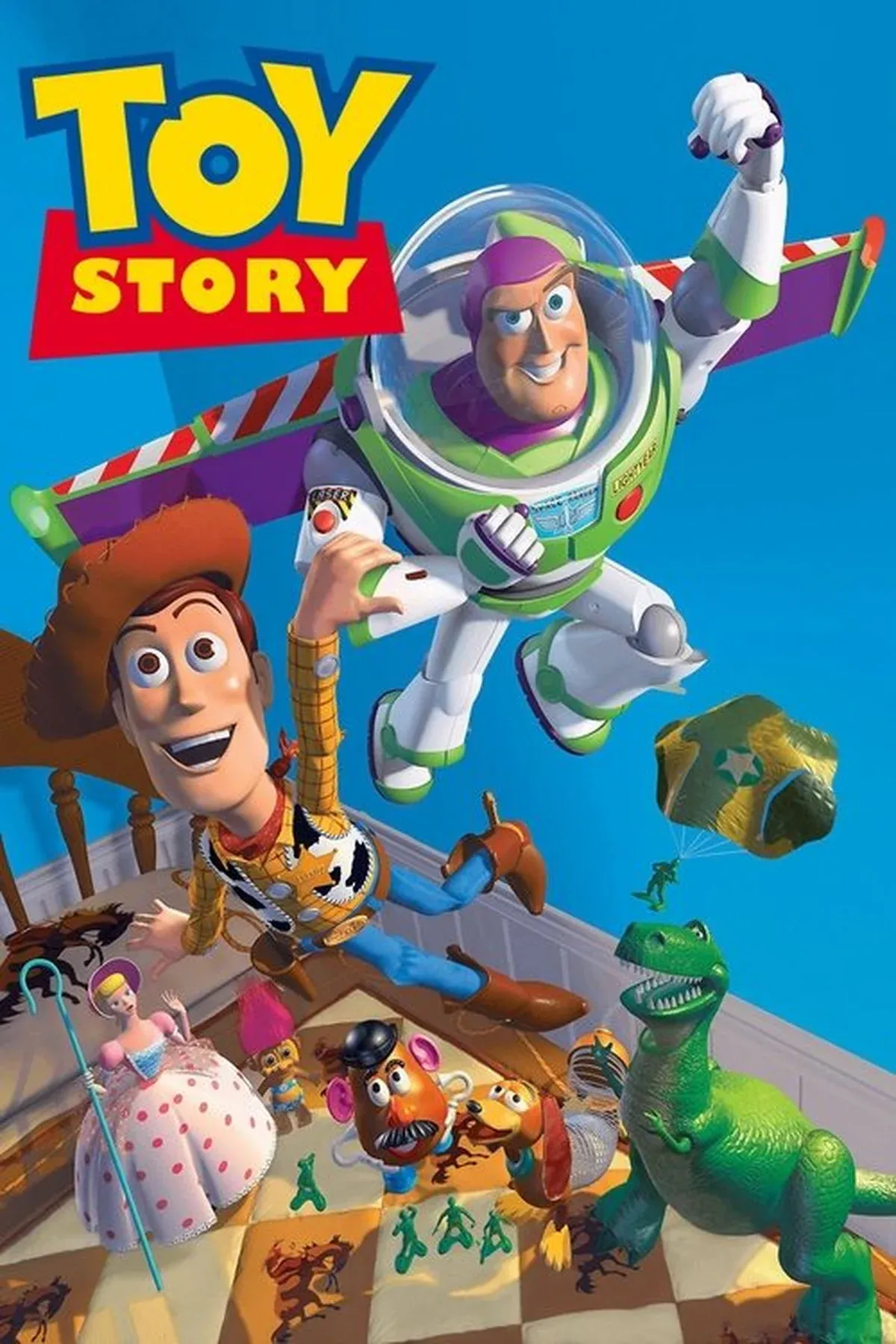
30 Years and $16 Billion: Why Toy Story Remains Disney's Most Reliable Franchise
The Toy Story franchise has generated $16 billion in revenue over three decades. With Toy Story 5 projected to break opening weekend records, we analyze the business strategy behind Hollywood's safest bet.
Editorial Notes
Anna edits BucketMovies criticism and essay packages, with a steady interest in classic Hollywood, literary adaptations, and repertory programming.
The numbers keep getting bigger, and they keep being right.
Toy Story 5 is projected to open between $160 million and $175 million domestically this weekend, according to Boxoffice Pro’s panel of analysts. If that happens, it will be the biggest opening of any Toy Story film and the largest domestic debut of 2026 so far. Deadline puts the global opening at roughly $275 million across 4,400 North American theaters and international markets.
These figures would be impressive for a brand-new intellectual property. They are almost absurd for a franchise that started in 1995 — back when Pixar was still negotiating with Disney from a position of weakness, when CGI was barely credible, and when the idea of a fully computer-animated feature film sounded like a gimmick.
But Toy Story is no longer a single film or even a series of films. According to an economic study commissioned by Disney and reported by Axios, the franchise has generated $16 billion in total revenue over its 30-year lifespan. Approximately $7.5 billion of that came from domestic sources, with the remainder from international markets. The revenue streams span theatrical box office, Disney+ streaming, merchandise, and theme park experiences.
The question for film analysts is not whether Toy Story 5 will succeed. It is what the franchise’s continued dominance tells us about how Hollywood thinks about risk, audience loyalty, and the economics of sequels in an era when every other studio is desperately trying to replicate the same formula.
The $16 Billion Breakdown
To understand why Toy Story is so valuable to Disney, you need to look beyond box office receipts. Theatrical revenue is only one piece of the puzzle, and for animated family films, it is often not even the biggest piece.
Theatrical box office. The first four Toy Story films have collectively grossed approximately $3 billion worldwide at the box office. Toy Story (1995) earned $373 million globally on a $30 million budget. Toy Story 2 (1999) nearly doubled that to $497 million. Toy Story 3 (2010) crossed the billion-dollar mark with $1.067 billion, and Toy Story 4 (2019) followed with $1.073 billion. The new entry is projected to push the theatrical total well past $3.3 billion.
Merchandise and licensing. This is where the real money lives. Woody and Buzz Lightyear have been licensed across virtually every product category imaginable: toys, clothing, bedding, school supplies, video games, home decor. Disney has not broken out merchandise revenue for Toy Story specifically, but the Steward Redqueen economic study estimated that merchandise and licensing represent roughly half of the franchise’s total economic impact.
Theme parks. Toy Story Land exists at Walt Disney World’s Hollywood Studios, Disneyland Paris, and Hong Kong Disneyland. The attractions — Slinky Dog Dash, Alien Swirling Saucers, Toy Story Mania — are among the highest-capacity rides in each park, meaning they process more guests per hour than most other attractions. Higher throughput means more daily ticket revenue and more opportunity for in-park spending on food and merchandise.
Streaming. On Disney+, Toy Story films are among the most-watched titles in the platform’s family content library. Unlike theatrical releases, which generate revenue in concentrated bursts, streaming provides steady, year-round engagement that supports Disney’s subscription retention metrics.
Why Sequels Work for Animated Franchises
Disney’s strategy with Toy Story reveals a broader pattern in how studios manage animated intellectual property. Unlike live-action franchises, which face the problem of aging actors and increasingly expensive visual effects, animated sequels have structural advantages:
Characters do not age. Woody looks the same in 2026 as he did in 1995. The voice actors age, of course — Tom Hanks was 39 when he voiced Woody in the original and is 69 now — but the character’s visual identity is locked. This means the franchise does not need soft reboots or timeline resets to account for casting changes.
Audience renewal is automatic. Every generation of children discovers Toy Story for the first time. The parents who grew up with the 1995 original are now bringing their own kids to see the fifth installment. This cross-generational handoff is something live-action franchises can only dream of. The LA Times noted that Disney is counting on this dynamic for Toy Story 5, banking on the fact that adults who loved the film as children will pay premium ticket prices to share the experience with their families.
Creative risks are lower. When a live-action sequel fails, it damages the careers of real people attached to it. When an animated sequel underperforms, the damage is contained to the studio’s financials. This asymmetry means Pixar can afford to take more creative swings within the Toy Story universe — exploring themes like AI anxiety in Toy Story 5 — without the same level of reputational risk.
The Competition: Why Other Franchises Can’t Replicate This
Every major studio has tried to build a Toy Story-style franchise. Most have failed to sustain it past two or three installments. The reasons are instructive.
DreamWorks’ Shrek ran for five films over 20 years and generated strong box office returns, but the franchise never achieved the same merchandise depth or theme park integration. Shrek Land is not a thing. You will not find a Shrek-themed land at any Universal park that competes with Toy Story’s presence at Disney parks.
Universal’s Despicable Me franchise has come closest to matching Toy Story’s commercial success, with the Minions spinoff becoming a merchandise juggernaut. But the Minions brand skews younger and more novelty-driven, which limits its ability to tell the kind of emotionally resonant stories that keep adults engaged across decades.
Pixar’s own Cars franchise proved that even Pixar cannot force every property into a multi-billion-dollar franchise. Cars was hugely profitable — the merchandise alone reportedly exceeded $10 billion — but the third film in 2017 underperformed critically and commercially, and the franchise has gone dormant since. The lesson: not every popular concept has the narrative depth for five films.
Illumination’s Super Mario Bros. Movie (2023) earned $1.36 billion globally and spawned a sequel announcement, but it is too early to tell whether it will develop the kind of sustained revenue ecosystem that Toy Story has built over 30 years.
The difference between Toy Story and these other properties is not just quality — though that matters — but the completeness of the revenue ecosystem. Toy Story works as a film, a merchandising platform, a theme park anchor, and a streaming retention tool. Most franchises manage two of those four. Toy Story manages all four simultaneously.
What Toy Story 5’s Numbers Mean for Hollywood
The projected $160–175 million domestic opening for Toy Story 5 matters beyond Disney’s balance sheet. It signals something about the current state of the theatrical market.
Summer 2026’s domestic box office stands at approximately $1.6 billion through mid-June, according to Deadline. That is a strong number, but it is not evenly distributed. A handful of tentpole films are carrying the bulk of the revenue, while mid-budget releases continue to struggle. Toy Story 5 alone is expected to capture roughly 38 percent of showtime market share during its opening weekend, per Boxoffice Pro. That concentration of audience attention is both good news and bad news for the industry.
The good news: People will still go to theaters for event films. The idea that streaming has killed theatrical exhibition is demonstrably false — audiences simply have higher standards for what justifies leaving the house. A Pixar sequel with 30 years of brand equity easily clears that bar.
The bad news: If one film captures more than a third of all screens in a given weekend, there is less room for anything else. Mid-tier releases that open the same weekend as Toy Story 5 will be squeezed out of showtimes, reducing their ability to build word-of-mouth momentum.
For Disney, this concentration is precisely the point. The company has structured its release calendar so that its biggest franchise entries land with minimal direct competition, maximizing the opening weekend multiplier that drives downstream revenue in every other category.
The Taylor Swift Factor
One detail worth noting in the Toy Story 5 promotional strategy is Disney’s decision to commission a new Taylor Swift song for the film’s soundtrack. Swift’s involvement is not coincidental. Her songs for previous Disney projects — including “Carolina” for Where the Crawdads Sing and multiple tracks for the Eras Tour film — have driven significant additional audience interest.
For a franchise that already has cross-generational appeal, adding a Swift song extends the reach into demographics that might not otherwise prioritize an animated film: teenage and young adult Swift fans who will listen to the soundtrack on streaming platforms even if they never buy a movie ticket. This is not just marketing. It is revenue diversification.
The Risk That Disney Can’t Control
For all of its advantages, the Toy Story franchise faces one existential risk that no business model can eliminate: audience fatigue.
Every sequel has diminishing returns. The question is not whether the returns will diminish, but when. Toy Story 4 opened to $120 million domestically in 2019 and finished with $1.073 billion globally — a strong performance, but one that was already being viewed as a step down from Toy Story 3’s cultural impact.
Toy Story 5 is projected to open higher than Toy Story 4, which suggests the franchise has not yet hit its ceiling. But projections are not results. If the film opens below $140 million, analysts will start asking whether the fifth installment is simply too many. If it opens above $175 million, Disney will almost certainly greenlight a sixth.
The pattern is predictable. The only uncertainty is timing.
What Other Studios Should Learn
The $16 billion figure is not just a Disney victory lap. It is a case study in franchise management that other studios should study carefully. The key takeaways:
Build the ecosystem, not just the film. Toy Story’s success is not measured in ticket sales alone. The franchise generates revenue from at least four distinct channels simultaneously. Studios that focus only on box office are leaving money on the table.
Invest in theme park integration early. Toy Story Land was announced in 2015, six years before the most recent film at that point. The physical presence of characters in theme parks creates a feedback loop: park visitors become movie viewers, movie viewers become park visitors. This cycle is difficult to start but nearly impossible to disrupt once established.
Let the creative team say no. Pixar famously killed Toy Story 2’s original cut and rebuilt it from scratch. The studio has also said no to sequels for properties that did not warrant them (The Incredibles took 14 years to get a sequel; Coco has not received one despite strong demand). This discipline protects the brand’s reputation, which is the asset that makes the $16 billion figure possible in the first place.
Cross-generational appeal is not an accident. It is the result of writing stories that work on multiple levels: surface-level adventure and humor for children, and deeper themes about identity, loss, and purpose for adults. When a film achieves both, it creates a viewing experience that families can share rather than endure.
Thirty years in, Toy Story is still proving that the most reliable franchise strategy is the simplest one: make something people care about, then make more of it without destroying what made them care in the first place. Hollywood has spent three decades trying to complicate that formula. Toy Story keeps proving they should not have bothered.
Share This Article
Comments