Venice 2026 Lineup: Boyle, Herzog, and a Murdoch Biopic Open the Most Political Festival in Years
Danny Boyle's Rupert Murdoch drama opens Venice as the festival unveils a competition stacked with auteurs, a single female director, and a sharp political edge.
Editorial Notes
BucketMovies Editorial covers classic cinema, repertory discoveries, and context-rich film criticism with an emphasis on source-backed reporting and careful editorial review.
The Venice Film Festival dropped its 2026 lineup on Wednesday, and the message is hard to miss: this year, the world’s oldest film festival is coming for media moguls.
Danny Boyle’s Rupert Murdoch drama Ink will open the 83rd edition on September 2, with Jack O’Connell playing the young Murdoch and Guy Pearce as the Australian newspaper tycoon who bought the Sun in 1969 and reshaped British public life for half a century. The script comes from James Graham, the Olivier-winning playwright behind Dear England and Brexit: The Uncivil War, which means the dialogue will probably cut deeper than most biopics bother to attempt. An Elon Musk documentary is also in the lineup, rounding out what The Guardian called a festival that “promises to take a swing at media moguls of the print and digital era.” Studiocanal is handling distribution, which signals serious awards-season intent.
The closing night slot goes to Giovanni Veronesi’s Dio ride, an out-of-competition Italian comedy starring Pierfrancesco Favino, Silvio Orlando, and Alma Noce. It’s a lighter choice to cap a festival that otherwise reads like an argument about power and who gets to hold it.
That political edge doesn’t stop at the opening and closing films. Critics’ Week, the sidebar curated by Italy’s national film critics union, described its own selection as deliberately political — organizers said outright that “a festival is not a neutral bubble” separate from the world. This is not a Venice trying to please everyone. It’s picking sides, and it wants you to notice.
The Competition: Auteur Stacking
The 20-film competition lineup reads like someone raided the Criterion closet and threw the results onto the Lido. Werner Herzog returns with Bucking Fastard, his first narrative feature in years and, knowing Herzog, probably involves someone doing something inadvisable in a remote location while the director narrates the existential implications. Hirokazu Kore-eda brings Look Back, his follow-up to The Voice of Hind Rajab which premiered at Venice last year — a quick turnaround for a director who usually takes his time. Lee Chang-dong, who hasn’t directed a feature since 2018’s Burning, resurfaces with Possible Love, immediately becoming one of the most anticipated titles in the entire festival.
The rest of the competition is similarly loaded. Casey Affleck steps behind the camera for Company — his second directorial effort after the 2010 mockumentary I’m Still Here, and a notable departure given Affleck has spent most of the intervening years in front of the lens. Stéphane Brizé, a Venice regular whose The Measure of a Man won best actor here in 2015, competes with Un Bon Petit Soldat, a title that suggests the kind of working-class social realism Brizé has made his signature. Cédric Kahn, whose The Goldman Case opened Directors’ Fortnight at Cannes in 2023 and became an unexpected awards-season sleeper in France, brings A Place to Heal. Marco Bechis returns to Argentina with Ritorno a Buenos Aires, his first feature since 2011. Ali Asgari, who made waves with the vignette-style Terrestrial Verses at Cannes, competes with A Bit of Light. Edoardo de Angelis represents the home team with Il Fuoco Che Ti Porti Dentro, and Italian audiences tend to rally behind a local entry in competition. Ilya Khrzhanovsky, the Ukrainian director whose sprawling Dau project has been in various states of completion for over a decade, finally lands a competition slot — though what exactly he’s showing remains characteristically opaque, which is either marketing genius or a sign that the edit isn’t locked.
The jury sorting through all this is led by Maggie Gyllenhaal, whose directorial debut The Lost Daughter premiered at Venice in 2021 and won best screenplay. She’s joined by Tunisian director Kaouther Ben Hania (whose The Voice of Hind Rajab competed here last year), composer Daniel Blumberg, Italian film scholar Francesco Casetti, French director Xavier Giannoli, Afghan filmmaker Shahrbanoo Sadat, and Hong Kong legend Johnnie To. Gyllenhaal and To alone have sensibilities far enough apart to produce genuinely unpredictable winners. Add Ben Hania and Sadat to the mix and you have a jury that’s unlikely to default to the obvious choices.
One Woman in a Room of Twenty
Here is the number that’s going to generate the most uncomfortable headlines between now and September: six female directors competed for the Golden Lion in 2025. This year, there is one.
May El-Toukhy’s Woman Unknown is the sole female-directed entry among the 20 competition films. The Danish-Egyptian director previously broke through with 2019’s Queen of Hearts, a thorny drama about a lawyer who seduces her teenage stepson — the kind of morally complicated material that plays well at festivals. Her Venice slot now carries more weight than it should, not because of the film itself but because every interview she gives between now and the premiere will include some version of “what do you make of being the only woman in competition?”
The optics are genuinely strange given that the festival’s own sidebar programming tells a different story. Venice Days opens with Lili Horvát’s My Notes on Mars, starring Mackenzie Davis and Rupert Friend — a female-directed film with name actors that could easily have sat in the main competition. Critics’ Week has Shalini Adnani’s Our Share of Sand and Dong Jie’s Zoom In, Zoom Out. The talent pool exists. The main competition just didn’t draw from it.
This isn’t exclusively a Venice problem. Cannes caught similar criticism earlier this summer. Toronto’s lineup arrives next week and will face the same scrutiny. Festival programmers will argue they pick films, not gender quotas, which is true up to a point. That point crumbles when you go from six to one in a single year and expect nobody to ask why.
The Murdoch Factor and What It Signals
Boyle’s Ink lands at an odd moment for media biopics. Michael made money but nobody discusses it as a film — it’s a box office statistic that happened to have a runtime. Smaller entries in the genre have struggled to break through at all. The difference here might be Graham’s script, which reportedly focuses on the Sun acquisition as a hinge point — one specific moment where British media culture pivoted — rather than attempting the cradle-to-grave sweep that sinks most biopics. Guy Pearce as Murdoch is casting that clicks: he can turn on charm and menace in the same scene, sometimes in the same line reading.
Pair Ink with the Elon Musk documentary also in the lineup and Venice 2026 becomes the festival where cinema decided to stare directly at the people who control the distribution pipes through which cinema flows. The irony is hard to miss. Whether either film is any good is a separate question, but the programming choice itself is a statement — one that previous Venice editions, for all their prestige, rarely made this explicitly.
George Clooney and Ellen Burstyn will receive Golden Lions for lifetime achievement during the festival. Clooney’s ties to Venice run deep — Good Night, and Good Luck premiered here in 2005, and he’s been a fixture on the Lido ever since, returning most recently with Wolfs in 2024. Burstyn, at 93, is still working and still formidable, with a career that spans from The Last Picture Show to The Exorcist to Pieces of a Woman. Their presence adds a layer of old-Hollywood glamour to a festival lineup that otherwise feels unusually confrontational.
Sidebars: Where the Discoveries Happen
The Venice Days sidebar, now in its 23rd year, has quietly become one of the more interesting launchpads for directors moving from the festival circuit toward wider audiences. This year’s opener, My Notes on Mars, follows a scientist (Davis) whose grip on reality begins to fray during an extended Mars simulation mission. Horvát’s previous film Preparations to Be Together for an Unknown Period of Time was a festival circuit favorite, and the Davis/Friend casting suggests a bigger budget and broader commercial ambition than her earlier work.
Critics’ Week is traditionally where you go for genuine discovery — first and second features, lower budgets, higher risk tolerance. The 2026 selection leans hard into genre-adjacent debuts and doesn’t seem interested in playing it safe. The H@llow Man from Tunisian director Kamel Laaridhi is dystopian science fiction. London from Brazilian directors Victor Di Marco and Márcio Picoli is a drama set inside a fetish community. Zoom In, Zoom Out, the debut of Chinese director Dong Jie, follows a young game designer searching through real and virtual worlds to find a missing roommate. Our Share of Sand from Shalini Adnani spans India, the UK, and Greece. At least one of these titles will be the film everyone’s talking about by the festival’s second weekend. That’s how Critics’ Week works — the films nobody has heard of in July become the films everyone wants to see by September.
What It Means for Fall Festival Season
Venice has long been the unofficial starting line for Oscar season. Oppenheimer, Poor Things, Joker, Roma, The Shape of Water, La La Land — all launched here, all went the distance with voters. The 2026 edition has obvious contenders: Boyle’s Ink arrives with the pedigree, the subject matter, and Studiocanal’s awards machinery behind it. Kore-eda and Lee Chang-dong are less likely to connect with American Academy voters but should dominate the international feature conversation. Herzog will receive some kind of career tribute somewhere regardless of whether Bucking Fastard connects.
The wildcard is whether the festival’s political positioning helps or hurts its films’ awards trajectories. A Murdoch biopic opening the festival — paired with a Musk documentary and a Critics’ Week that explicitly describes itself as “cultural activism” — is Venice planting a flag. If the films are good, that flag will look prescient. If they’re not, it’ll look like a festival that confused a sharp press cycle for a program.
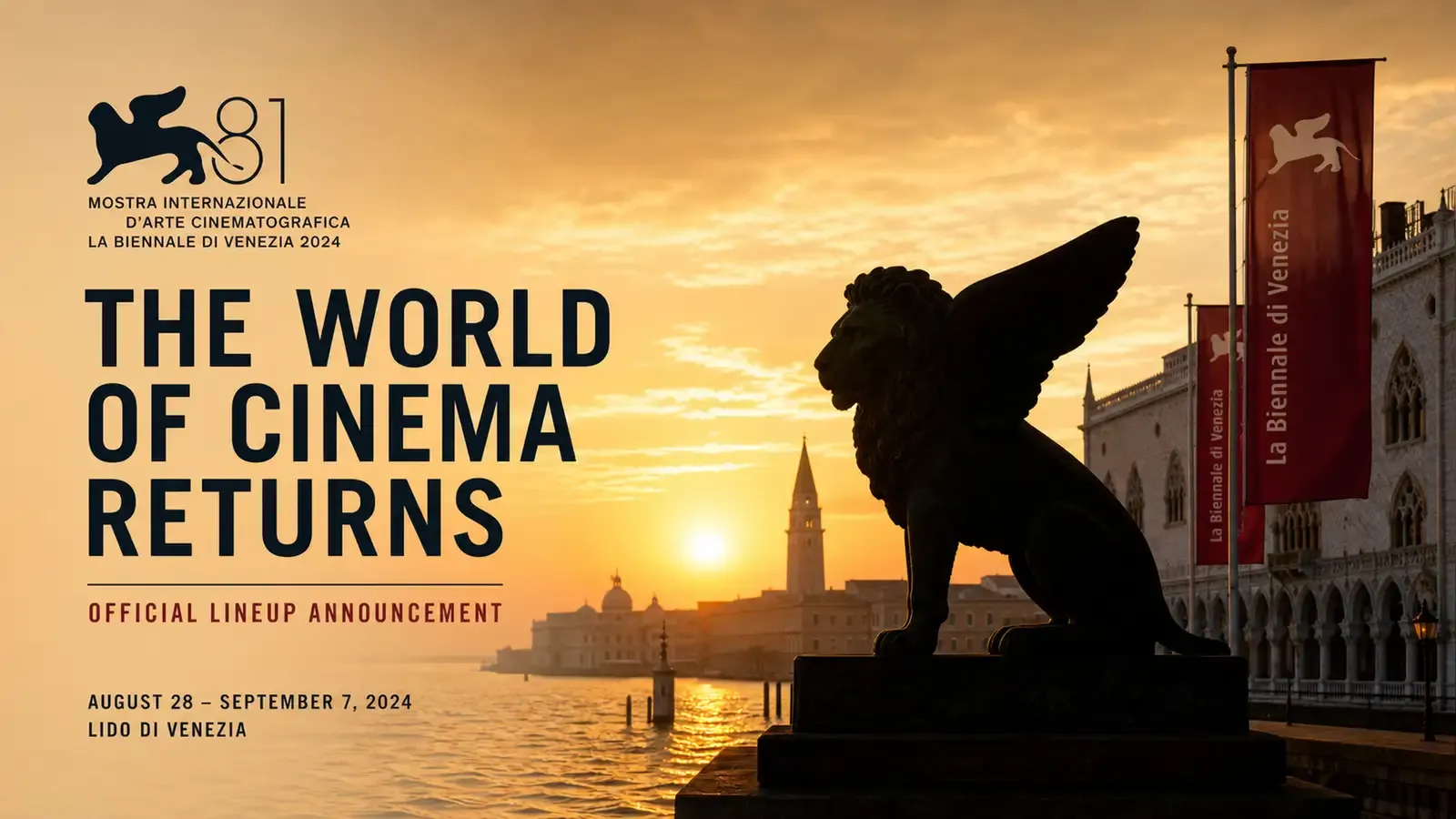
The 83rd Venice Film Festival runs September 2 through 12 on the Lido. The full competition lineup and sidebar programs are available on the festival’s official website. We’ll have coverage from the ground once the screenings begin — the reviews that come out of the first weekend will tell us whether the Murdoch-Musk double feature was a genuine provocation or just good programming copy.
Share This Article
Comments