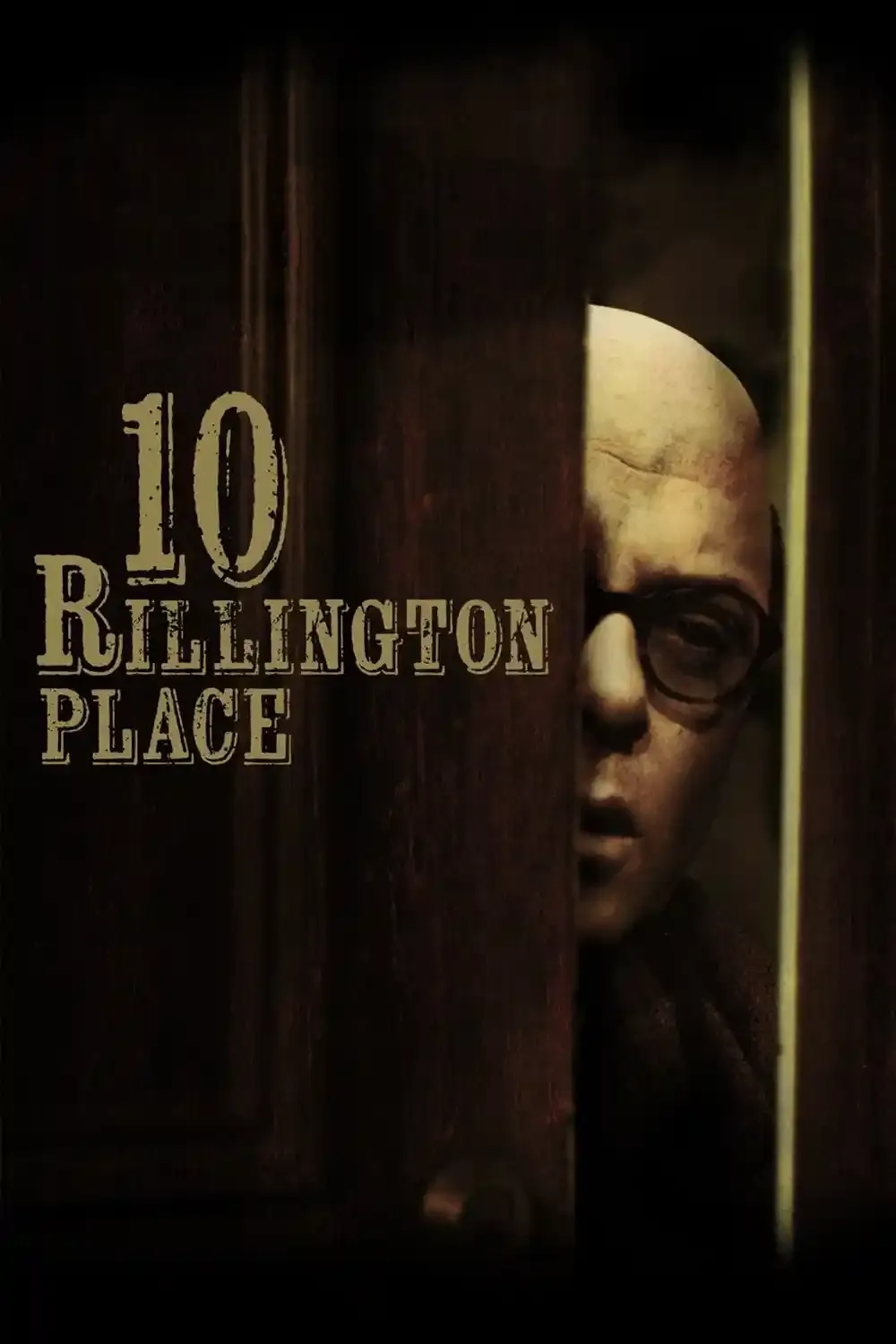
10 Rillington Place (1971): The True Crime Film That Still Haunts
Richard Attenborough's chilling portrayal of serial killer John Christie—and the innocent man who hanged for his crimes. Documentary-style horror that argues against capital punishment more powerfully than any polemic.
Editorial Notes
Anna edits BucketMovies criticism and essay packages, with a steady interest in classic Hollywood, literary adaptations, and repertory programming.
Leah Carter
Research Editor
Leah handles source checks, release-date verification, awards coverage, and the reporting framework behind BucketMovies news and industry pieces.
There’s a scene in 10 Rillington Place where John Christie—serial killer, necrophiliac, war veteran—makes his victims a cup of tea. He’s solicitous. Concerned. The gas jar is already prepared. Within minutes, these women will be dead.
Richard Attenborough plays Christie with absolute normality, which is what makes the film unbearable. There’s no twitching evil, no theatrical menace. Just a quiet man in a quiet house, doing quiet horrible things. When I finished watching, I had to sit in silence for a while. The mundanity of evil had gotten under my skin.
The True Story
In the early 1950s, at 10 Rillington Place in London’s Notting Hill, John Christie murdered at least eight women, including his own wife. His upstairs tenant, Timothy Evans, was arrested and hanged for the murder of his wife and infant daughter—crimes that Christie likely committed.
After Christie was finally caught in 1953, Evans received a posthumous pardon. The case became a landmark argument against capital punishment in Britain, contributing to the eventual abolition of the death penalty in 1965.
Director Richard Fleischer (an American who’d made The Boston Strangler) shot the film at the actual location—the house was scheduled for demolition as part of a motorway project. The walls that contained these horrors were the actual walls.
Richard Attenborough: The Banality of Evil
Before Hannah Arendt, there was John Christie. Attenborough’s portrayal shows how ordinary evil can look. Christie is polite. He speaks softly. He’s patriotic (exaggerating his war service), respectable (he served as a special constable), and helpful (always ready with medical advice).
None of this is performance. Christie genuinely sees himself as a decent man. He’s helpful when he lures women to their deaths—after all, he’s offering to cure their medical problems. His delusion is complete.
What Attenborough captures is the emptiness at Christie’s center. There’s no there there—no guilt, no pleasure, no motive we can understand. He kills because he kills. He buries bodies in his garden. He moves on.
John Hurt: The Innocent Condemned
Against Attenborough’s void, John Hurt’s Timothy Evans is painfully present. Evans is dim—not stupid, but limited. He struggles with basic concepts. When Christie frames him for murder, Evans lacks the intellectual resources to defend himself.
Hurt makes Evans sympathetic without sentimentality. This is a man who probably did beat his wife, who was a poor husband and father, who’s hardly a saint. But he’s also innocent of murder, and watching the legal system crush him is devastating.
The interrogation scenes are especially hard to watch. Evans doesn’t understand what’s happening. He signs confessions written by others. He trusts authority figures who are manipulating him. He goes to his death confused.
Fleischer’s Documentary Approach
10 Rillington Place is shot like a documentary. No score. Natural lighting. The actual house. Long takes that let horror accumulate.
Fleischer’s approach strips away genre pleasures. There’s no stylization of violence, no thriller mechanics, no catharsis. We watch murders happen with the detachment of a surveillance camera. The distance makes it worse—we’re not participants in suspense, we’re witnesses to history.
The color palette is appropriately gray—post-war London in all its bombed-out grimness. This isn’t the swinging sixties but the preceding decade of rationing and rubble, where a house at 10 Rillington Place could contain horrors without anyone noticing.
The Execution Scene
⚠️ Spoiler Warning: Discussion of Evans’s execution follows.
The hanging of Timothy Evans is filmed with documentary restraint. We see the morning preparations. We see Evans led to the gallows. We hear the trap open.
What we don’t see is designed to maximize horror: Evans’s face as he realizes what’s happening. The moment of death. The aftermath.
Fleischer understood that suggestion would be more powerful than depiction. What haunts isn’t what we see but what we imagine—an innocent man’s last seconds, knowing he’s dying for crimes he didn’t commit, powerless to stop it.
The Arguments It Makes
10 Rillington Place isn’t subtle about its argument against capital punishment. But it makes that argument through drama, not polemic. We watch:
- A guilty man manipulate the justice system
- An innocent man convicted on false evidence
- A state execution of that innocent man
- The guilty man eventually caught anyway
The implication is clear: the death penalty, once carried out, cannot be undone. Timothy Evans was murdered by the British state for crimes committed by John Christie. No posthumous pardon can undo that murder.
Why It’s Still Relevant
True crime has become entertainment. Podcasts turn murders into mysteries. Netflix documentaries give killers celebrity. There’s something unseemly about our fascination with death.
10 Rillington Place offers a corrective. It refuses entertainment. It doesn’t make Christie interesting or Evans sympathetic beyond his humanity. It presents facts and lets them accumulate weight.
The film’s final title cards, noting Evans’s pardon and Christie’s execution, provide closure but not satisfaction. The system eventually worked—but only after executing an innocent man. That can’t be fixed.
My Rating: 8.5/10
What works:
- Attenborough’s carefully empty performance
- Hurt’s vulnerability without sentimentality
- Shot at the actual location
- Documentary restraint in depicting horror
- The anti-death-penalty argument emerges from drama
What doesn’t:
- Relentlessly bleak (which is the point)
- Some may find the pace slow
- The kitchen-sink realism can feel drab
If You Liked This, Try:
- Frenzy (1972) — Hitchcock’s London serial killer film
- The Boston Strangler (1968) — Fleischer’s earlier American true crime
- Henry: Portrait of a Serial Killer (1986) — Another documentary-style killer portrait
- In Cold Blood (1967) — Brooks’ true crime masterpiece
- Vera Drake (2004) — Another British film about ordinary people and the law
10 Rillington Place is not a film you enjoy. It’s a film you survive, and then think about afterward. The horror isn’t in the murders—it’s in the system that executed the wrong man.
John Christie smiled and made tea. Timothy Evans hanged. The house is demolished now, covered by a motorway. But the questions remain: How do we recognize evil when it wears an ordinary face? And what do we do when justice fails?
References
- Kennedy, Ludovic. 10 Rillington Place, Simon & Schuster, 1961 (source material)
- British Film Institute. Production notes and location documentation
- Fleischer, Richard. Just Tell Me When to Cry (autobiography), Carroll & Graf, 1993
- The Evans/Christie case files, National Archives UK
- Variety staff. Original review, 1971
Share This Article
Comments