How The Devil Wears Prada 2 Became 2026's Most Important Box Office Story
The Devil Wears Prada 2 didn't just make money — it shattered decades of conventional wisdom about what kind of movie can kick off the summer box office.
Editorial Notes
BucketMovies Editorial covers classic cinema, repertory discoveries, and context-rich film criticism with an emphasis on source-backed reporting and careful editorial review.
When 20th Century Studios announced they were making a sequel to The Devil Wears Prada — nearly two decades after the original became an unlikely cultural institution — the collective response from Film Twitter was a weary sigh. Another nostalgia cash grab. Another studio desperate to wring value from old IP because original ideas feel too risky. We’ve seen this movie before, and usually it stinks.
Then the numbers came in.
$77 million domestic opening. $233 million worldwide in a single weekend. A global cume that would eventually sail past $666 million — making it not just the highest-grossing film of Meryl Streep’s legendary career, but one of 2026’s defining theatrical events. Something happened here that deserves more than a shrug.
This isn’t just a story about a sequel that worked. It’s a story about who gets to matter at the box office, and how the industry spent decades getting that question wrong.
The Summer Belonged to Men — Until It Didn’t
Here’s a statistic that should make you angry: before The Devil Wears Prada 2, no female-driven movie in modern history had ever kicked off the summer box office season. Ever. The first weekend of May — the traditional launchpad for blockbuster season — has been the exclusive territory of Marvel movies, Fast & Furious entries, and the occasional Spielberg spectacle. Hollywood had simply accepted as fact that if you wanted to open summer with a bang, you needed something boys would show up for.
The Devil Wears Prada 2 didn’t just prove that assumption wrong — it embarrassed it. The sequel’s opening weekend drew an audience that was, by virtually every metric, overwhelmingly female. And they didn’t just show up — they showed up in numbers that made Masters of the Universe look like a rounding error.
The implications are hard to overstate. For decades, studios have operated on a quiet, largely unexamined premise: female audiences are less reliable, less likely to rush out on opening weekend, less interested in the communal theatrical experience. When a movie aimed at women succeeded — Barbie, Mamma Mia, the first Sex and the City film — it was treated as a fluke, an outlier, not evidence that the premise itself was broken.
A $666 million global gross makes “fluke” a hard argument to sustain.
The Nostalgia Engine, Done Right
Not all nostalgia plays are created equal. You can feel the difference between a project born from genuine affection and one assembled in a spreadsheet. The Devil Wears Prada 2 landed firmly in the former category, and the numbers back that up.
In the weeks before release, Nielsen reported that streaming viewership for the original 2006 film surged 428%. That’s not an accident — that’s a campaign. Disney and 20th Century Studios understood something crucial: the audience for this sequel wasn’t just people who remembered liking the first movie. It was people for whom the first movie had become part of their emotional furniture. Women who’d watched it in college and could still quote Miranda Priestly’s withering one-liners. Gay men who’d made it a sleepover staple. Anyone who’d ever felt undervalued at work and dreamed of telling their boss exactly where to stick it.
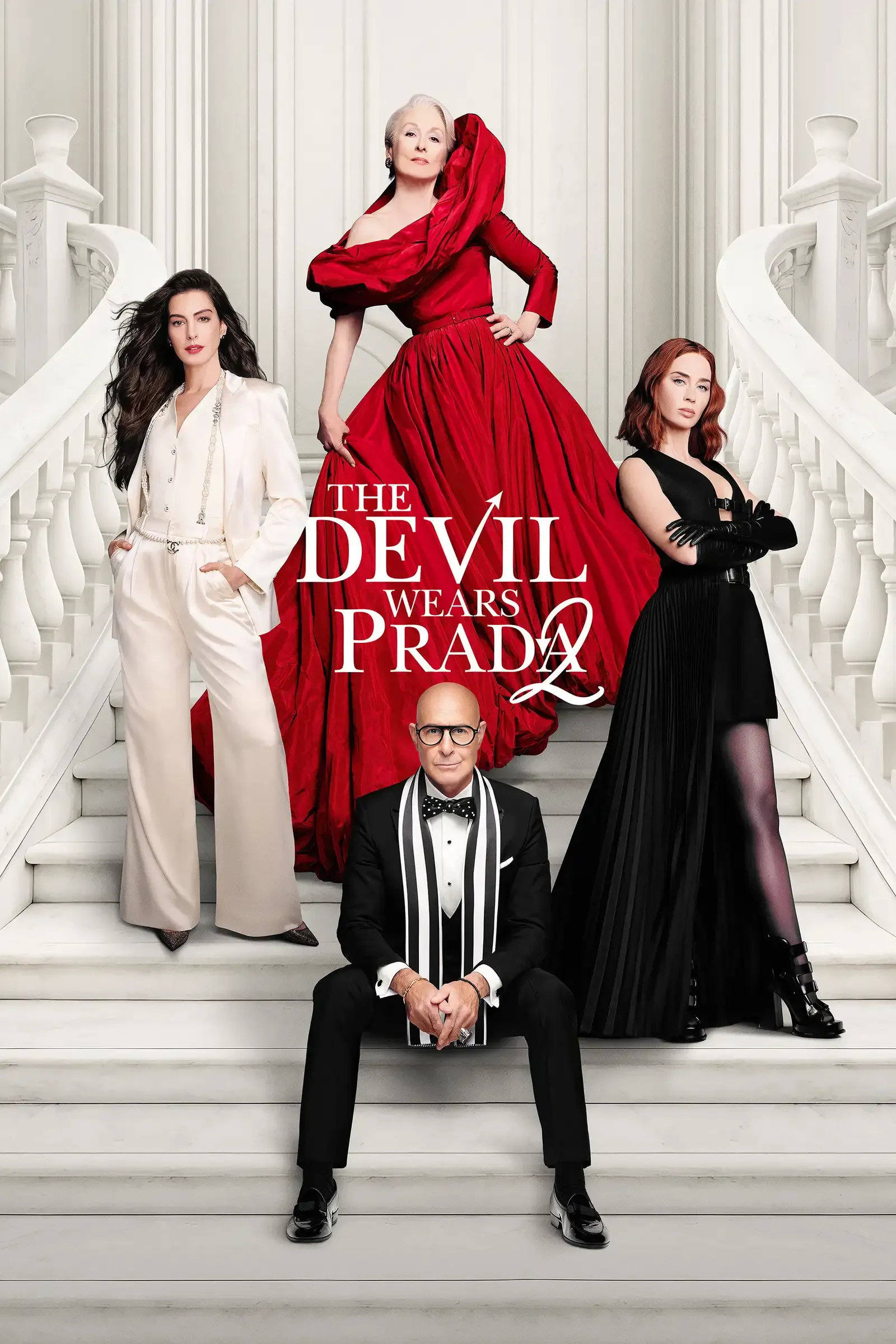
The “A Night With Runway” photocall at London’s National Gallery in April — with Streep, Hathaway, Emily Blunt, and Stanley Tucci all present — wasn’t just a press event. It was a homecoming. The images from that night circulated with the energy of a reunion episode of a beloved TV show. You couldn’t manufacture that warmth if you tried.
This is where the legacy sequel conversation usually gets sloppy. Critics (myself included) tend to lump every belated franchise revival into the same bucket of creative bankruptcy. But there’s a real distinction between dredging up IP nobody asked for (Independence Day: Resurgence, anyone?) and giving people more of characters they genuinely miss.
Miranda Priestly is not a superhero. She doesn’t have a costume or a catchphrase. She’s a 60-something magazine editor with withering taste and zero patience for mediocrity. That she became one of the most rewatchable characters in modern cinema says something about how starved audiences are for characters who feel like actual human beings — complicated, difficult, magnetic human beings — rather than vessels for quippy dialogue and third-act CGI battles.
Why This One, Why Now
There’s a practical question buried under all the cultural analysis: why did this legacy sequel connect when so many others haven’t? Gladiator II made money but left no cultural footprint. Beetlejuice Beetlejuice was fun and forgettable. The Indiana Jones revival felt like an obligation nobody asked for. Something about The Devil Wears Prada 2 hit differently.
Part of it is timing. Twenty years is the sweet spot for nostalgia — long enough that the original audience has grown up and built careers of their own, short enough that the cultural memory hasn’t faded into irrelevance. The women who watched Andy Sachs navigate Miranda Priestly’s impossible standards in 2006 are now running departments, managing teams, maybe becoming a little bit Miranda themselves. The sequel landed at the exact moment its core audience was ready to revisit that world from the other side of the experience.
Part of it is the subject matter. Fashion is cyclical by nature — the trends the original film skewered have come back around twice already. A movie about a magazine navigating the digital age in 2026 carries a different kind of tension than a movie about a magazine in the print heyday of 2006. Runway fighting for relevance against TikTok and Instagram is a story that writes itself.
And part of it is simply that the cast wanted to be there. You can tell when actors are collecting a paycheck and when they’re genuinely happy to reunite. The London photocall radiated the latter. Streep, Hathaway, Blunt, and Tucci have all done plenty of prestige work in the intervening years — awards, critical darlings, the whole gamut. They didn’t need this sequel. They wanted it. That energy travels from the screen to the audience in ways that marketing budgets can’t replicate.
The Streep Factor
Can we talk about Meryl Streep for a second? The woman has three Oscars and a career that spans five decades, and The Devil Wears Prada 2 just became her highest-grossing film ever. By a lot. Her previous best was Mamma Mia: Here We Go Again at roughly $400 million worldwide. This nearly doubled it.
There’s something quietly radical about that. In an industry that has been openly — sometimes brutally — hostile to actresses over 40, Streep at 77 just delivered the kind of opening weekend that would make any Marvel lead jealous. She didn’t do it by playing younger. She didn’t do it by softening Miranda into something cuddly and palatable. If anything, early reactions suggest the sequel lets Miranda be even more Miranda — more imperious, more complicated, more willing to burn bridges just to watch the flames.
Audiences want this. They’ve always wanted this. The industry just kept refusing to believe them.
What the Sequel Actually Means
I haven’t even talked about the plot yet, and honestly that’s by design. The specifics of what happens in The Devil Wears Prada 2 — the machinations of Runway magazine in 2026, the evolved dynamics between Andy and Miranda, whatever Emily Blunt’s character is up to now — are almost secondary to what the film represents as a cultural event.
This is a movie that opened in Italy to the fourth-biggest debut ever for a Hollywood release. The Italians, who know a thing or two about fashion and cinema, turned out in force for a story about a New York magazine office. That’s not just brand recognition — that’s proof that certain stories transcend geography and language because they’re built on something universal. In this case: the terrifying, thrilling, occasionally transcendent experience of working for someone who demands more from you than you knew you had to give.
The Real Legacy
The most important thing The Devil Wears Prada 2 accomplished might be the simplest: it made going to the movies feel like an event for an audience that Hollywood has chronically underserved. Walk into any multiplex on a random weekend and count how many screens are showing things designed for you if you’re not a teenage boy or a superhero enthusiast. It’s a dispiriting exercise.
This film proved — with numbers, the only language studios actually speak — that there’s an enormous, passionate audience hungry for something different. Not different in the prestige-film sense of subdued dramas about grief. Different in the sense of big, glossy, unapologetically entertaining movies that happen to center women’s experiences and relationships.
Whether Hollywood actually learns this lesson is another question. The industry has a long, documented history of drawing exactly the wrong conclusions from its successes. More likely, we’ll get a wave of half-baked fashion-world dramas and belated sequels to movies that never earned them, all of which will underperform, and executives will conclude that female audiences are unreliable after all.
But I’m choosing optimism, at least for today. The Devil Wears Prada 2 opened in the same summer that gave us Christopher Nolan’s The Odyssey, the Spider-Man franchise reinvention, and the ongoing chaos of a box office that refuses to follow anyone’s predictions. In a season defined by massive swings, the movie about a fashion magazine editor somehow became the one that felt most revolutionary. Not because of its budget or its spectacle, but because of who it was for — and who finally got to see themselves reflected in a blockbuster event.
Miranda Priestly got the last word, as she always does. And the word was “that’s all.”
Share This Article
Comments