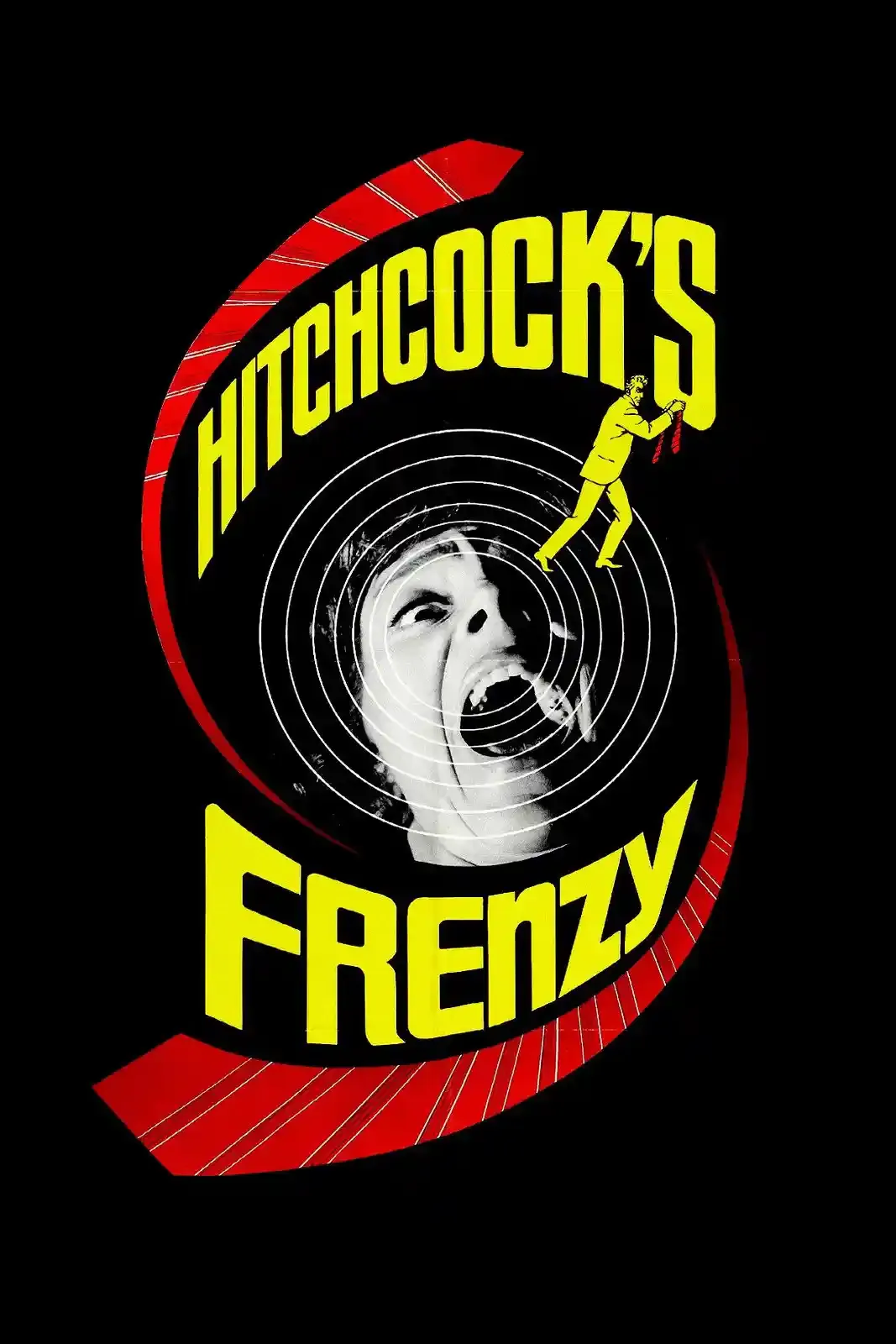
Frenzy (1972): Hitchcock Returns to London for One Last Kill
After a decade of American films, the Master of Suspense came home to make his most violent, most explicit, and most underrated thriller. A serial killer in Covent Garden—and Hitchcock still had teeth.
Editorial Notes
Daniel covers repertory revivals, American genre films, and performance-led criticism across both new releases and older catalog titles.
By 1972, Alfred Hitchcock’s reputation had calcified into monument. He was “The Master of Suspense”—a brand name, a television host, the director of Psycho and Vertigo and Rear Window. He was also 72 years old, coming off two financial disappointments, and widely assumed to be finished.
Then he went home to London and made Frenzy.
It’s the Hitchcock film almost nobody talks about, which is strange—because it’s also his most genuinely disturbing film, more violent than anything he’d done before, more explicit in its sexuality, more willing to make the audience uncomfortable. At an age when most directors coast on reputation, Hitchcock was still pushing himself.
The Setup: Wrong Man in the Garden
Richard Blaney (Jon Finch) is a former RAF officer now working as a bartender in Covent Garden, London’s famous fruit-and-vegetable market. He’s angry, resentful, down on his luck. His ex-wife Brenda runs a successful dating agency. His girlfriend Babs works at a pub.
Someone is strangling women with neckties—the “Necktie Murderer” making headlines. When Brenda is killed and Blaney is spotted leaving her office, he becomes the prime suspect.
But we know who the real killer is. Hitchcock shows us early: it’s Bob Rusk (Barry Foster), Blaney’s friendly acquaintance, a produce dealer in the market, a cheerful psychopath who rapes and strangles with a smile.
This is classic Hitchcock—the wrong man, the transfer of guilt, the audience knowing more than the characters. What’s not classic is how explicit Hitch made the violence.
The Murder Sequence: Hitchcock Finally Shows
In Psycho, the shower scene was revolutionary—but you never actually see the knife enter the body. Hitchcock created violence through editing, through suggestion, through Bernard Herrmann’s shrieking strings.
In Frenzy, he shows.
The murder of Brenda Blaney is shot in unflinching detail. Rusk’s cheerful seduction turns to violence. The camera doesn’t cut away. We watch the strangulation in real time, see the life leave her eyes, observe Rusk straighten himself afterward as if he’d just completed a business transaction.
It’s horrible. It’s meant to be horrible. At 72, Hitchcock wanted to prove he could still shock—and he could.
The Reverse: What We Don’t See
But Hitchcock’s mastery isn’t just in what he shows—it’s in what he withholds. The second major murder (of Babs) is handled completely differently.
Rusk takes her up to his apartment. We know what’s coming. The camera follows them to the door, watches them enter, and then… backs away. Down the stairs. Out into the street. Into the noise of the market.
We don’t see this murder. We don’t need to. Our imagination—and the memory of Brenda’s death—does the work. It’s vintage Hitchcock technique applied to material that could have descended into exploitation.
Barry Foster: The Cheerful Psychopath
Rusk is one of Hitchcock’s great villains because he’s so likeable. Foster plays him as everyone’s friend—buying drinks, sharing produce, always with a joke and a smile. He’s the kind of man people trust instinctively.
And that’s the horror. There’s no external marker of his evil. He looks normal. He acts normal. Only in private, only with women, does the mask slip.
Foster’s performance anticipates later serial killer characterizations—the Hannibal Lecters and Patrick Batemans—but without their theatrical menace. Rusk is mundane evil, the killer next door, the horror of normality.
The Potato Truck: Black Comedy
One sequence in Frenzy is pure Hitchcock dark comedy: Rusk realizes he’s left his monogrammed tie pin in the grip of his victim, who’s now in a sack of potatoes on a truck. He has to climb into the truck and wrestle with the corpse to retrieve it.
It’s played for laughs—sick laughs, uncomfortable laughs, but laughs. The body has gone into rigor mortis. The fingers won’t open. Rusk has to break them. And throughout, he’s terrified of being discovered.
This tonal shift could have derailed the film, but Hitchcock calibrates it perfectly. We’ve seen the horror; now we see its absurd aftermath. Murder, the sequence suggests, isn’t just evil—it’s also squalid, comic, human.
London Location
Hitchcock hadn’t shot in London since Stage Fright (1950). Returning after two decades, he filmed extensively on location—Covent Garden, Leicester Square, the courts of law, the Thames.
There’s a documentary quality to these sequences that Hitchcock’s Hollywood films lacked. The bustling market, the damp streets, the particular light of London gray—it feels authentic in a way his process-shot American films never quite managed.
One senses nostalgia beneath the murders. This is Hitchcock’s London—the city of his youth, his early films, his memories. That he chose to fill it with rape and strangulation says something about his relationship to nostalgia.
The Ending: Justice Without Triumph
⚠️ Spoiler Warning: Discussion of the ending follows.
Blaney escapes from prison to kill Rusk, breaks into his apartment, attacks a body in the bed—and discovers it’s another victim, not Rusk himself.
The police arrive. So does Rusk, carrying a trunk (presumably containing another body). “Mr. Rusk,” the inspector says, “you’re not wearing your tie.”
And that’s it. Rusk is caught not through clever detection but through stupid chance. There’s no confrontation, no speech, no justice. Just a moment of awkward recognition, and fade to black.
It’s almost anticlimactic—deliberately so. Hitchcock denied the audience the cathartic final act. Evil is caught, but there’s no satisfaction in it.
My Rating: 8/10
What works:
- Barry Foster’s charming monster
- The contrast between shown and implied violence
- London locations feel lived-in
- The potato truck sequence is masterfully uncomfortable
- Hitchcock still has formal command
What doesn’t:
- The explicit violence may have been too much for 1972
- Blaney is hard to root for
- Some comic subplot feels forced
If You Liked This, Try:
- Psycho (1960) — Hitchcock’s earlier shower-curtain shocker
- The Lodger (1927) — Hitchcock’s first serial killer film
- 10 Rillington Place (1971) — British serial killer film from the same year
- The Boston Strangler (1968) — Another semi-procedural killer film
- Peeping Tom (1960) — Powell’s British killer film that destroyed his career
Frenzy isn’t Hitchcock’s best film, but it might be his bravest. At an age when he could have rested on reputation, he pushed into explicit territory, returned to London, and made something genuinely unsettling.
The Master of Suspense hadn’t lost his touch. He’d just been waiting to show how much further he could go.
References
- Truffaut, François. Hitchcock/Truffaut, Simon & Schuster, 1967 (updated editions)
- Spoto, Donald. The Dark Side of Genius: The Life of Alfred Hitchcock, Da Capo Press, 1999
- McGilligan, Patrick. Alfred Hitchcock: A Life in Darkness and Light, Regan Books, 2003
- British Film Institute. “Frenzy” production notes
- Variety staff. Original review, 1972
Share This Article
Comments