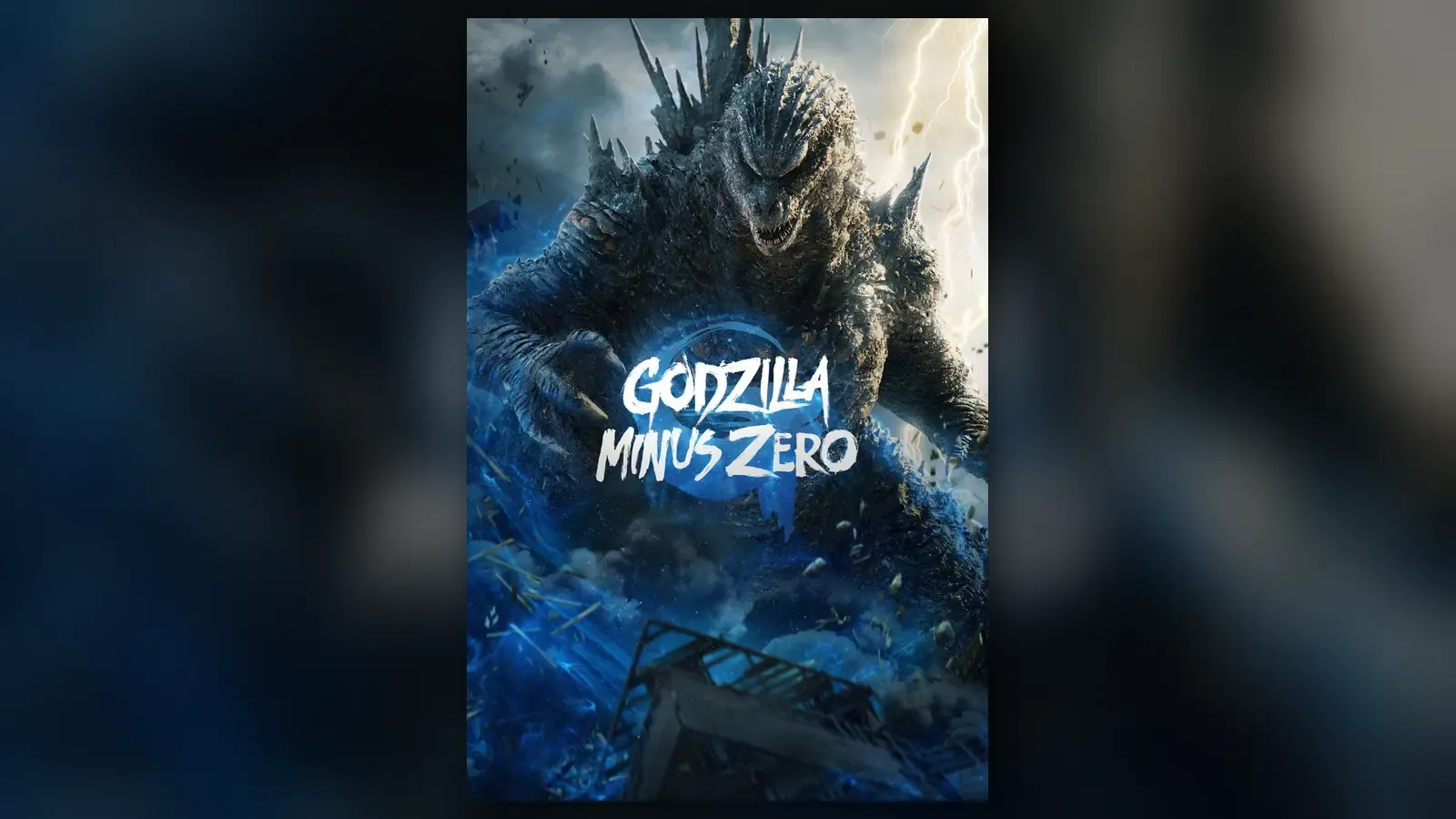
Godzilla Minus Zero at NYFF: What the First Reviews Say
Takashi Yamazaki's Godzilla Minus Zero premiered at the New York Film Festival. A roundup of the first reviews, where they agree, and where they split.
Editor’s note: We have not seen this film yet. This article summarizes published reactions from critics, linked below, together with our own analysis of what they agree and disagree on.
Four reviews of the same sequel landed between Sept. 24 and Sept. 28, and they do not agree on what they saw. Variety’s review, filed from the New York Film Festival Spotlight Gala at Dolby 88 on Sept. 24, calls Godzilla Minus Zero the even grander follow-up to Godzilla Minus One, a battle to the death. Screen Daily calls it devastating and heartbreaking, and still a blockbuster. Eli Friedberg at Slant says the movie is at war with itself, more tormented by the carnage it adores than the 2023 film was. InSession Film’s NYFF note finds a tinge of hope inside a single-take of scientists running through rubble.
We have not seen the film. This is not a review. It is a reading of the split, which is the only thing a person who was not at Dolby 88 can actually check. We have been in festival season long enough to know the pattern. The TIFF list we wrote up was a consensus document. Being Heumann was one film where the history outran the movie. Godzilla Minus Zero is a third shape. The trade papers are warm. The critic who is angry at the film is angry because he thinks it knows better.
What the reviews agree on about Godzilla Minus Zero
Takashi Yamazaki wrote and directed the film (Japan, 2026, 135 minutes); Variety, Screen Daily, and Slant all give that running time. Screen Daily’s credits list production design by Anri Jojo and Wataru Hirai, editing by Ryuji Miyajima, and music by Naoki Sato, and its cast list names Ryunosuke Kamiki, Minami Hamabe, Hidetaka Yoshioka, Min Tanaka, and Masami Nagasawa. Slant gives a longer cast list, including Yamada Yuki, Sasaki Kuranosuke, Kunimura Jun, Tanaka Mio, Ando Sakura, and Nagatani Sae, and names GKIDS as the North American distributor.
The story is set in 1949. Variety and Slant both place King Ghidorah in Matsumoto, and both note that the dragon does not arrive at full strength: Variety says Ghidorah first appears with only one head, and that this changes; Slant describes a lightning-spitting dragon devastating the city. Screen Daily adds that Ghidorah emerges from a meteorite. The other two reviews do not mention the meteorite, which is an omission rather than a contradiction.
Godzilla, in Variety’s account, was thought destroyed at the end of Godzilla Minus One. The parenthetical is the whole theology of this series: it is hard to destroy a god. Screen Daily frames the human side as the Shikishima family, last seen in the 2023 film, trying to rebuild when the new kaiju interrupts them. They rejoin a man named Kenji Noda. That name is stable. Almost nothing else about him is.
The credits do not even agree on the spelling
The reviews also differ on a supporting character. Variety spells the actor’s name Hidetake Yoshioka and describes Kenji Noda as the director of the Large-Scale Disaster Response Bureau, sketching him as high-strung and Einstein-haired. Screen Daily and Slant both spell the name Hidetaka Yoshioka, and Screen Daily calls the character a naval engineer. The two descriptions are not necessarily in conflict, since a naval engineer could run a disaster bureau, but the reviews use different terms and we report both rather than merging them.
Murakami splits the same way. Variety introduces Professor Murakami, played by Min Tanaka, as a Hiroshima survivor doing biological creature research, and puts him in the point of view of the Matsumoto destruction. Slant gives him a full name, Dr. Kanji Murakami, and a harder biography. His wife and child died in the bombing of Hiroshima in 1945. In 1947, during the events of Godzilla Minus One, he watched a nuclear Godzilla destroy Ginza. Two years later he is watching Ghidorah take Matsumoto. We do not have Variety’s full text in front of us, so we cannot say Variety omitted the wife and child. We can say the sentence Slant leads with is a different temperature from “biological creature research.” One review introduces a scientist. The other introduces a man who has already buried a family and a city, and is now watching a third destruction.
That difference in temperature is the real story of the festival response. Variety’s review presents a grander sequel built around a plan: Noda’s team will lure both creatures into a confrontation, which the review praises as sandbox-showdown ingenuity. Slant’s review treats the scientist less as a strategist and more as a witness to his third catastrophe. Neither reading rules out the other, but they invite very different expectations.
Slant thinks the film knows what it is doing, and hates it
Friedberg’s headline is the one we keep coming back to, because it is not a pan in the ordinary sense. “Fascinatingly at war with itself” is a compliment wearing a complaint. The sentence he is willing to print as a thesis: more than its predecessor, Godzilla Minus Zero feels tormented by the very carnage it adores. That is a specific charge. He is not saying the effects are bad. He is saying the movie loves a kind of image it also claims to mourn.
The evidence he offers, in the chunks we can actually quote, is twofold. Literally, there is a new plot contrivance of human bodies fused with Godzilla DNA. Figuratively, the prospect of Japan taming the monster produces what he calls a show-stopping, T2-like vision. The sentence breaks off in the text we have. We will not finish it for him. The point that survives the cutoff is the double exposure: man and monster, nation and weapon, a film that stages the fusion and then wants credit for being disturbed by it.
Koichi, played by Kamiki, is where Friedberg puts the moral argument. The film, in his reading, belittles Koichi’s pacifism as selfishness, and also echoes Koichi’s fear of being reduced to a tool of imperial war. Before the character gets back in his plane, he chokes and sobs. Again the sentence cuts off. We can say the review saw a man crying on the way back to a cockpit. We cannot say what the film thinks that cry means, because Friedberg is in the middle of arguing that the film does not know. That is the war with itself. A movie can show a pacifist as selfish and still be the movie that is afraid of the uniform. Friedberg thinks this one tries to be both, and that the carnage is the tell. You do not shoot the destruction that lovingly if you are as tormented as the dialogue claims.
Slant’s review does not carry a star rating, and lists the film as NR, which is typical of a festival print. Variety’s review gives an MPA rating of R. That is not a disagreement about the film’s content so much as a difference between a festival screening copy and a rated commercial release. If the rating matters to your plans, wait for GKIDS to confirm the rating of the version it releases. None of the four reviews gives a wide-release date.
The hopeful reading is also about parents
InSession’s review is the one that sounds least like a verdict and most like a description of a shot. The opening, in that account, is a single-take. Scientists film the carnage while they run through rubble, away from mutilation or death. The reviewer says it is hard not to think of war films and of bombastic action set pieces, and then states the question Yamazaki is posing to himself: how do you balance raw spectacle, which this film has in quantity, with the terror of that carnage? That is Friedberg’s question too, asked from the other side of the aisle. Friedberg thinks the balance fails in an interesting way. InSession thinks the question is the film’s integrity.
The family material, in the InSession reading, is parents who are terrified of leaving a child in a world that already contains an unfathomable disaster. The review says that despite everything Yamazaki conveys with respect and earnestness, there is a tinge of hope. It praises one fixed-camera sequence and does not, in the text we have, say what the camera is fixed on. We will not invent the shot. A fixed camera in a kaiju movie is usually a choice to stop selling you the scale and make you sit in a room. Whether that room is the hope, or whether the hope is a later scene, is not in our notes.
Screen Daily is closer to InSession than to Slant, and it is closer in a trade-paper way. The human stakes are real, the monster brawls are not sacrificed, the family is trying to rebuild, the engineer is back, the fight is traumatic. “Devastating and heartbreaking” is a blurb. It is also a claim that the emotion is in the film and not only in the audience’s memory of Hiroshima, which the reviewers keep importing because the characters import it. Variety’s grander-sequel frame is the most commercial of the four. A battle to the death, a plan with ingenuity, a god that would not stay dead. You can sell a ticket on that paragraph. You cannot sell a ticket on “at war with itself,” and you should not pretend those are the same recommendation.
What we would do with a ticket, and what we would not claim
The commercial chart we have been writing is a different lobby. This film is still a festival object in the pieces we have. If GKIDS has dated it and we missed the date, that is our miss, not a fact we are willing to type. The analysis that does not require a date is the split itself.
If you want to know whether the 2023 film’s family returns, Screen Daily says they do, and InSession notes that the fear now centres on the child who will inherit the rebuilt city. If you want the strategic, plan-driven version of the film, Variety’s review is the one that praises its ingenuity. If you want a critic who argues that the spectacle and the mourning feed the same appetite, Friedberg’s review makes that case, but read it before you see the film rather than after, because it discusses two late images in detail.
The name and job disagreements are small, and they matter for a different reason. Festival reviews filed in the same week should not be arguing about whether the engineer is Hidetaka or Hidetake, or whether Murakami is a professor of creatures or a doctor who buried his family in 1945. Some of that is sloppiness. Some of it is two writers choosing different nouns for the same man, which is the whole critical act. We trust the overlap: 1949, Matsumoto, a dragon that is not finished arriving, a god that was supposed to be gone, 135 minutes, Yamazaki, the Shikishima household, a scientist who survived Hiroshima. We do not trust a merged character sheet.
The rating card is the practical residue. Variety printed R. Slant printed NR. Buy the ticket for the version you can actually see, and read Friedberg if you want the argument that the movie is ashamed of a pleasure it will not give up. Read Variety if you want the argument that the pleasure got bigger and the plan is the fun. They reviewed the same title. They did not review the same experience, and the gap is the piece, not a problem we can close from a desk.
worth a spot on the list?
Reader notes
Join the discussion
No account needed — leave your take on this film below.
Add these to your list
Nuisance Bear Is in Theaters After Its Critics Choice Win as Josephine Sets November 20
Nonfics says Nuisance Bear is in theaters after the Critics Choice science and nature prize. Josephine, a Sundance double prize winner, is dated for select theaters on November 20.
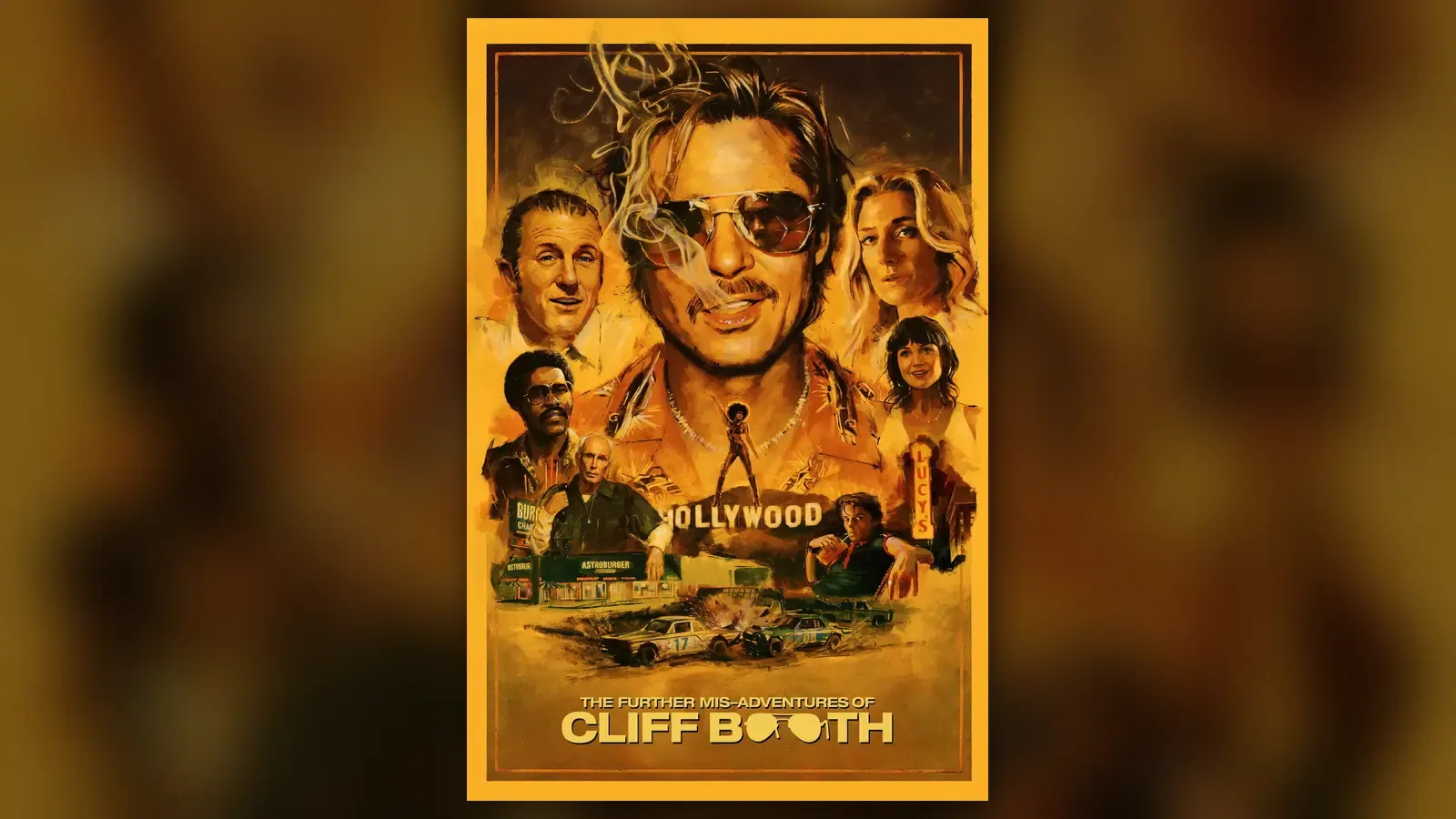
Cliff Booth Trailer: Fincher, Tarantino, and IMAX Details
Netflix released the official Cliff Booth trailer for David Fincher and Quentin Tarantino's 1977 neo-noir, confirming a 141-minute runtime and IMAX dates.
Weekend Box Office (Oct. 23–25): Clayface Wins, but You Can See Everything Steals the Story
Clayface opened at No. 1 with about $24.5 million, while Nathan Fielder's Elizabeth Holmes documentary grew 25% in its second weekend. The full top ten, the holdovers, what happened the following weekend and what it all means.
Clayface Box Office: DC's $24.5 Million Horror Experiment, Explained
Clayface opened at No. 1 with about $24.5 million in North America and $43 million worldwide. How the weekend unfolded, how it compares with DC and horror openings, and what the holds since then say about DC's mid-budget gamble.
Loading comments...