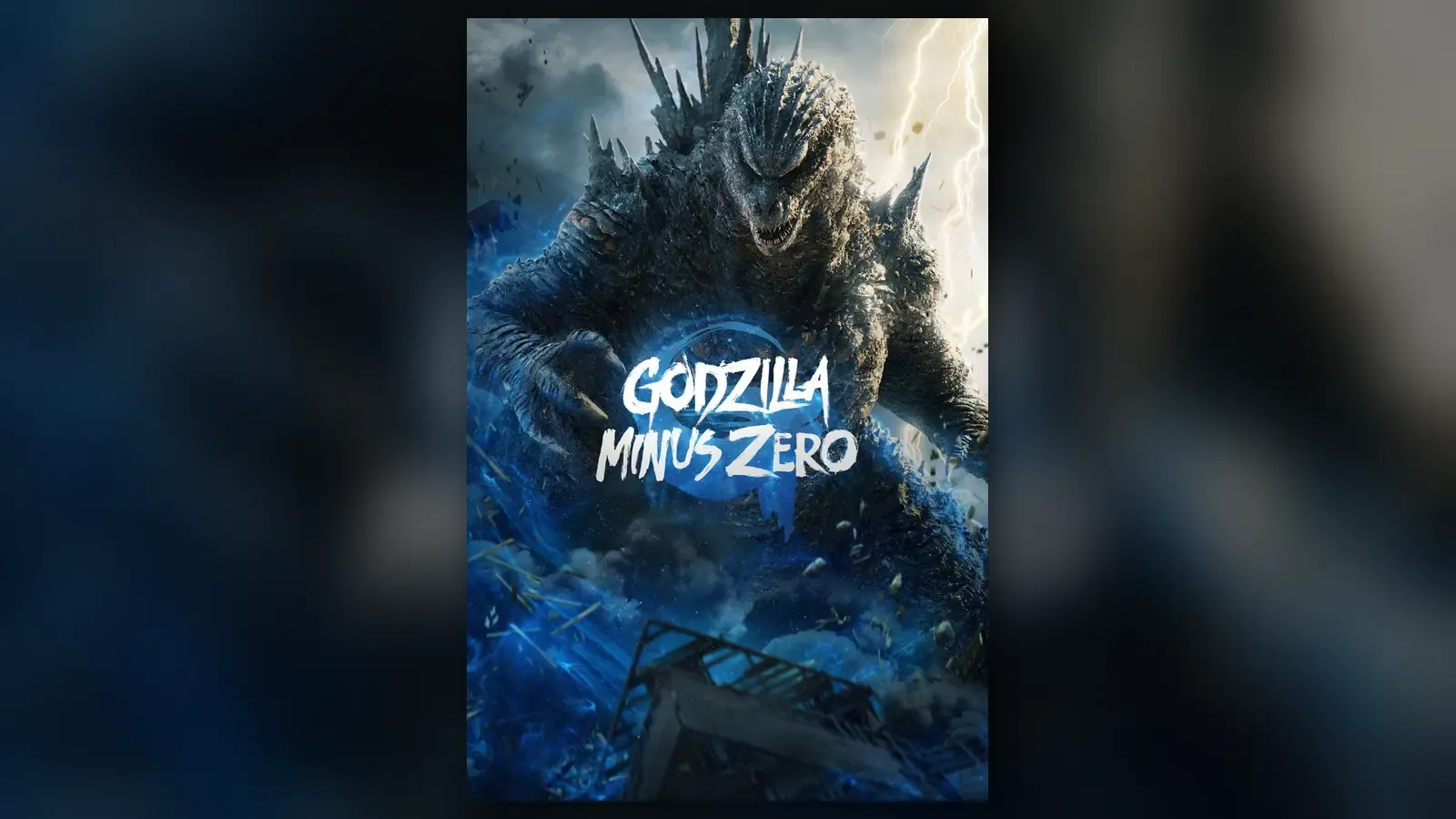
Godzilla Minus Zero Review Roundup: What Critics Said About Takashi Yamazaki's Sequel
Takashi Yamazaki's Godzilla Minus Zero pits Godzilla against King Ghidorah in 1949 Japan. Critics praised its effects and scale and debated whether it tops Minus One. Reviews, production, box office.
Editor’s note: This review is a roundup of published critical reception and reporting, with analysis by the Bucket Movies Editorial Team. We did not attend a screening; plot and scene details are summarized from published reviews and official materials. See how we work.
Editor’s note: an earlier version of this article linked to two pages that do not exist and included production details and scene descriptions we could not verify. It has been rewritten from the published reviews and reporting linked below.
Our angle: The question every review of Godzilla Minus Zero tries to answer is whether it beats Godzilla Minus One. Critics broadly agree that it is bigger and better-looking. They split on whether it is better. This roundup sets out both sides, then adds the production and box office facts. For the festival reaction specifically, see our NYFF reaction piece.
What the film is
Godzilla Minus Zero is the 2026 sequel to Godzilla Minus One (2023), written and directed by Takashi Yamazaki, who also supervised its visual effects. Its credits read “VFX, written, and directed by Takashi Yamazaki,” a credit Variety called “highly unusual.” Ryunosuke Kamiki, Minami Hamabe, Hidetaka Yoshioka, Yuki Yamada, Kuranosuke Sasaki, Sakura Ando and Miou Tanaka return from the first film. They are joined by Min Tanaka as a scientist who survived Hiroshima, Masami Nagasawa as a meteorologist and Jun Kunimura. Toho produced with Robot Communications, Shirogumi handled the effects, and Naoki Satō composed the score. It runs 135 minutes and is the first Japanese production filmed for IMAX.
The film premiered at the New York Film Festival on September 26, 2026. It opened in Japan on November 3, Godzilla Day, and in North America on November 6 through Toho’s subsidiary GKIDS. It is the first Godzilla film rated R in the U.S., for “some violent content/bloody images.”
The premise (no ending)
In 1949, two years after the events of Minus One, Kōichi Shikishima and Noriko are raising their adopted daughter, Akiko, while Japan rebuilds. A dragon-like creature then destroys the city of Matsumoto. Scientists name it Ghidorah, and Kenji Noda’s disaster-response bureau has to find a way to stop it. As conventional weapons fail, Godzilla, believed destroyed at the end of the first film, becomes part of the plan. The Guardian notes that Ghidorah’s presence is not a spoiler, since the creature appears from the very first scene.
How it was made
- An early start. Producer Kazuaki Kishida has said that planning began in May 2023, after a strong internal reaction to the first cut of Minus One. Toho confirmed a new Yamazaki Godzilla film in November 2024 and announced the title in November 2025.
- The shoot. Principal photography ran from August to December 2025, including location work with extras in Ibaraki Prefecture. Kōzō Shibasaki, Yamazaki’s longtime cinematographer, shot it.
- The budget. Minus One cost less than $15 million. Yamazaki has said the sequel’s budget was about 30% higher.
- The effects. Yamazaki has said the larger budget let him expand the effects team, but also “moved the goalposts” for what the shots had to achieve. He discussed the IMAX-scale effects and his influences in an interview with Collider.
- Marketing. GKIDS and Toho released teasers and posters through 2026, including a July poster and teaser. The North American marketing budget was reported to be under $10 million.
What critics praised
Rotten Tomatoes lists 90% approval from more than 160 reviews. Its consensus says the film “solidifies director Takashi Yamazaki’s take on the King of Monsters as one of the mightiest yet by upping the ante without losing sight of its lovable characters.” Metacritic shows 74 from 44 critics, which it classifies as “generally favorable.” None of those 44 reviews was negative. Audiences gave it an “A” CinemaScore, the same as Minus One.
- David Rooney of The Hollywood Reporter called it “a crackling kaiju epic every bit as exciting as its predecessor.” He praised “some of the most impressively seamless integration of major-scale CGI in recent memory,” and said the human drama is “no less compelling than the monster faceoffs.”
- Owen Gleiberman of Variety was among the most enthusiastic. He wrote that when Godzilla and King Ghidorah fight, “it’s more than a WWE match of primeval rivals.”
- Molly Edwards of GamesRadar+/Total Film called it “bigger, bolder, and more ambitious than its predecessor” and “easily one of the best films of the year.” She praised its “devastating, hard-hitting story that grapples with post-war trauma.”
- Jesse Hassenger of The Guardian praised the film for combining disaster-movie scope with horror-movie intensity while still favoring the quality of its effects over their quantity.
- Inverse called it “a triumph of special effects.” It noted that the film confronts the atomic bomb more directly than Minus One, including a callback to the hospital-ward scene in the 1954 original.
The reservations
The reservations are about structure and focus rather than craft.
- Not enough Godzilla. Inverse wrote that “Godzilla Minus Zero could have used more Godzilla.” Even GamesRadar+, in a rave, said it “is more of a Ghidorah movie than a Godzilla movie.” Inverse’s Kate Rife also found the human story less tightly organized than in Minus One.
- Sillier late passages. William Bibbiani of TheWrap judged it one of the stronger Godzilla sequels but not one of the franchise’s best. He argued that its later stretches get sillier and its drama leans more on contrivance. He also read Ghidorah, a lightning-breathing dragon, as a metaphor for natural disasters, especially hurricanes.
- A weaker ending. James Mottram of the South China Morning Post praised the imagery and the surprises but found the ending weaker.
- Small continuity notes. The Guardian observed that Akiko “somehow seems more or less the same age” two years later.
The atomic-bomb thread
Several reviews singled out how much more directly the sequel engages with the war. Minus One was about a kamikaze pilot’s survivor’s guilt. Minus Zero adds Professor Murakami, played by Min Tanaka, a biologist who survived the Hiroshima bombing. Variety noted that the opening destruction of Matsumoto is partly seen from his point of view. Inverse wrote that the film “delves into the connection between Godzilla and the atomic bomb more explicitly than its predecessor,” and that at one point Yamazaki “dispenses with metaphor altogether,” showing the aftermath of Hiroshima. Inverse also noted that Godzilla “bleeds in Minus Zero in a way he hasn’t for decades,” which helps account for the R rating. For critics who preferred the first film, that heavier material sits awkwardly beside the more fantastical monster battles. For its admirers, it is what keeps the spectacle grounded.
Box office
The film earned about ¥910 million on its first day in Japan, a record opening day for a live-action film in Japan. In North America it opened above tracking of $25 million to $30 million, with $14.7 million on its first day including previews, per Deadline. That made it the biggest opening weekend for a foreign-language live-action film in the U.S. and Canada. Globally it set a record for a Japanese film in IMAX, per Deadline’s global report. As of its first full week, it had reached about $63 million worldwide, including $31.6 million in North America. Those figures will keep changing while it is in theaters.
Where it sits in the franchise
Minus One won the Academy Award for Best Visual Effects and became one of the highest-grossing Japanese films ever, so expectations were unusually high. Ghidorah first appeared in Ghidorah, the Three-Headed Monster (1964), as Variety noted, making this a deliberate return to one of the franchise’s oldest rivalries. The film also follows the long-standing practice under which Toho and Legendary avoid releasing competing Godzilla films in the same year. Legendary’s next Monsterverse entry, Godzilla x Kong: Supernova, is scheduled for 2027.
Who it is for
Fans of Minus One will find the same mix of postwar drama and monster spectacle on a larger scale. Viewers who mainly want Godzilla on screen should know that, by several accounts, Ghidorah gets more of the spotlight. The R rating reflects bloodier imagery than earlier Godzilla films, including scenes depicting the aftermath of Hiroshima. For more of this season’s releases, see our fall 2026 movies guide, or browse the reviews section.
Our read
Read together, the reviews describe a sequel that clearly beats its predecessor on spectacle and roughly matches it on heart, with a looser structure. Critics agree on the effects, and the opening records suggest audiences do too. The one debate is whether a bigger Minus One is a better one, and the reviews leave that question genuinely open.
How this was compiled: credits, plot outline, production and release details come from Toho, GKIDS and NYFF materials and the trade coverage linked above; critics’ quotes come from the linked reviews in The Hollywood Reporter, Variety, GamesRadar+, The Guardian, Inverse, TheWrap and the South China Morning Post; scores are from Rotten Tomatoes, Metacritic and CinemaScore; box office from Deadline. Bucket Movies did not watch the film for this piece. See how we work.
worth a spot on the list?
Reader notes
Join the discussion
No account needed — leave your take on this film below.
Add these to your list
Mayday Review: Reynolds and Branagh Make a Cold War Buddy Movie Work
Apple TV's Mayday premieres September 4. Ryan Reynolds and Kenneth Branagh sell a silly Siberian escape better than the stealth-jet premise deserves.
The Burning Sea Review Roundup: Norway's Oil-Rig Disaster Film, Reconsidered
John Andreas Andersen's The Burning Sea (Nordsjøen), a 2021 Norwegian oil-rig disaster film from the team behind The Wave and The Quake. What critics praised, what they faulted, and why it still matters.
Coyote vs. Acme (2026): The Looney Tunes Courtroom Comedy That Refused to Die
Coyote vs. Acme, the Looney Tunes courtroom comedy Warner Bros. shelved for a tax write-off, finally reached theaters in 2026. What critics said, how it was made, how it was saved, and how it performed.
Mutiny (2026) Review Roundup: Jason Statham's Cargo-Ship Thriller Splits Critics Down the Middle
Jean-François Richet's Mutiny puts Jason Statham on a cargo ship against a human-trafficking crew. Critics split almost exactly 50/50. What they praised, what they faulted, and how it performed.
Loading comments...