Grown Ups 3 Is Finally Happening: The Original Cast Is Back
More than a decade after Grown Ups 2, Netflix has officially greenlit the third installment with Adam Sandler, Chris Rock, and the full original crew returning.
Editorial Notes
BucketMovies Editorial covers classic cinema, repertory discoveries, and context-rich film criticism with an emphasis on source-backed reporting and careful editorial review.
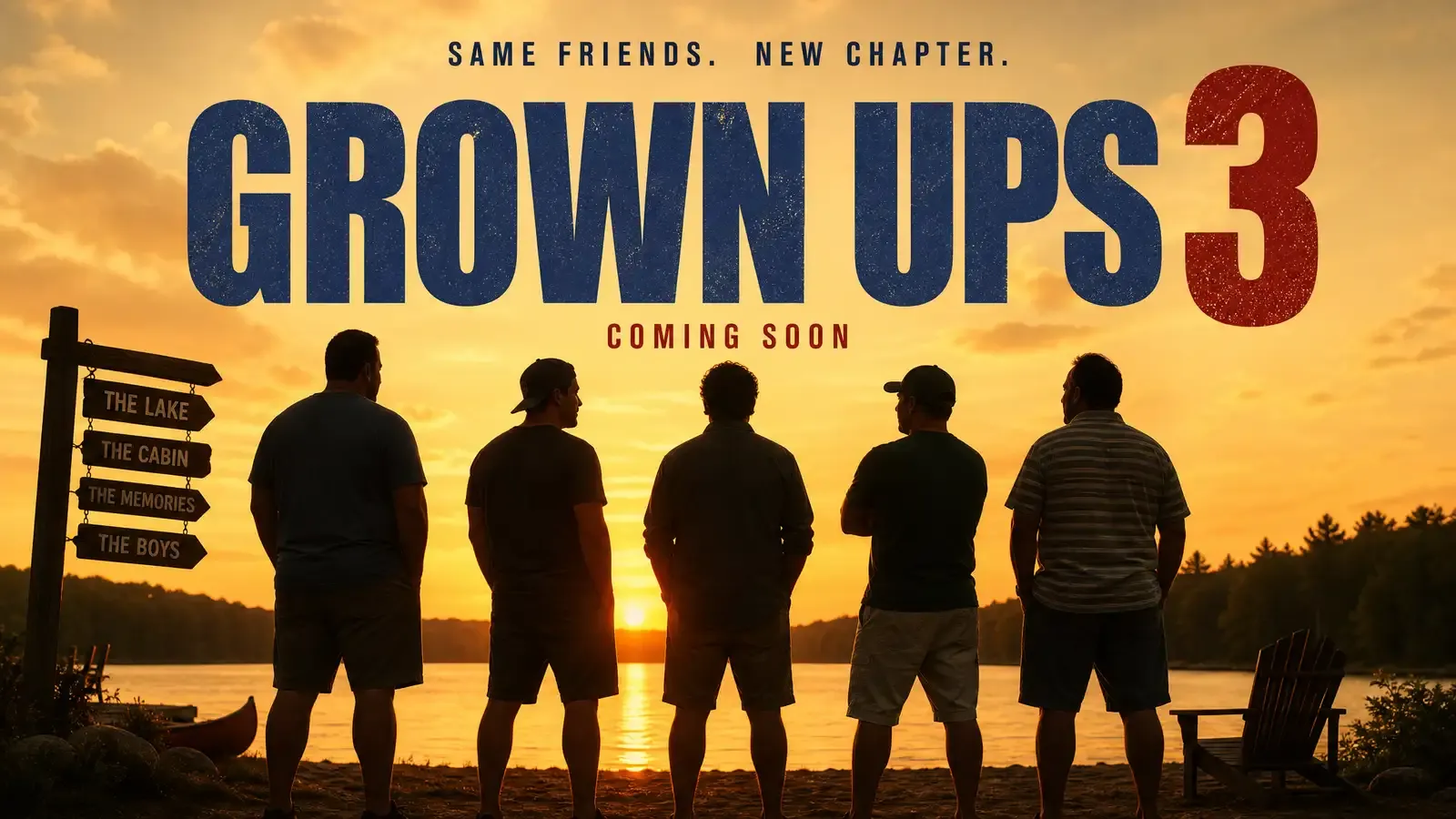
The wait is over. More than thirteen years after Grown Ups 2 hit theaters in 2013, Netflix has officially confirmed that Grown Ups 3 is in the works, and the entire original cast is coming back.
Adam Sandler, Kevin James, Chris Rock, David Spade, and Rob Schneider will all reprise their roles as the childhood friends who reunite for various misadventures. The announcement, which came from Netflix’s Tudum editorial team on August 6, immediately sent the franchise’s fanbase into a frenzy.
Why now?
The timing makes sense from a business perspective. Netflix has been aggressively expanding its film slate, and the Grown Ups franchise has consistently performed well on streaming platforms. The first two films grossed a combined $585 million worldwide, making it one of Sandler’s most commercially successful properties.
But the real driver appears to be audience demand. Social media has been littered with “where is Grown Ups 3?” posts for years. The second film ended with a post-credits scene teasing another reunion, and fans never let that thread die. Netflix clearly noticed the built-in audience.
Sandler’s relationship with Netflix has been mutually beneficial since they first partnered in 2014. He’s delivered a steady stream of original films for the platform, and his deal has been renewed multiple times. Adding Grown Ups 3 to the Netflix slate gives the streamer a guaranteed crowd-pleaser with cross-generational appeal.
What we know about the cast
The core five are all returning. Sandler will once again play Lenny Feder, the successful Hollywood producer who moved his family back to his hometown. Kevin James reprises his role as Eric Lamonsoff, the lovable everyman. Chris Rock returns as Kurt McKenzie, the wisecracking father dealing with teenage daughters. David Spade is back as Marcus Higgins, the perpetual bachelor. And Rob Schneider rounds out the group as Rob Hilliard, the eccentric stepfather.
The original films also featured Salma Hayek, Maria Bello, Maya Rudolph, and other supporting players, but Netflix has not yet confirmed which of those actors will return. The absence of those names from the initial announcement doesn’t necessarily mean they won’t be involved, but it does suggest the focus is on the male leads.
The franchise has always been built around the chemistry between these five actors. They worked together before Grown Ups through various Happy Madison productions, and their off-screen friendship translates into an easy, improvisational dynamic on screen. Whether that chemistry still works after more than a decade apart remains to be seen.
The Grown Ups legacy
The Grown Ups franchise occupies an unusual space in modern comedy. Critics have consistently panned both films, with the first earning a 10% on Rotten Tomatoes and the second dropping to 3%. The reviews tend to focus on lazy writing, broad humor, and a reliance on Sandler’s improv-heavy style.
But audiences have consistently disagreed. The first film earned $271 million worldwide on a $75 million budget. The sequel, despite worse reviews, earned $241 million. The home video and streaming numbers have been even stronger, with both films regularly appearing in Netflix’s most-watched comedy categories.
This disconnect between critical reception and commercial performance is actually one of the more interesting things about the franchise. Sandler has built a career on making movies that critics hate but audiences love. The Grown Ups films are perhaps the purest expression of that philosophy.
There’s also something to be said for the films’ fundamental premise. The idea of middle-aged men trying to recapture the simplicity of their childhood friendships resonates with a specific audience, particularly men in their 30s and 40s who are navigating the same life transitions. The films don’t pretend to be deep, but they tap into a genuine emotional current about friendship, aging, and the desire to maintain connections that childhood provided effortlessly.
What to expect from the third film
Netflix has not released a plot synopsis or production timeline, so details are scarce. However, based on the franchise’s pattern, we can make some educated guesses.
The first film centered on a weekend reunion at a lakeside vacation home. The second expanded the scope to include a series of competitive games at their children’s summer camp. A third film would likely push the premise further, perhaps involving a different kind of reunion or a new setting that forces the characters together.
The supporting cast’s children, played by various young actors including Sandler’s real-life daughters, have also grown up significantly since the last film. That could provide new material, with the next generation entering the picture as teenagers or young adults.
Director Dennis Dugan, who helmed both previous films, has not been confirmed for the third installment. Dugan retired from directing after 2015’s Pixels, so Netflix will likely need to find a new director. Given Sandler’s loyalty to his regular collaborators, a director from the Happy Madison stable seems probable.
The streaming comedy landscape
Grown Ups 3 arrives in a very different comedy landscape than its predecessors. The theatrical comedy has been in decline for years, with studios increasingly hesitant to release comedies in theaters. Netflix and other streamers have filled that gap, becoming the primary home for comedy films.
This shift actually works in Grown Ups 3’s favor. The franchise was always more of a living room movie than a theatrical event. Audiences watched the previous films on cable and streaming, not in theaters. Moving to Netflix eliminates the box office pressure and lets the film play to its natural audience.
The question is whether the humor that worked in 2010 and 2013 still lands in 2026. Comedy ages differently than drama, and the Grown Ups films were very much of their time. Sandler’s improv-heavy style, the broad physical comedy, and the gender dynamics of the humor have all come under more scrutiny in recent years.
But Sandler has shown an ability to adapt. His more recent Netflix films, like Murder Mystery and Hustle, demonstrated a willingness to work within different frameworks while maintaining his comedic identity. A Grown Ups 3 could benefit from that evolution, potentially finding a balance between the franchise’s established tone and a slightly more modern sensibility.
The nostalgia factor
There’s another angle to consider: nostalgia. The original Grown Ups came out in 2010, which means the kids who watched it in theaters are now in their late twenties and early thirties. They’re the exact demographic that Netflix is targeting with this franchise. These viewers grew up with Sandler’s comedies, and the idea of seeing the gang back together carries genuine emotional weight for them.
This is the same nostalgia engine that powered franchise revivals like Top Gun: Maverick and the Cobra Kai series. When done right, returning to familiar characters and worlds after a long gap can create a powerful connection with audiences. The key is honoring what people loved about the original while acknowledging that time has passed.
For Grown Ups, that means the characters should be visibly older, dealing with the realities of middle age in ways that feel honest rather than performative. The first two films touched on this occasionally, but a third film has an opportunity to lean into it more fully. The characters aren’t just reuniting for fun; they’re reuniting because life has changed, and they need each other in ways they didn’t before.
The franchise’s core appeal has always been about male friendship and the difficulty of maintaining it as life gets complicated. That theme hasn’t aged at all. If anything, it’s become more relevant as conversations about men’s mental health and social isolation have entered the mainstream.
Behind the scenes
Netflix has not announced a director, writer, or production timeline for Grown Ups 3. Dennis Dugan, who directed both previous films, retired from directing after 2015’s Pixels, so a new director will be needed. Given Sandler’s loyalty to his regular collaborators, someone from the Happy Madison Productions stable seems likely.
The writing situation is also uncertain. Fred Wolf wrote the first film, and the second was written by Wolf and Sandler collaborator Tim Herlihy. Whether either will return for the third is unknown. Sandler typically maintains tight control over his projects, so expect his fingerprints on the script regardless of who gets the official credit.
Production will likely take place in 2027, with a release targeted for late 2027 or early 2028. Netflix tends to move quickly on these projects once they’re greenlit, and the franchise doesn’t require extensive post-production work. The films are straightforward comedies without heavy visual effects requirements.
What this means for Netflix
For Netflix, Grown Ups 3 represents a safe bet in an increasingly competitive streaming landscape. The platform needs content that draws broad audiences, and few properties have the built-in recognition of this franchise.
The film also reinforces Netflix’s strategy of leveraging established IP and star power. Rather than gambling on unproven concepts, the platform is doubling down on properties with track records. It’s a pragmatic approach, even if it doesn’t generate the kind of cultural conversation that more innovative projects might.
Grown Ups 3 doesn’t have a release date yet, but given Netflix’s production timeline, a 2027 or 2028 release seems likely. In the meantime, the cast announcement alone has generated more buzz than most Netflix originals receive in their entire marketing cycle. That’s the power of a franchise that, despite its critical reputation, has never lost its audience.
Share This Article
Comments