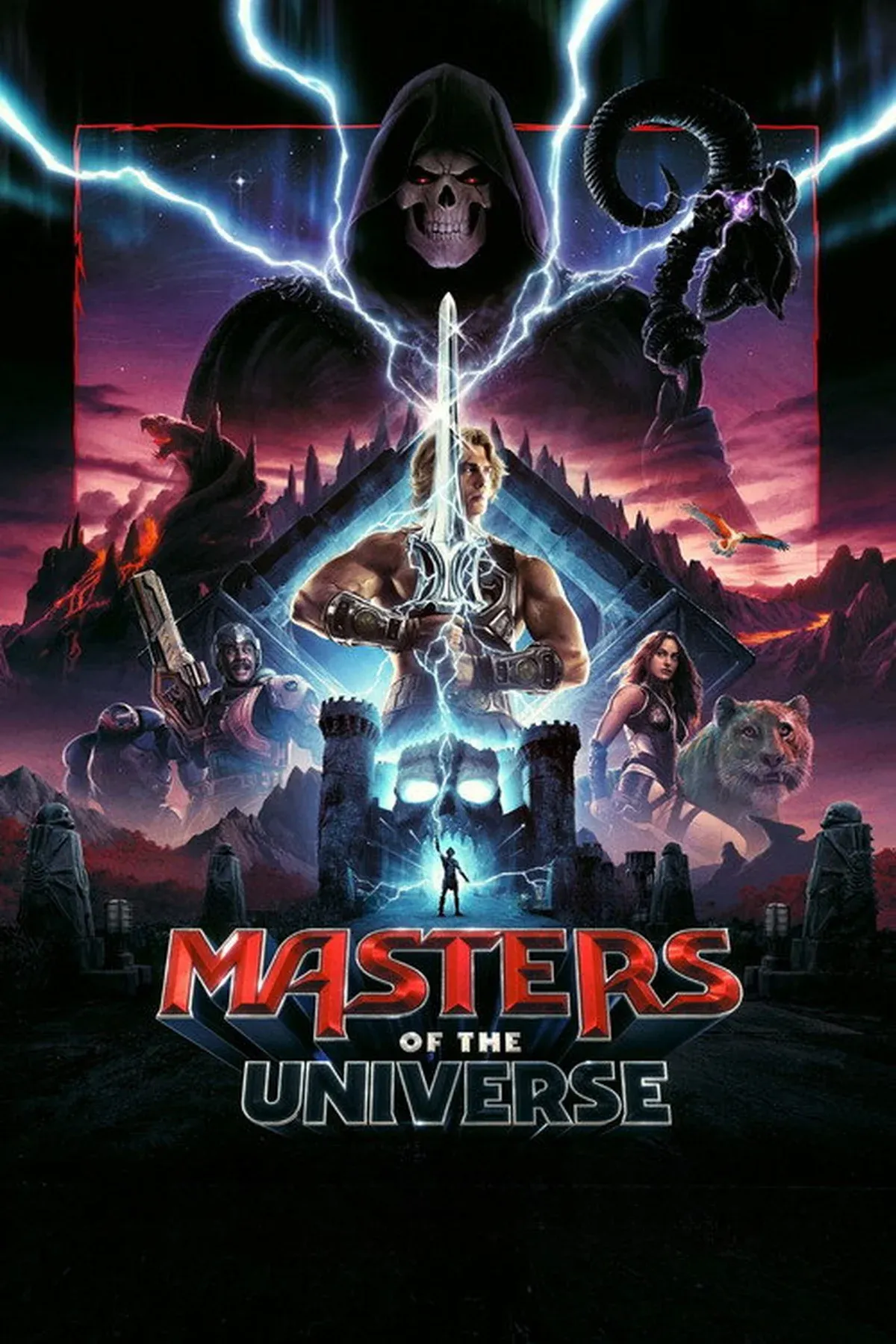
Why Masters of the Universe Became One of 2026's Biggest Box Office Bombs
Amazon MGM's $200M Masters of the Universe opened to just $54M worldwide despite solid reviews. Here's why big-budget nostalgia IPs are losing their grip on modern audiences.
Editorial Notes
Anna edits BucketMovies criticism and essay packages, with a steady interest in classic Hollywood, literary adaptations, and repertory programming.
There’s a saying in Hollywood: “Good reviews don’t pay the bills.” Masters of the Universe just proved it.
Amazon MGM’s He-Man reboot, starring Nicholas Galitzine as Prince Adam and Jared Leto as Skeletor, opened to a combined $54 million across 86 countries over the weekend ending June 7, 2026. The budget was $200 million. That doesn’t require a film school degree to work out. This is one of the most expensive box office disasters of the decade.
What makes it jarring is that critics actually liked it. Rotten Tomatoes scores were solid. Audiences who watched it weren’t turning away in disgust. And yet almost nobody showed up. The disconnect between quality and commercial performance tells a bigger story about where the film industry is heading, and it probably isn’t the direction studio executives want to hear.
The Numbers Don’t Lie
Let’s start with the facts. Masters of the Universe opened to roughly $29 million domestically and $25 million internationally. That’s $54 million total against a $200 million production budget, and that doesn’t even count marketing costs. For a tentpole of this scale, marketing typically adds another $100 to $150 million.
Compare this to what happened just one month earlier. The Super Mario Galaxy Movie crossed the $1 billion mark globally, with $438.5 million domestic and $571.5 million international on a comparatively modest $110 million budget. That’s a 9x return. Masters of the Universe won’t even triple its budget at this rate.
And it isn’t a binary comparison either. Project Hail Mary pulled in $680 million worldwide. The Devil Wears Prada 2 is threatening $700 million. Backrooms and Obsession, both smaller films with far smaller budgets, crossed $200 million each. Obsession was made on a budget of just $750,000 and has already grossed over $225 million. That’s a 300x return.
The pattern is clear. In 2026, the films that work aren’t necessarily the ones with the most money behind them.
The Nostalgia Trap
Here’s the uncomfortable truth that studio executives don’t want to hear: nostalgia is not a strategy. For years, Hollywood operated on the assumption that reviving a beloved property was a built-in ticket to box office success. If you can just get the right character back on screen, the fans will come.
Masters of the Universe shattered that assumption.
He-Man is a cultural icon. The 1980s cartoon defined an entire generation’s relationship with action figures. The brand recognition is enormous. And yet, when Amazon MGM put $200 million behind a theatrical release with recognizable stars, the audience simply didn’t materialize.
Nostalgia is a feeling, not a purchase intention. People remember He-Man fondly, but warm feelings don’t translate into $15 cinema tickets on a Friday night. Not when there are dozens of other options competing for the same two hours of attention.
The YouTube-TikTok Generation Problem
This is where the story gets interesting, because it isn’t just about Masters of the Universe. It’s about a generational shift in how audiences consume entertainment.
Kotaku’s coverage of the failure noted something important: “Big IP appealing to older generations is not the future of cinema.” Meanwhile, smaller films appealing to the YouTube and TikTok generation are keeping Hollywood afloat.
Backrooms is the perfect counter-example to He-Man. It wasn’t built on a beloved 1980s franchise. It didn’t have decades of cultural nostalgia behind it. What it did have was a concept that resonated with a generation raised on internet creepypasta and liminal space aesthetics, plus a budget small enough that $200 million in box office revenue represented a massive win rather than a catastrophic loss.
The audience for Masters of the Universe is an aging demographic. People who grew up with the original He-Man cartoon in the 1980s are in their 40s and 50s now. They have jobs, mortgages, kids. They might have gone to the theater when they were 12 and their parents took them. Today they’re far more likely to wait for the streaming release than to spend an evening at the cinema.
Meanwhile, the demographic that actually goes to movie theaters regularly — teenagers and young adults — has no emotional attachment to He-Man. To them, it’s just another fantasy action movie. And when you’re 19 and choosing what to see on a Friday night, you pick the film your friends are talking about. Not the one your dad had posters of in his bedroom.
The Budget-to-Return Disconnect
The most damning aspect of the Masters of the Universe story isn’t that it failed. It’s how expensively it failed.
A $200 million budget for a reboot of a property whose cultural relevance peaked four decades ago is an astonishing misallocation of resources. Amazon MGM could have made five Backrooms-sized films for the same price. Each one would have needed to find its audience, but the risk would have been distributed across five different properties and five different concepts instead of landing entirely on one enormous bet.
All that money went into a single nostalgic IP. And it lost.
This is the old Hollywood model, and it’s breaking. Find a property people remember, pour $200 million into it, attach a famous actor, and watch the money roll in. That model worked in 2015. It might have even worked in 2019. But in 2026, the audience has changed.
What This Means for the Rest of 2026
The domestic box office is still on pace for well over $9 billion by year’s end, which sounds healthy. But the composition of that $9 billion tells a different story. The biggest earners aren’t the expensive nostalgia plays. They’re the films that found genuine cultural resonance — Project Hail Mary’s science fiction optimism, Obsession’s horror efficiency, Mario’s family-friendly universality.
The question for the second half of 2026 is whether studios will learn from Masters of the Universe. Will they recognize that throwing money at IP isn’t a substitute for understanding what audiences actually want to watch?
The films that are succeeding right now share a common trait: they found an audience first and spent money second. Obsession was made on $750,000 because it had a concept that resonated. The budget followed the idea. Backrooms succeeded because it understood its audience’s cultural language. Project Hail Mary succeeded because it offered something genuine rather than something merely familiar.
The Bigger Picture
Masters of the Universe isn’t just a box office failure. It’s a signal. The era of nostalgia-driven tentpoles is closing, not because audiences hate old properties, but because nostalgia alone isn’t enough to get people off their couches and into theaters.
The audience that grew up with He-Man loved it. Love doesn’t buy tickets. Relevance does. And in 2026, relevance looks a lot more like Backrooms and Obsession than a $200 million He-Man movie.
Amazon MGM made a well-reviewed film with recognizable talent and enormous production values. They just made it for an audience that doesn’t exist anymore. Whether anyone in Hollywood is willing to try a different approach — that’s the real story here.
Share This Article
Comments
Join the conversation
0 entriesRelated Articles

The 2026 Box Office at Midyear: Billion-Dollar Mushrooms, Superhero Flops, and What It All Means

The Greek Poem and the Masked Man: How 2026's Oddest Double Act Saved Hollywood's Summer