Christopher Nolan's The Odyssey: The Director's Epic Journey Home
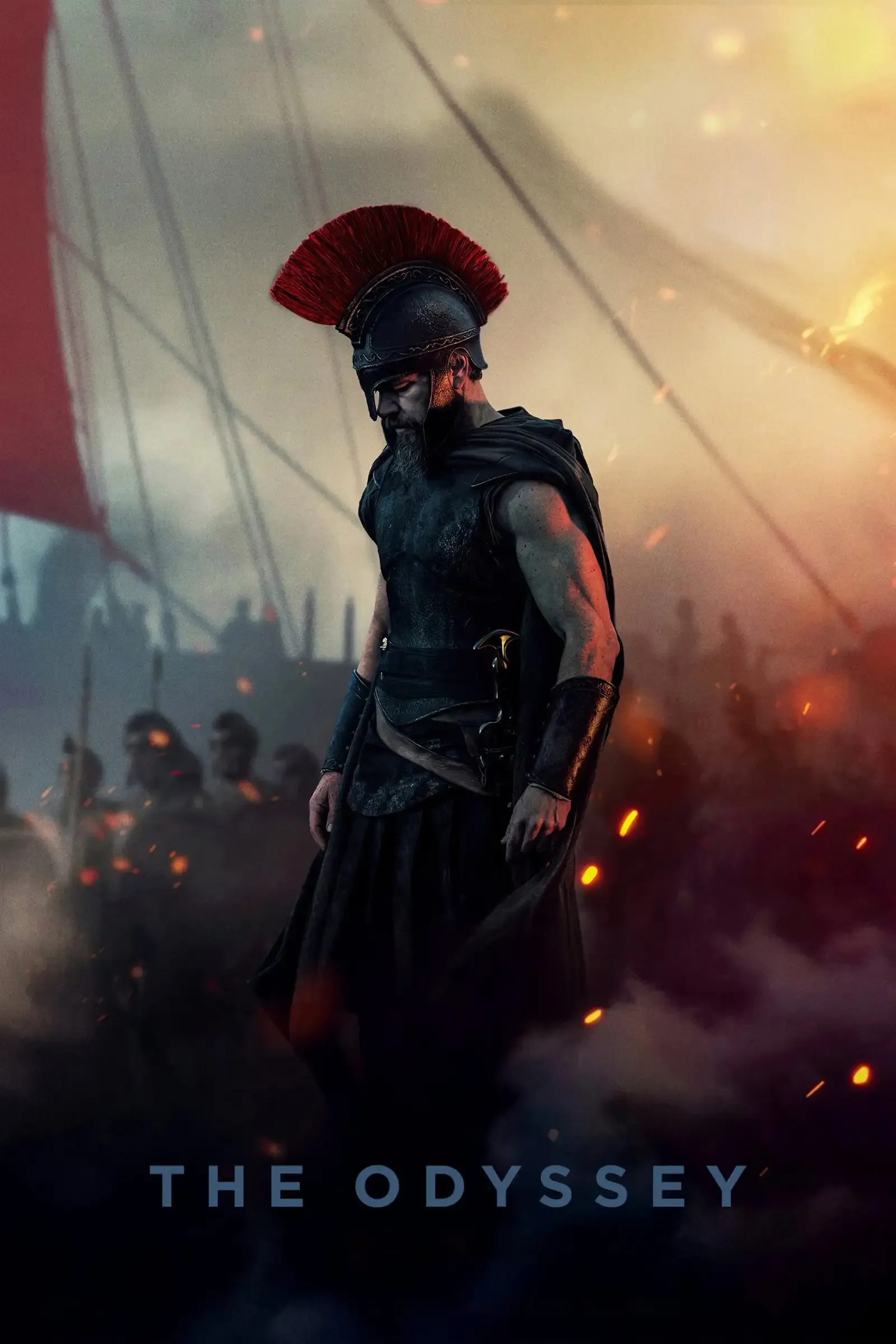
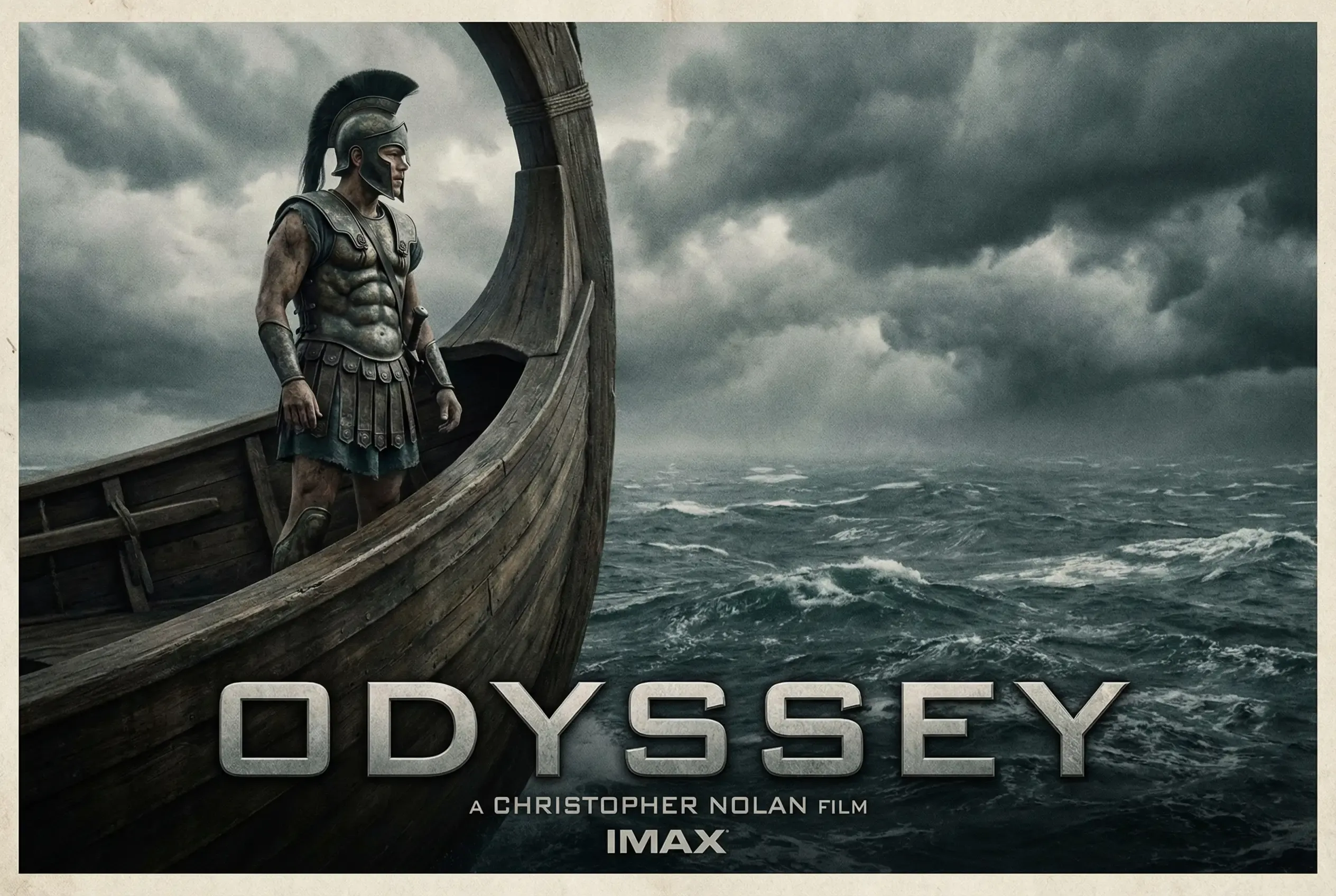
Christopher Nolan brings Homer's ancient epic to life with Matt Damon as Odysseus. Everything we know about the 2026 summer blockbuster.
Editorial Notes
Michael works on director studies, international cinema features, and discovery-focused list packages built around film history.
Anna Price
Editor-in-Chief
Anna edits BucketMovies criticism and essay packages, with a steady interest in classic Hollywood, literary adaptations, and repertory programming.
Christopher Nolan’s The Odyssey: The Director’s Epic Journey Home
Christopher Nolan has spent his career constructing labyrinths of narrative complexity, from the dream-within-dreams architecture of Inception to the temporal manipulations of Tenet. Yet none of his films have prepared audiences for the most ancient labyrinth of all: the one woven by the Greek poet Homer nearly three millennia ago. The announcement of Nolan’s The Odyssey, an adaptation of the foundational Western epic, represents something more than a directorial pivot to classical material. It marks the convergence of a filmmaker who has repeatedly explored themes of homecoming, sacrifice, and the fragile boundary between myth and reality with a story that has defined those themes for generations. Set for release on July 17, 2026, The Odyssey promises to be not merely a retelling of Odysseus’s ten-year voyage home to Ithaca, but potentially the most personal film in Nolan’s distinguished career.
A Story Written in the Stars
The Odyssey begins where the Iliad ends: in the smoldering ruins of Troy, after a decade of brutal warfare. The Greek hero Odysseus, known for his cunning intellect rather than brute strength, sets sail for his homeland of Ithaca, accompanied by twelve ships and a crew of loyal men. What follows is a journey that would span ten years and test the limits of human endurance, both physical and psychological. Homer’s epic poem, composed around the 8th century BCE, established the template for nearly every adventure narrative that followed, from The Lord of the Rings to Star Wars.
The narrative branches into multiple legendary encounters that have become touchstones of Western literature. Odysseus faces the man-eating Cyclops Polyphemus, endures the deadly songs of the Sirens, and survives the wrath of Poseidon, god of the sea, who has sworn to keep him from ever seeing his home again. His wife Penelope, meanwhile, remains in Ithaca, defending their kingdom against ambitious suitors who believe Odysseus dead, weaving a burial shroud by day and unpicking it by night. Their son Telemachus, born during the war, must grow into a warrior worthy of his father’s legacy. The goddess Athena, protector of Odysseus, orchestrates divine intervention from Mount Olympus, blurring the line between fate and free will that Nolan has explored throughout his filmography.
The emotional core of the story, however, has always been the relationship between husband and wife, separated by geography but united by an unbreakable bond of loyalty and love. When Odysseus finally returns, disguised as a beggar, Penelope tests him by describing their marriage bed, carved from the living olive tree roots beneath their chamber. Only the true Odysseus would know this secret. This moment of recognition, delayed and hard-won, transforms The Odyssey from a swashbuckling adventure into something far more profound: an exploration of what it means to maintain identity across impossible distances and extended absences. Nolan’s films have frequently centered on characters separated from everything they know by time, space, or circumstance, making this adaptation feel almost inevitable in retrospect.
Assembling the Pantheon
The casting of Matt Damon as Odysseus represents perhaps the most conventional choice in a production that has otherwise courted controversy and curiosity in equal measure. Damon brings to the role a weathered gravitas that has deepened over his career, from the cerebral heroism of Good Will Hunting to the physical demands of the Bourne franchise. More importantly, he possesses the quality that defines Nolan’s preferred actors: an ability to project intelligence and internal conflict simultaneously. Odysseus is not a hero defined by physical prowess but by mental agility, and Damon has spent three decades demonstrating exactly that capacity on screen.
Tom Holland’s casting as Telemachus marks the most intriguing generational bridge in the production. The young actor, synonymous with the ultra-modern Spider-Man franchise, will now embody the coming-of-age narrative at the heart of Homer’s second book. The journey from boy to man that Telemachus undertakes, seeking news of his father and eventually standing beside him against the suitors, provides the emotional throughline that transforms The Odyssey from a one-man show into a multi-generational saga. Holland’s transition from Marvel’s most quip-heavy superhero to a figure of classical gravity represents a bold artistic statement about the universality of these ancient stories.
Anne Hathaway takes on the role of Penelope, one of the most complex female characters in all of classical literature. The challenge lies in portraying a woman who must simultaneously maintain hope for a husband who may never return while defending her kingdom against dozens of predatory suitors. Hathaway’s career has included both the fantastical romance of The Princess Diaries and the psychological intensity of The Dark Knight Rises, suggesting she possesses the range required to navigate Penelope’s impossible position. The character’s famous stratagem, testing Odysseus by demanding he move their bed, requires an actress capable of projecting both vulnerability and fierce intelligence in equal measure.
Zendaya’s portrayal of Athena presents perhaps the most unconventional casting choice, and consequently the most potentially revelatory. The goddess of wisdom and strategic warfare serves as Odysseus’s divine protector throughout the epic, appearing in various guises to guide him toward home. In Homer’s original, Athena maintains a sardonic wit and fierce partisanship that transcends the typical solemnity of divine characters. Zendaya’s casting, following her acclaimed work in Challengers and the Spider-Man films, suggests an Athena who bridges the mortal and divine worlds with contemporary charisma while honoring the character’s ancient authority. Her previous collaborations with Nolan on smaller roles in other productions have evidently led to this more substantial creative partnership.
The supporting ensemble brings together performers whose careers have taken wildly different trajectories, united now in this singular production. Lupita Nyong’o, already proven in both the intimate drama of 12 Years a Slave and the spectacular world-building of Black Panther, takes on the role of Helen of Troy, the face that launched a thousand ships. Robert Pattinson, who has reinvented himself repeatedly since the Twilight franchise, appears in a role that has generated considerable speculation. Charlize Theron, one of contemporary cinema’s most versatile performers, adds further weight to a cast that already reads like a summit of modern acting achievement.
The Production: Scope and Ambition
The scale of The Odyssey reflects both the source material’s immensity and Nolan’s established appetite for ambitious filmmaking. A budget of 250 million dollars positions the production among the most expensive original narratives ever attempted, rivaling the superhero tentpoles that have dominated box office discussions for the past fifteen years. Yet The Odyssey represents something fundamentally different from those franchise installments: a singular vision based on public domain material, owned by no studio and belonging to all of humanity. This distinction appears to matter deeply to Nolan, who has consistently prioritized creative freedom over the safety of established intellectual property.
The collaboration with Universal Pictures marks a significant homecoming for Nolan, whose relationship with Warner Bros. became publicly contentious following the simultaneous release controversy of Tenet during the pandemic era. The move to Universal reunites Nolan with a studio that distributed his earlier successes including The Dark Knight Trilogy, suggesting both parties recognized the value of an ongoing partnership. The production company Syncopy Inc., co-founded by Nolan and his wife Emma Thomas, maintains creative control while Universal provides the distribution infrastructure required for a global release.
The creative team assembled around Nolan includes several veterans of his previous productions. Cinematographer Hoyte van Hoytema returns behind the camera, having previously collaborated on Interstellar, Dunkirk, and Tenet. His IMAX photography has become synonymous with Nolan’s commitment to physical realism and immersive visual scale. Composer Ludwig Göransson, fresh from his acclaimed work on Oppenheimer, brings his talent for integrating classical orchestration with contemporary electronic textures. Göransson’s score for Oppenheimer demonstrated his ability to convey psychological interiority through musical means, a skill that will prove invaluable in translating Odysseus’s internal struggles into sonic form.
Thomas’s involvement as producer carries particular significance given the project’s subject matter. Her degree in ancient history from University College London informs her deep appreciation for classical source material, and she has described The Odyssey as foundational to Western literature’s understanding of home, absence, and return. This scholarly foundation distinguishes The Odyssey from previous Hollywood treatments that have sometimes reduced Homer’s epic to a template for action set pieces. The production appears committed to honoring both the narrative’s sweep and its intimate psychological dimensions.
Themes: The Eternal Return
At its core, The Odyssey is a story about the impossibility of truly leaving home, even when one has traveled to the farthest reaches of the known world. Odysseus spends twenty years away from Ithaca: ten fighting at Troy, ten more struggling to return. Yet throughout his journey, he remains defined by his relationship to that small island kingdom, to his wife and son, to the physical reality of his ancestral lands. Every trial he faces, from the temptation of the Lotus-Eaters to the hazards of Scylla and Charybdis, ultimately derives its meaning from his ultimate destination. Home is not merely a place in The Odyssey but a state of being, a completion of identity.
The theme resonates with particular force in Nolan’s filmography, which has repeatedly explored characters severed from their origins. Bruce Wayne in the Dark Knight Trilogy must reconcile his Gotham upbringing with his global travels. The thieves in Inception create elaborate dreamscapes that blur the distinction between home and exile. Cooper in Interstellar travels across cosmic distances, knowing that each minute spent in space represents years on Earth, potentially returning to find his children older than himself. Even the temporal mechanics of Tenet serve a fundamentally emotional purpose: the protagonist seeks to return to a moment before everything went wrong, to restore a sense of home that violence and betrayal have destroyed. The Odyssey synthesizes these concerns into their most direct expression yet.
The relationship between Odysseus and Penelope updates and amplifies themes that Nolan has touched on throughout his career. The couple’s reunion requires not merely physical presence but the reconstruction of trust across a decade of separation and doubt. Penelope’s famous test, demanding proof of identity that only the true Odysseus could provide, echoes the identity crises that haunt Nolan protagonists from Memento to The Prestige. What distinguishes this particular treatment is the explicitly relational nature of the verification: identity is not self-proclaimed but confirmed through shared history, through intimate knowledge that cannot be forged or imitated. In an era of deepfakes and algorithmic impersonation, this ancient test of authenticity carries unexpected contemporary resonance.
The generational dimension introduced through Telemachus adds another layer to the film’s thematic architecture. The son’s journey toward his father’s legacy mirrors the audience’s own relationship with inherited narratives. Homer’s original poem addressed a culture processing the transition from a heroic age to a more settled civilization, using Odysseus’s return as a metaphor for establishing order after chaos. Nolan’s adaptation presumably speaks to contemporary audiences navigating their own transitions, whether technological, political, or personal. The suitors who have taken over Ithaca can be read as invaders of various kinds, and their ultimate defeat represents the restoration of legitimate authority against opportunistic appropriation.
Connections to Nolan’s Previous Works
The Odyssey emerges from a filmography that has been quietly preparing for this material for decades. Nolan’s interest in non-linear storytelling finds its ultimate test in a narrative that itself plays with chronology, beginning in medias res before flashing back to explain how Odysseus arrived at the point of storytelling. The film’s structure will presumably employ similar techniques, jumping between Odysseus’s present-tense struggles and Telemachus’s parallel journey, between the hero’s memories and the reality that greets him upon return. This temporal complexity has become Nolan’s signature, transforming what might be a straightforward adventure into a meditation on how we construct and reconstruct our understanding of the past.
The practical effects philosophy that Nolan has championed throughout his career finds perhaps its most demanding testing ground in material that audiences might expect to handle through digital enhancement. The Cyclops cannot be merely a CGI creation if Nolan remains true to his established methods. The sea monster, the descent into the underworld, the shipwrecks and battles: each presents an opportunity to demonstrate that physical spectacle retains power even in an era of unlimited digital possibilities. The plane crash sequence in Tenet and the rotating hallway in Inception established Nolan’s commitment to real-world spectacle, and The Odyssey will presumably push those boundaries further. The practical approach also carries thematic weight: Homer’s original audience imagined these wonders through language alone, and Nolan’s camera provides contemporary flesh for ancient imagination.
The Oppenheimer connection deserves particular attention, as The Odyssey follows what may be Nolan’s most acclaimed achievement. That film’s granular attention to historical detail and psychological authenticity demonstrated a director capable of rendering complex real-world material with the same architectural precision he brings to science fiction and superhero narratives. The shift to mythological material might seem like a departure, yet Oppenheimer’s exploration of a man destroyed by the consequences of his own brilliance shares DNA with Odysseus’s journey through consequences of the Trojan War. Both protagonists carry the weight of conflicts they did not initiate but cannot escape. Both must navigate between divine forces beyond their control and human frailties that compound their suffering. Nolan’s interest in how power transforms and consumes its wielders will presumably inform his approach to Odysseus, a figure who uses intelligence to survive but also creates enemies through that very intelligence.
The family dynamics at the heart of The Odyssey also connect to themes Nolan has explored in more contemporary settings. The Batman’s relationship with Gotham, perpetually returning to a city that both defines and damages him, anticipates Odysseus’s complicated homecoming. The protagonist’s complicated feelings about legacy and continuation in Inception, where Cobb’s children exist as both motivation and obstacle, parallel Telemachus’s need to establish his own identity while living in his father’s shadow. Emma Thomas’s production involvement, always significant, becomes particularly meaningful here: The Odyssey can be read as a meditation on creative inheritance, on what we carry forward from those who came before and what we must ultimately create ourselves.
The Odyssey in Film History
Homer’s epic has proven remarkably resilient to adaptation across more than a century of cinema. The earliest surviving version, Giuseppe de Liguoro’s 1911 silent film, predates World War I and demonstrates that filmmakers recognized immediately the visual possibilities inherent in Homer’s narrative. Those early treatments focused primarily on spectacle, using the epic’s exotic locations and fantastic encounters as vehicles for developing cinematic techniques. The tradition established then, of using classical material to showcase technological innovation, continues in Nolan’s approach, though the specific innovations have evolved from practical effects to digital capabilities and back again.
The 1954 film Ulysses, starring Kirk Douglas in the title role, represents perhaps the most commercially successful theatrical adaptation of the epic. That production emphasized the physical journey, the romantic entanglements, and the battles against supernatural foes, establishing a template that subsequent treatments would follow. The film’s success demonstrated that audiences remained hungry for these ancient stories, even when presented in formats far removed from their literary origins. Yet the treatment also revealed the limitations of pure spectacle: without psychological depth, the characters became types rather than individuals, obstacles to be overcome rather than minds to be understood.
The Coen Brothers’ O Brother, Where Art Thou from 2000 offers a radically different approach, transplanting The Odyssey’s narrative structure to Depression-era Mississippi while retaining the essential shapes of Homer’s plot. That film’s success demonstrated that the epic’s themes of homecoming, mistaken identity, and divine intervention could translate to any setting where ordinary people struggle against extraordinary circumstances. The Coens’ treatment also proved that humor and gravity could coexist within the Odyssey framework, a lesson that presumably informs Nolan’s approach. The filmmaker has never been confused with a comic director, yet his work contains moments of unexpected levity even in the most intense sequences.
Nolan’s adaptation enters this tradition at a moment of unprecedented audience sophistication regarding mythological material. Marvel’sThor franchise has introduced mainstream audiences to Norse mythology, while various streaming productions have brought Greek legends to new generations. Yet the Nolan treatment carries different weight: it arrives from a filmmaker who has never condescended to his source material, who has consistently demonstrated that blockbusters can operate at the level of art. The combination of classical source, contemporary master, and unlimited resources suggests that The Odyssey may establish a new benchmark for what cinema can achieve with foundational human narratives.
Looking Forward
The release of The Odyssey on July 17, 2026, will mark a significant moment in contemporary cinema’s relationship with classical material. Nolan has spent three decades proving that audiences will follow intellectual complexity when it serves emotional truth, that spectacular visuals can coexist with challenging narratives, and that the blockbuster format can accommodate genuine artistic ambition. The Odyssey tests all of these propositions simultaneously, demanding spectacle on a mythological scale while requiring psychological authenticity in its portrayal of a hero defined by longing and return.
What remains most intriguing about the production is the implicit argument it makes about storytelling itself. Homer’s poem survived millennia not through any single authoritative version but through countless retellings, each generation finding new meanings in ancient words. Nolan’s adaptation continues this tradition, translating the epic into the visual grammar of contemporary cinema while presumably honoring the essential human truths that have kept audiences returning to Odysseus’s story for nearly three thousand years. Home is worth fighting for. Love endures across impossible distances. The journey matters as much as the destination. These simple propositions, rendered with cinematic grandeur, may prove to be exactly what audiences need as the world approaches whatever new normal follows our current age of disruption.
The Odyssey will premiere as summer blockbuster season reaches its apex, competing for attention against franchise installments and original productions alike. Yet its classical source provides a marketing advantage no sequel can match: everyone already knows the story, even if they know it only vaguely, and that familiarity creates immediate investment in seeing how Nolan will bring such beloved material to life. Whether The Odyssey achieves the commercial success its production values demand or merely demonstrates that classical material can operate at the highest levels of contemporary cinema, its very existence marks a significant moment in the ongoing conversation between ancient stories and modern audiences. The journey home, it seems, is one we never tire of taking.
Share This Article
Comments