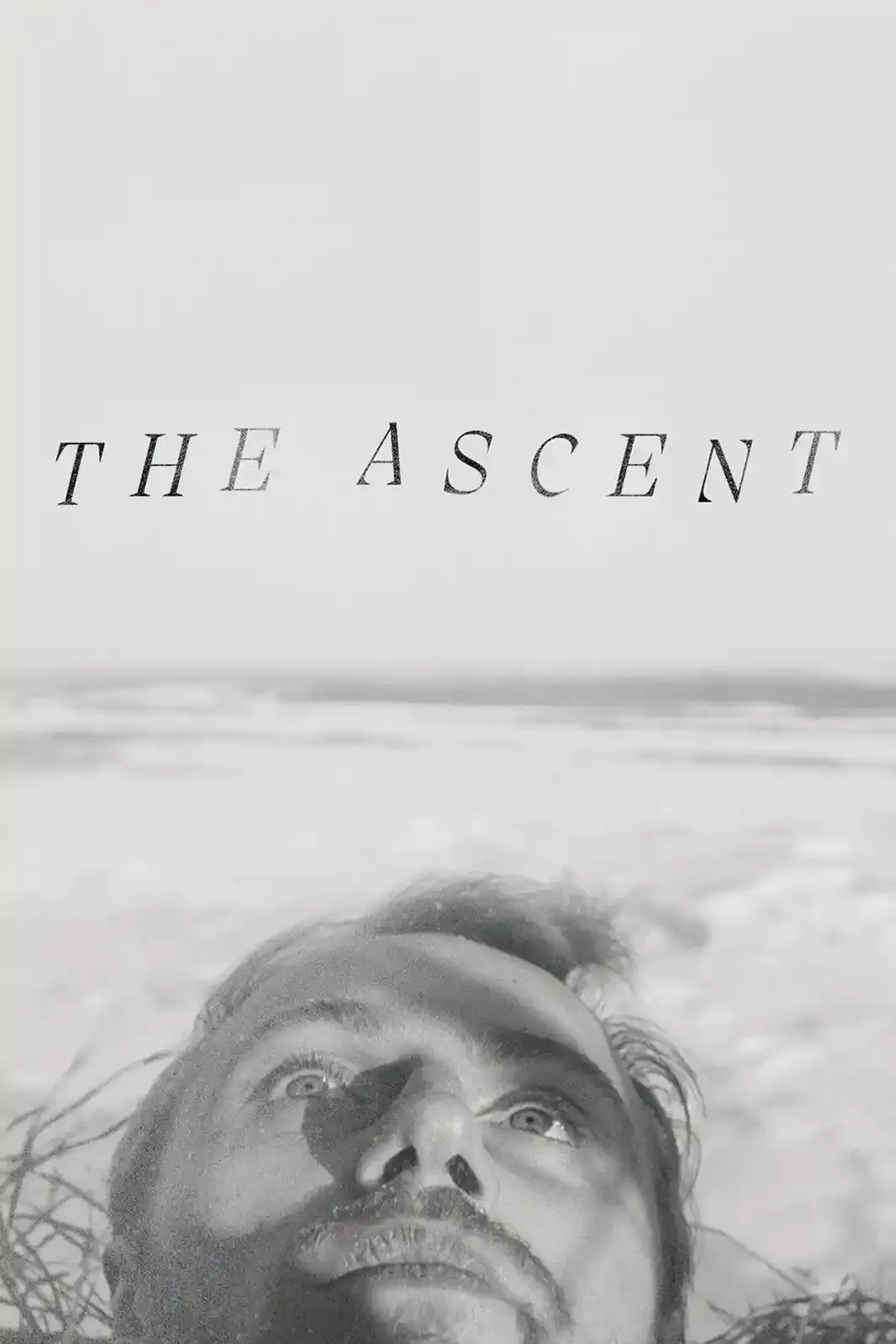
The Ascent (1977): Larisa Shepitko's Brutal Meditation on Sacrifice and Betrayal
A Soviet masterpiece that transcends propaganda to become one of cinema's most devastating explorations of moral choice under impossible circumstances. Shepitko's final completed film remains unbearably powerful.
Editorial Notes
Anna edits BucketMovies criticism and essay packages, with a steady interest in classic Hollywood, literary adaptations, and repertory programming.
Anna Price
Editor-in-Chief
Anna edits BucketMovies criticism and essay packages, with a steady interest in classic Hollywood, literary adaptations, and repertory programming.
I’ve seen a lot of war films. I’ve seen films that show you the horror of combat, the camaraderie of soldiers, the political machinery that sends young men to die. But I’ve never seen anything quite like The Ascent. Larisa Shepitko’s 1977 Soviet film strips away everything—action, heroism, spectacle—and leaves you with just two men, snow, and the unbearable weight of moral choice.
This is not a film you enjoy. It’s a film you survive.
The Setup: Two Partisans, One Mission
The plot is almost absurdly simple. It’s 1942, winter, Nazi-occupied Belarus. A group of Soviet partisans is starving. Two men—Sotnikov and Rybak—are sent to find food. They fail. They’re captured. They’re interrogated. One breaks. One doesn’t.
That’s it. That’s the entire film. And yet within this minimal framework, Shepitko constructs one of the most profound examinations of human nature ever committed to celluloid.
Sotnikov (Boris Plotnikov) is the intellectual—thin, sickly, clearly not suited for this physical ordeal. He’s already running a fever when the mission begins. Every step through the snow seems to cost him something essential.
Rybak (Vladimir Gostyukhin) is the survivor type—strong, practical, pragmatic. He knows how to move through the world. He knows how to stay alive. He’s the one you’d bet on to make it.
But survival, Shepitko suggests, isn’t always the same as salvation.
The Snow as Character
The snow isn’t just setting—it’s a presence. Shepitko and her cinematographer Vladimir Chukhnov shoot Belarus in winter as a kind of white purgatory. The landscape isn’t beautiful; it’s oppressive. Every frame feels like suffocation.
| Visual Element | Symbolic Function |
|---|---|
| Endless white fields | Moral blankness, no place to hide |
| Characters’ breath visible | Life itself made visible, fragile |
| Tracks in snow | Evidence, consequences, betrayal |
| Gray sky meeting white ground | No horizon, no escape, no future |
The two men trudge through this whiteness for what feels like hours (it’s actually about forty minutes of screen time). There’s almost no dialogue. Just the sound of boots in snow, labored breathing, the occasional cough from Sotnikov’s worsening condition.
Shepitko makes you feel the cold. Not through dramatic shivering or obvious suffering, but through rhythm—the slow, exhausting rhythm of bodies pushing through resistance. By the time they’re captured, you’re as depleted as they are.
The Interrogation: Where the Film Becomes Unbearable
The second half of The Ascent takes place almost entirely indoors—in a Nazi collaborator’s headquarters, in interrogation rooms, in cells. But if you think the cold was oppressive, the warmth is worse.
The chief interrogator, Portnov (Anatoly Solonitsyn, who worked with both Shepitko and Tarkovsky), is not a screaming sadist. He’s polite. Reasonable. He offers tea. He explains, almost sympathetically, that he too was once a Soviet citizen. He presents collaboration not as evil but as common sense.
This is the film’s genius and its horror: the temptation is made comprehensible. When Portnov tells Rybak that he can live, that all he has to do is join the auxiliary police, that no one will know, that it’s just practical—you understand the appeal. You might even, in your darkest thoughts, wonder what you would do.
Rybak wonders too. And then he decides.
The Christ Parallel (And Why It Works)
Shepitko makes the Sotnikov-as-Christ parallel explicit—perhaps too explicit for some viewers. There are literal shots of Sotnikov’s face framed like an icon. His suffering takes on stations-of-the-cross imagery. The final sequence is unmistakably a crucifixion.
But why it works instead of feeling heavy-handed: Shepitko isn’t saying Sotnikov is Christ. She’s examining what it means to choose death rather than compromise. The religious imagery isn’t allegory; it’s the language available to a filmmaker working within Soviet censorship who wanted to talk about transcendence.
Because make no mistake—despite being a Soviet film, The Ascent is profoundly spiritual. The question it asks isn’t “how do we defeat fascism?” but “what makes a human life worth living—or worth dying for?”
Sotnikov’s choice to die rather than betray his comrades isn’t presented as strategic or even heroic in any conventional sense. It’s presented as the only way he can remain himself. The body can be broken. The will can be broken. But something else—call it soul, conscience, essential identity—can be preserved through the act of choosing.
Rybak: The Real Tragedy
Here’s what haunts me most about The Ascent: Rybak is not a villain. He’s a man—a normal man, probably a good man in normal circumstances—who makes a choice to survive and then has to live with that choice.
The final scene shows Rybak after the execution. He can’t hang himself. He can’t escape. He’s trapped in the hell of his own continued existence.
This is worse than any torture scene. Shepitko understood that physical suffering ends, but moral suffering can be eternal.
The Director Who Didn’t Survive
Shepitko died in a car accident in 1979, at age forty-one, while location scouting for her next film. The Ascent is essentially her final statement.
Her husband, Elem Klimov, would go on to make Come and See (1985)—another Soviet war film about Belarus, another devastating examination of occupation and survival. He dedicated it to her memory. If The Ascent is a meditation on individual moral choice, Come and See is its companion piece: what happens when the choice is taken from you entirely, when you’re forced to witness rather than decide.
Knowing that Shepitko wouldn’t make another film adds a strange weight to The Ascent. It’s not that the film “predicts” her death—that would be cheap symbolism. But there’s something about its absolute seriousness, its refusal of comfort, that feels like a final reckoning.
Technical Notes: The Austere Brilliance
Shepitko’s style here is radically stripped down:
Camera: Mostly static or slow pans. No flashy movements, no action choreography. The camera observes like a witness, not a participant.
Sound: Minimal score. When music appears, it’s spare and liturgical. Most scenes rely on ambient sound—wind, breathing, footsteps, silence.
Editing: Long takes that make you sit with discomfort. No cutting away from suffering. No montages to compress time.
Performance direction: Shepitko reportedly pushed her actors to physical limits. Plotnikov actually was sick during much of the shoot. The exhaustion you see is real.
The result is a film that feels almost documentary in its observation while remaining entirely constructed.
Why You Should Watch This (Even Though You Won’t “Enjoy” It)
I recommend The Ascent to people with a warning: this will not be a pleasant evening. It’s not entertaining in any conventional sense. It’s slow, it’s cold, it’s merciless.
But it’s also one of the most important films ever made about what it means to be human under impossible pressure. It asks questions that most war films avoid:
- Is survival always good?
- What do we owe others versus what we owe ourselves?
- Can moral integrity survive physical destruction?
- What happens to the soul of someone who compromises to live?
These aren’t comfortable questions. The Ascent doesn’t offer comfortable answers.
My Rating: 9.5/10
What works:
- Two extraordinary performances at the center
- Visual poetry without prettification
- Moral complexity that refuses easy answers
- The interrogation scenes are masterfully written
- Ending that doesn’t let you escape
What doesn’t:
- Christ imagery may feel heavy-handed to some
- Pacing will challenge viewers used to action
- Relentlessly bleak (which is the point, but still)
If You Liked This, Try:
- Come and See (1985) — Klimov’s equally devastating Belarus war film
- Ivan’s Childhood (1962) — Tarkovsky’s war debut, which Shepitko admired
- Army of Shadows (1969) — Melville’s Resistance film with similar moral weight
- Son of Saul (2015) — Modern film that uses similar immersive techniques
- The Seventh Seal (1957) — Another film wrestling with faith and mortality
The Ascent won the Golden Bear at Berlin in 1977. It’s been preserved by Criterion and is considered one of the essential works of Soviet cinema. But more than prizes and prestige, it endures because it touches something true—something about the human capacity for both sacrifice and betrayal, and the thin line between them.
Watch it once. You’ll never forget it. And you’ll spend the rest of your life hoping you never have to find out which man you’d be.
References
- Shepitko, Larisa. Interviews collected in “Women Directors,” Soviet Film, 1978
- Horton, Andrew. “The Zero Hour of Cinema: The Soviet War Film,” Cinema Journal, 1986
- Youngblood, Denise. Russian War Films: On the Cinema Front, 1914-2005, University Press of Kansas, 2007
- Criterion Collection essay by David Shengold, 2017
- Klimov, Elem. Memorial interview, Sight & Sound, 1986
Share This Article
Comments