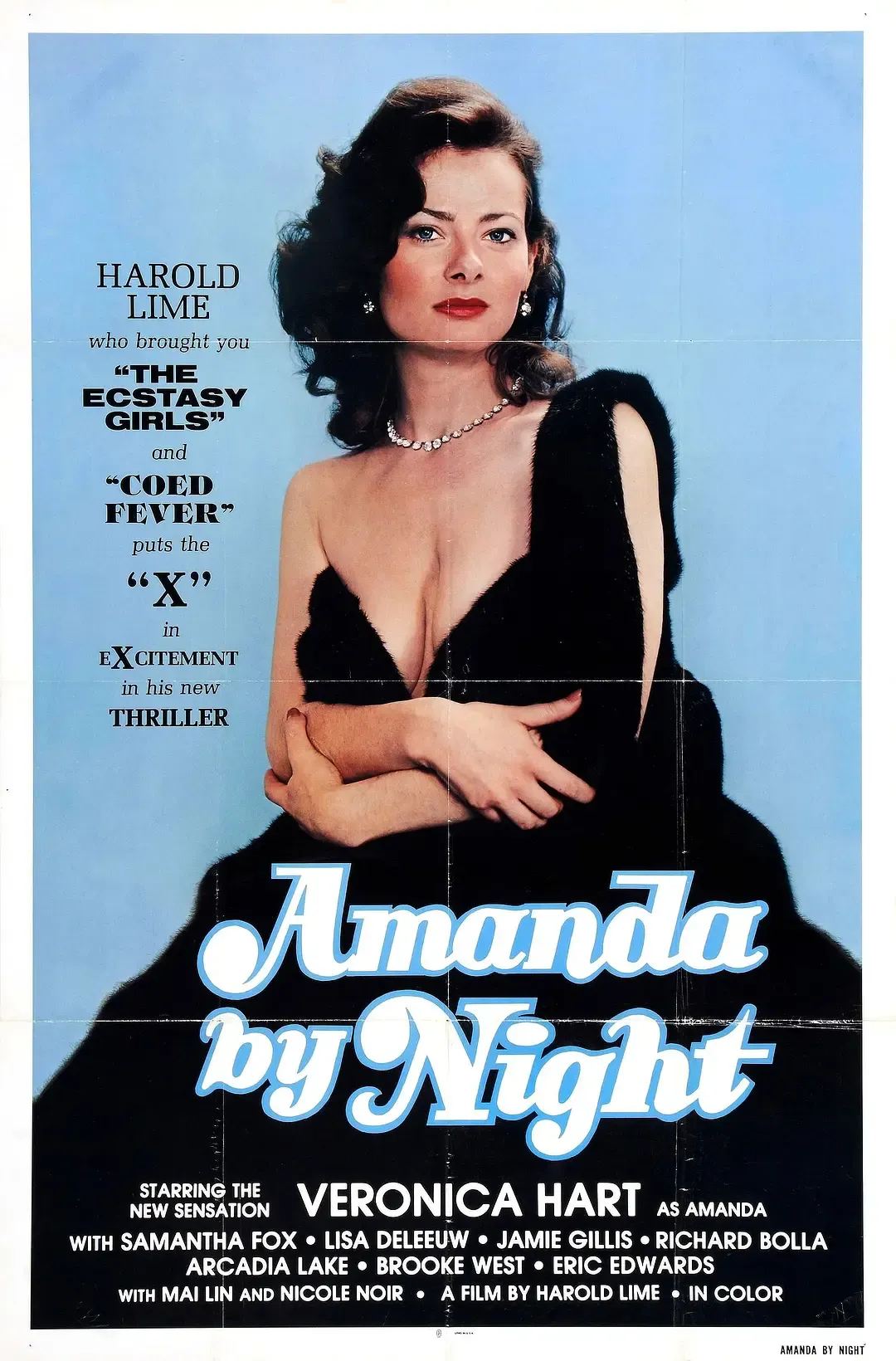
The Night Amanda (1981): A Correction, and the Real Career of Gary Graver
We could not verify that a 1981 Gary Graver film called The Night Amanda exists, and we have withdrawn our analysis of it. Here is what the record does show about Graver, Orson Welles's longtime cameraman.
Correction (November 10, 2026): This page previously carried an analysis of “The Night Amanda,” described as a 1981 crime thriller directed by Gary Graver. When we rechecked it, we could find no record of such a film. It does not appear in Graver’s published filmography, in film reference databases, or in contemporary reviews. The plot, scenes, dialogue and performances we described could not be verified, so we have withdrawn that analysis in full. We apologize to readers. We have kept this page so existing links still work, and replaced the content with a sourced note on Graver’s actual career.
Our angle: the mistake is a useful warning about “forgotten film” writing. An obscure title with a plausible director and a vivid description is exactly the kind of claim that needs a primary source before it is published. Below is what the record actually supports.
Who Gary Graver was
Gary Graver (July 20, 1938 – November 16, 2006) was an American cinematographer, editor and director, born in Portland, Oregon. As a teenager he ran his own radio show and built a small cinema in his parents’ basement to show his own 16 mm films. At 20 he moved to Hollywood to act, studying with Lee J. Cobb and Lucille Ball. Drafted in the early 1960s, he joined the Navy instead and was trained as a combat cameraman, working in Vietnam, the Philippines and Japan (biographical details from his reference page).
Back in civilian life he worked on documentaries before moving into features. He wrote and directed his first film, The Embracers, in 1966. He then shot and edited low-budget pictures such as The Mighty Gorga, The Fabulous Bastard from Chicago and Satan’s Sadists (all 1969).
Orson Welles’s cameraman
Graver’s best-known work came from a cold call. In 1970 he contacted Orson Welles to say he wanted to work with him. According to the account in Graver’s reference biography, Welles told him that only one other person had ever done that: Gregg Toland, the cinematographer of Citizen Kane. Journalist Josh Karp later wrote that from that day forward, Welles “was the central figure in Gary Graver’s life.”
Graver shot much of Welles’s unfinished The Other Side of the Wind in the 1970s. He also co-shot F for Fake (1973) with François Reichenbach and worked on Filming Othello (1978). His work for Welles was unpaid. After one scene of The Other Side of the Wind, in which Welles used his Citizen Kane screenwriting Oscar as a prop, Welles reportedly handed Graver the statuette: “Here, keep this.” Graver sold it in 1994 when he was in financial trouble. Welles’s daughter Beatrice later sued to stop a planned auction, and a 2003 attempt to sell it was withdrawn after the Academy objected.
The Other Side of the Wind was eventually completed long after both men had died. It premiered at the Venice Film Festival on August 31, 2018, and Netflix released it on November 2, 2018 (film history).
The B-movie years
Alongside the Welles projects, Graver made his living in low-budget genre film. He worked for Roger Corman and Fred Olen Ray, among others, explaining that “I knew how to make a movie without much money.” His credits as cinematographer or editor include Blood Mania (1970), Dracula vs. Frankenstein (1971), Invasion of the Bee Girls (1973) and The Toolbox Murders (1978). He also did additional camerawork on John Cassavetes’s A Woman Under the Influence (1974) and shot Ron Howard’s Grand Theft Auto (1977). The AFI Catalog lists his feature credits.
In 1981, the year our withdrawn article named, his verified credits include cinematography on Texas Lightning, which he also wrote and directed, Hollywood High Part II and Smokey Bites the Dust. In 1982 he wrote, directed, edited and produced the slasher film Trick or Treats. He was second-unit cinematographer on Eating Raoul the same year. Later he shot Mortuary (1983) and directed Moon in Scorpio (1987) with Britt Ekland. He also did additional cinematography for the Montana unit of Steven Spielberg’s Always (1989).
Under the pseudonym Robert McCallum, Graver was also a prolific director of adult films, with more than 135 features. That side of his career helps explain why his filmography is hard to map. It does not, however, turn up a film called “The Night Amanda.”
Why the error mattered
The withdrawn article described specific shots, lines of dialogue and an ending. None of that could be checked against any print, review or catalog entry. That is the opposite of how film writing should work. A described scene should come from a film someone can watch, and a quotation from a source someone can read. We have since rechecked our classic-film analyses against reference sources and contemporary reviews. Where we found errors, we have corrected them with dated notes, as in our pieces on Point Blank, Night Moves and Wake in Fright.
How to check an obscure title yourself
Readers who come across a “lost” or “forgotten” film online can run the same basic checks we should have run first. Look for the title in the director’s filmography on a reference site and in a catalog such as the AFI Catalog. Search for a contemporary review, a release date or a home-video edition. Check whether any listed cast member mentions it in their own credits. A genuinely obscure film usually leaves at least one of those traces. A description that cannot be matched to any of them should be treated as unverified, however detailed it sounds. Detail is not evidence. In this case, the precision of the withdrawn article, with its timed shots and quoted lines, made it more convincing, not more reliable.
If you want to see Graver’s work
The most rewarding place to start is The Other Side of the Wind and the companion documentary that accompanied its Netflix release. Together they show Graver’s camerawork in the service of a director he devoted most of his life to. F for Fake shows his work with Welles at its most playful. For his genre work, The Toolbox Murders and Trick or Treats are the best-documented titles. Graver’s memoir, Making Movies with Orson Welles, co-written with Andrew J. Rausch, was published by Scarecrow Press in 2008, two years after his death.
Graver died at his home in Rancho Mirage, California, in November 2006, after a long illness with cancer. His career was real, varied and largely unglamorous. It deserves to be described accurately, not supplemented with a film nobody can find.
How this was compiled: biographical and filmography details come from Graver’s reference biography and the AFI Catalog, and release details for The Other Side of the Wind from its reference page, all linked above. If you have documentary evidence of a film titled “The Night Amanda,” contact us at mybuke.com@gmail.com and we will review it. See how we work.
worth a spot on the list?
Reader notes
Join the discussion
No account needed — leave your take on this film below.
Add these to your list
The Third Man (1949): Why Vienna Haunts Every Frame
A deep analysis of The Third Man (1949), from Carol Reed's ruined Vienna and Anton Karas's zither score to Harry Lime, moral rot, and one of cinema's coldest endings.
Saturday Early Estimates for the November 20, 2026 Weekend
BoxOffice's Saturday list puts The Hunger Games: Sunrise on the Reaping at $120 million for November 20-22. The Numbers' Friday chart shows a $56 million opening day from 4,018 theaters and a wider field underneath.
November 13 Weekend Box Office Forecasts Across Six Wide Releases
Deadline's Friday update puts Ebenezer on a $20 million-plus pace after $7.1 million, with Cat in the Hat, Godzilla Minus Zero, and three other wide titles close behind.
Robert Pattinson's Primetime and the Fall Festival Awards Picture
Robert Pattinson's talk-show drama Primetime has emerged as an acting story of the fall festival season. What critics said and how it fits the awards race.
Loading comments...