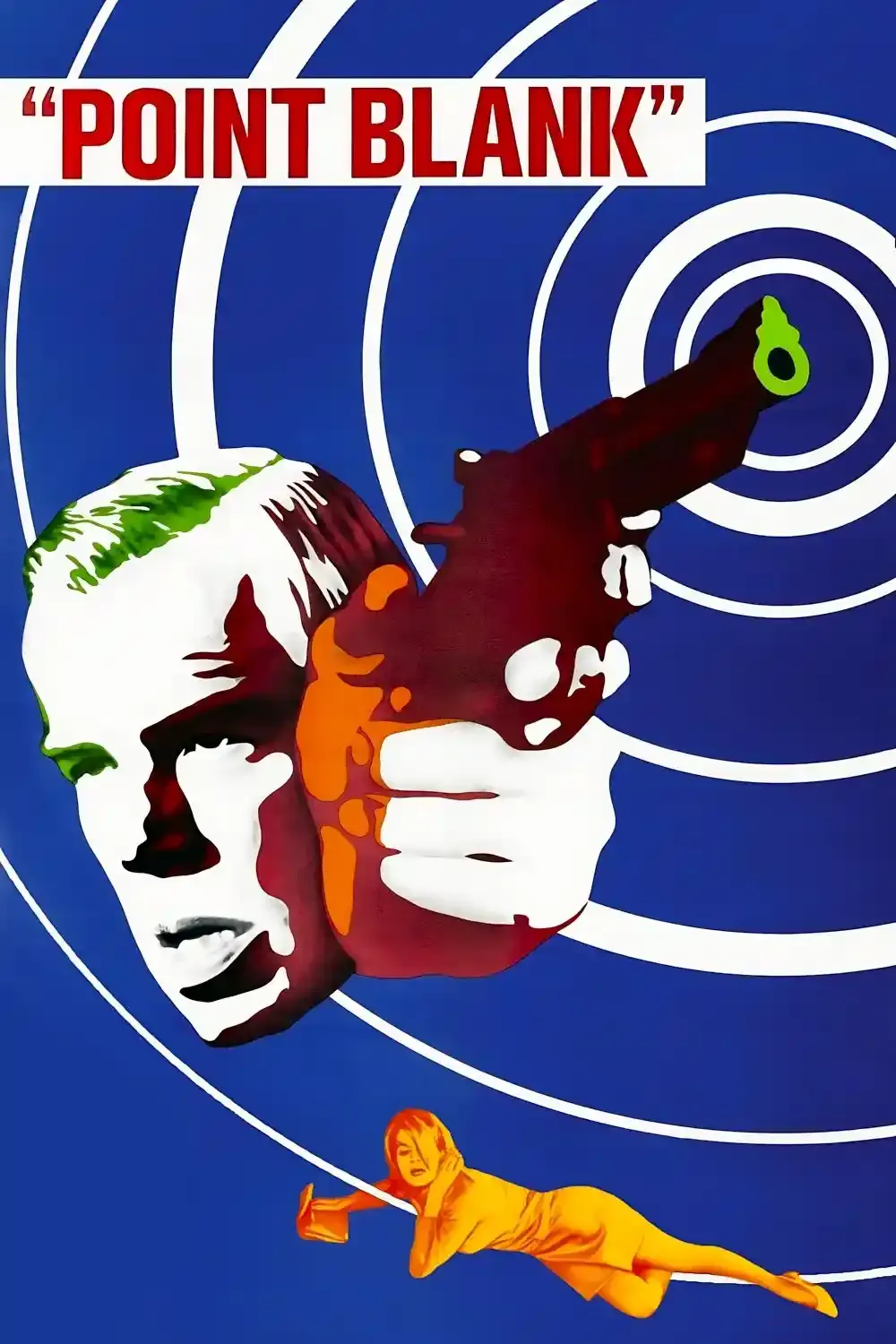
Point Blank (1967): How John Boorman Turned Revenge Into Abstract Art
Lee Marvin stalks a corporate crime syndicate in John Boorman's revolutionary neo-noir. A film that deconstructed the revenge thriller before the genre knew what hit it.
Editor’s note (November 10, 2026): We rewrote this analysis to fix errors in our earlier version. Walker does not find his wife already dead: he fires into her empty bed, and she overdoses that night. The finale takes place at Fort Point in San Francisco, not Alcatraz. Pauline Kael’s “intermittently dazzling” came in a later assessment, not in her Bonnie and Clyde review. We also removed a line of dialogue we could not verify, a “studio-mandated romance” claim we could not source, a reference list we could not check, and a numerical rating.
Our angle: Point Blank is often discussed through the theory that Walker died on Alcatraz. That theory is interesting, but the film’s more durable idea is simpler. Walker’s enemy is not a man but an organization, and the film is about one person trying to collect a debt from a system designed to make sure no one is responsible.
What it is
Point Blank (1967) was John Boorman’s first Hollywood film, made for MGM on a budget of about $2 million to $2.5 million. It was adapted from The Hunter, the first of Donald E. Westlake’s Parker novels, written under the name Richard Stark. Lee Marvin plays Walker, with Angie Dickinson as Chris, Keenan Wynn as Yost, Carroll O’Connor as Brewster, Lloyd Bochner as Carter, Michael Strong as Stegman and John Vernon as Mal Reese. Philip H. Lathrop shot it, Johnny Mandel scored it, and it runs 92 minutes (film overview).
The premise
Walker helps his friend Mal Reese rob a courier on the deserted Alcatraz Island. Reese shoots him, leaves him for dead, and takes both the money and Walker’s wife, Lynne, using the cash to pay a debt to a syndicate called the Organization. Walker survives. With help from a mysterious man named Yost, he sets out to recover his share, $93,000, and works his way up the Organization’s chain of command.
How it was made
Boorman met Marvin in London while Marvin was shooting The Dirty Dozen. Both men disliked the script but liked the character. Boorman later recalled that Marvin asked the studio to confirm his script and casting approvals, then said, “I defer all those approvals to John,” and walked out. “So on my very first film in Hollywood, I had final cut and I made use of it,” Boorman said. MGM wanted Stella Stevens for the female lead. Boorman and Marvin insisted on Angie Dickinson. The production was the first to shoot on Alcatraz after the prison closed in 1963 (production history as compiled in the film’s reference page).
Marvin also shaped scenes in rehearsal. In the scene where Walker questions Lynne about the money, he did not speak his lines, which left Sharon Acker to ask and answer the questions herself. Boorman rewrote the scene that way. “Lee never made suggestions. He would just show you.”
Walker, and the “dead man” reading
There is a long-standing reading that Walker died in that Alcatraz cell and that everything after is a dying fantasy. The film supports it in places. He survives a point-blank shooting, he moves through the city with almost no interior life, and he ends the film by retreating into darkness. It is a useful lens. It also matters less than it seems. Alive or dead, Walker works the same way in the story. He repeats one demand, his $93,000, while everyone around him negotiates, explains or reasons.
Marvin plays him without psychology. He is not on a character arc. He keeps moving through the story, a bullet that was fired on Alcatraz and has not stopped.
Time and sound
The opening is the film’s most celebrated passage. Walker strides down an airport corridor, and his footsteps carry over cuts between the present and fragments of the heist and the betrayal. The sound holds the film together while the images scramble time. Boorman later attributed the fractured structure partly to the novel’s own non-linear shape and partly to discoveries made during shooting.
The device pays off at Lynne’s apartment. Walker bursts in and empties his gun into the bed, but Reese is long gone. That night, while Walker sleeps, Lynne takes an overdose of sleeping pills and dies. The film presents her death with the same flat calm as everything else, which makes it more disturbing.
Los Angeles as corporate space
Boorman’s Los Angeles is not The Graduate’s sunlit suburbia. It is concrete, glass and empty offices, and Lathrop’s color moves from the grays of Alcatraz to the harsh, designed interiors of the city. The higher Walker climbs in the Organization, the more its spaces look like legitimate business. Carter, Brewster and Fairfax are executives. They talk about accounts and authority, and nobody can sign off on $93,000 in cash. Bosley Crowther’s New York Times review praised how Boorman got “the look and smell of Los Angeles into the texture of his picture.”
Violence and its limits
For a revenge thriller, Point Blank has little killing by its protagonist. Walker terrifies the car dealer Stegman by deliberately wrecking a new car with both of them inside. He manipulates his targets into positions where others do the killing. Reese falls from his penthouse while Walker holds him by a bedsheet. Carter and Stegman are shot by the Organization’s own sniper at a money drop in the Los Angeles River bed. Walker is less an avenger than a catalyst. The system he is attacking eliminates its own people.
Chris
Angie Dickinson’s Chris, Lynne’s sister, despises Reese. She agrees to help Walker by going to Reese’s guarded penthouse and unbolting a door. The film uses her, and so does Walker, but Dickinson plays her as someone with her own anger. The most famous scene is at Brewster’s house, where Chris slaps and punches Walker as he stands there without defending himself. Then she runs every appliance in the kitchen at once to provoke him, and finally hits him with a pool cue. It is often read as comic or erotic. It also plays as rage at being made a piece in someone else’s game. Walker absorbs it because there is so little there to hit.
The ending
⚠️ Spoiler warning: this section discusses the ending.
The last drop happens at Fort Point, under the Golden Gate Bridge. Walker stays hidden as the courier delivers the money. The sniper shoots Brewster, and Yost steps out of the shadows. He is Fairfax, the man at the top, and he has used Walker to clear away his dangerous subordinates. “Our deal’s done, Walker. Brewster was the last one,” he says, and offers him a partnership. Walker does not answer. He steps back into the dark, and Fairfax leaves the money on the ground.
The ending supports two readings. In one, Walker cannot take the money because taking it would mean stopping, and the money was never really the point. In the other, he simply will not be bought by the man who used him. Either way, the film ends with a debt that no one will pay and a man who refuses to join the system that owes it.
Critical reception
Pauline Kael opened her 1967 Bonnie and Clyde review with: “A brutal new melodrama is called Point Blank, and it is.” She later called the film “intermittently dazzling” and voted for Boorman as best director in the National Society of Film Critics polling. Roger Ebert gave it three stars out of four. Crowther found it “spectacularly stylized” and “calculatedly sadistic.” Leonard Maltin later called it a “taut thriller, ignored in 1967, but now regarded as a top film of the decade.” Writing for Slant in 2003, Nick Schager praised Boorman’s “virtuoso use of such unconventional avant-garde stylistics.” Rotten Tomatoes lists a 93% positive score.
Where it fits
Point Blank sits at the start of a line of minimalist crime films. That line includes Jean-Pierre Melville’s Le Samouraï (1967), Mike Hodges’s Get Carter (1971), and Steven Soderbergh’s The Limey (1999), often compared to it for its fractured structure. Payback (1999), with Mel Gibson, adapted the same Westlake novel far more conventionally. For more on crime cinema of the period, see our analysis section.
Our read
The film’s gender politics belong to its era, and its abstraction will put off viewers who want a conventional thriller. What lasts is the central joke, told with a straight face. A man demands his money from an organization that keeps telling him nobody has the authority to give it. Sixty years on, that feels less like modernist abstraction than like a phone call to customer service.
How this was compiled: production details, plot and critics’ quotations come from the linked reference page and reviews. Bucket Movies did not interview anyone for this piece. See how we work.
worth a spot on the list?
Reader notes
Join the discussion
No account needed — leave your take on this film below.
Add these to your list
Night Moves (1975): The Private Eye Who Couldn't See
Arthur Penn's neo-noir put Gene Hackman in a mystery he can't solve—because the mystery is himself. A post-Watergate detective story where finding the truth doesn't help.
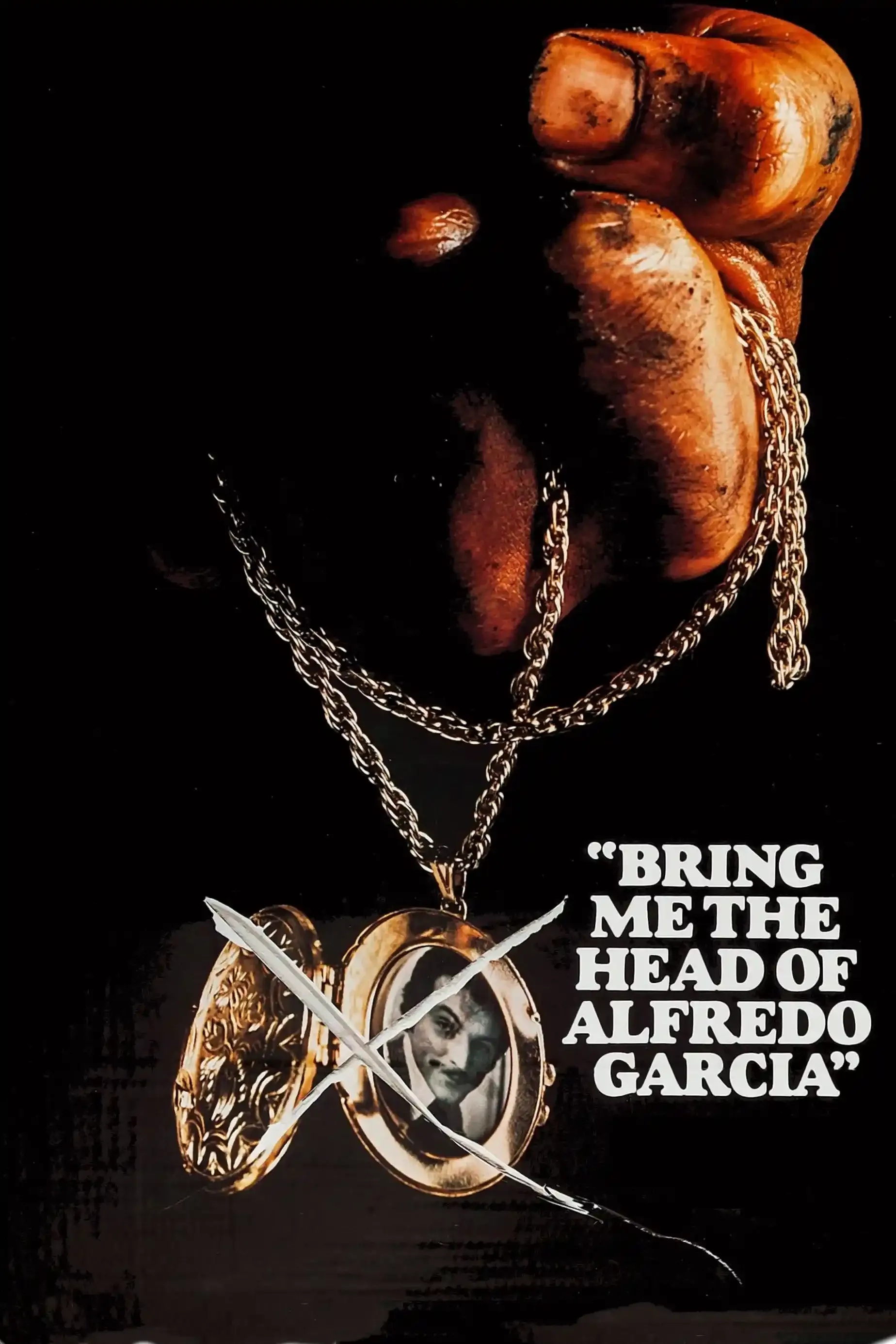
Bring Me the Head of Alfredo Garcia (1974): Sam Peckinpah's Most Personal Apocalypse
A washed-up piano player in Mexico pursues a severed head through a desert of greed and death. Peckinpah's most reviled and most revealing film—a masterpiece of self-destruction.
The American Friend (1977): Wim Wenders Turns Ripley Into an Arthouse Tragedy
Dennis Hopper and Bruno Ganz play a deadly game of manipulation and unlikely friendship in Wenders' gorgeous adaptation of Patricia Highsmith. A film about Americans, Europeans, and the poison between them.
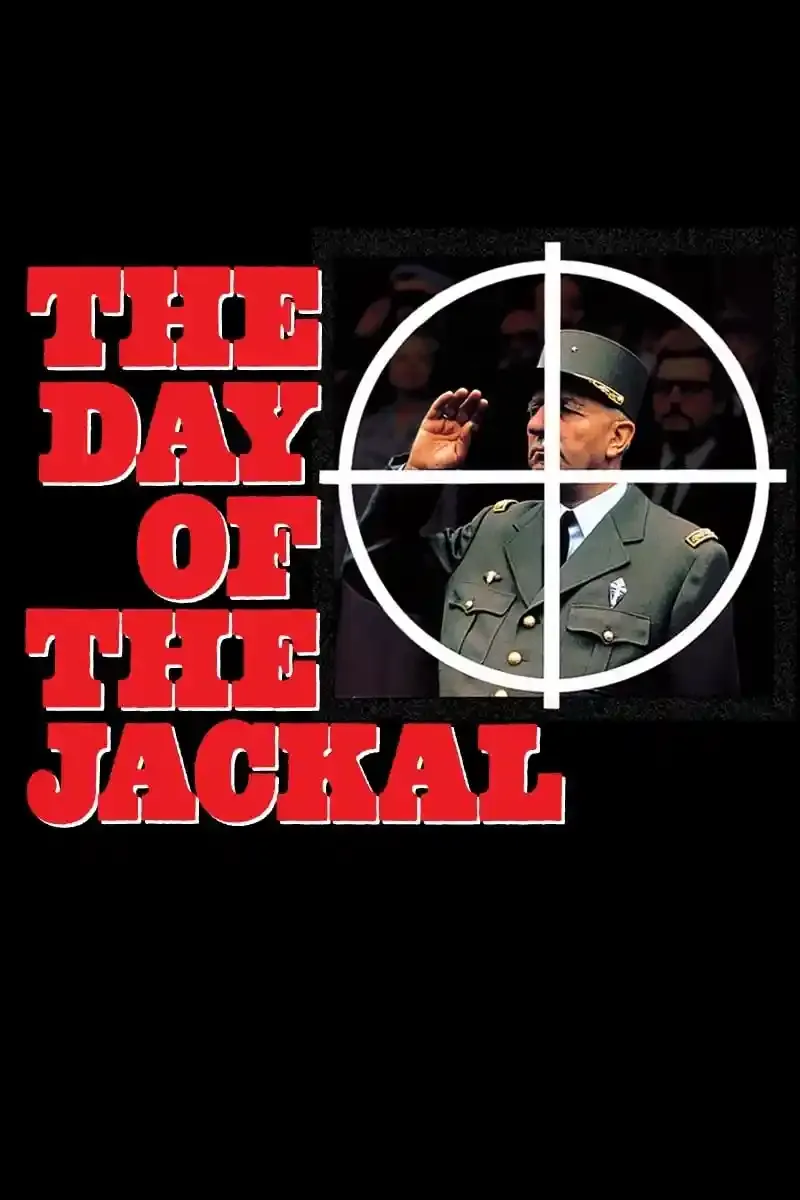
The Day of the Jackal (1973): The Procedural Thriller That Defined the Genre
Fred Zinnemann's meticulous assassination thriller follows a killer we know will fail—and makes it unbearably tense anyway. The blueprint for every procedural that followed.
Loading comments...