Christopher Nolan's The Odyssey Arrives: Shot Entirely on IMAX, 2 Million Feet of Kodak Film, and a 60-Foot Practical Cyclops
Nolan's Homer adaptation hits theaters with a staggering all-star cast, six-country production, and the director's most ambitious practical effects yet. Here's everything you need to know about the film that's being called his most impressive work.
Editorial Notes
BucketMovies Editorial covers classic cinema, repertory discoveries, and context-rich film criticism with an emphasis on source-backed reporting and careful editorial review.
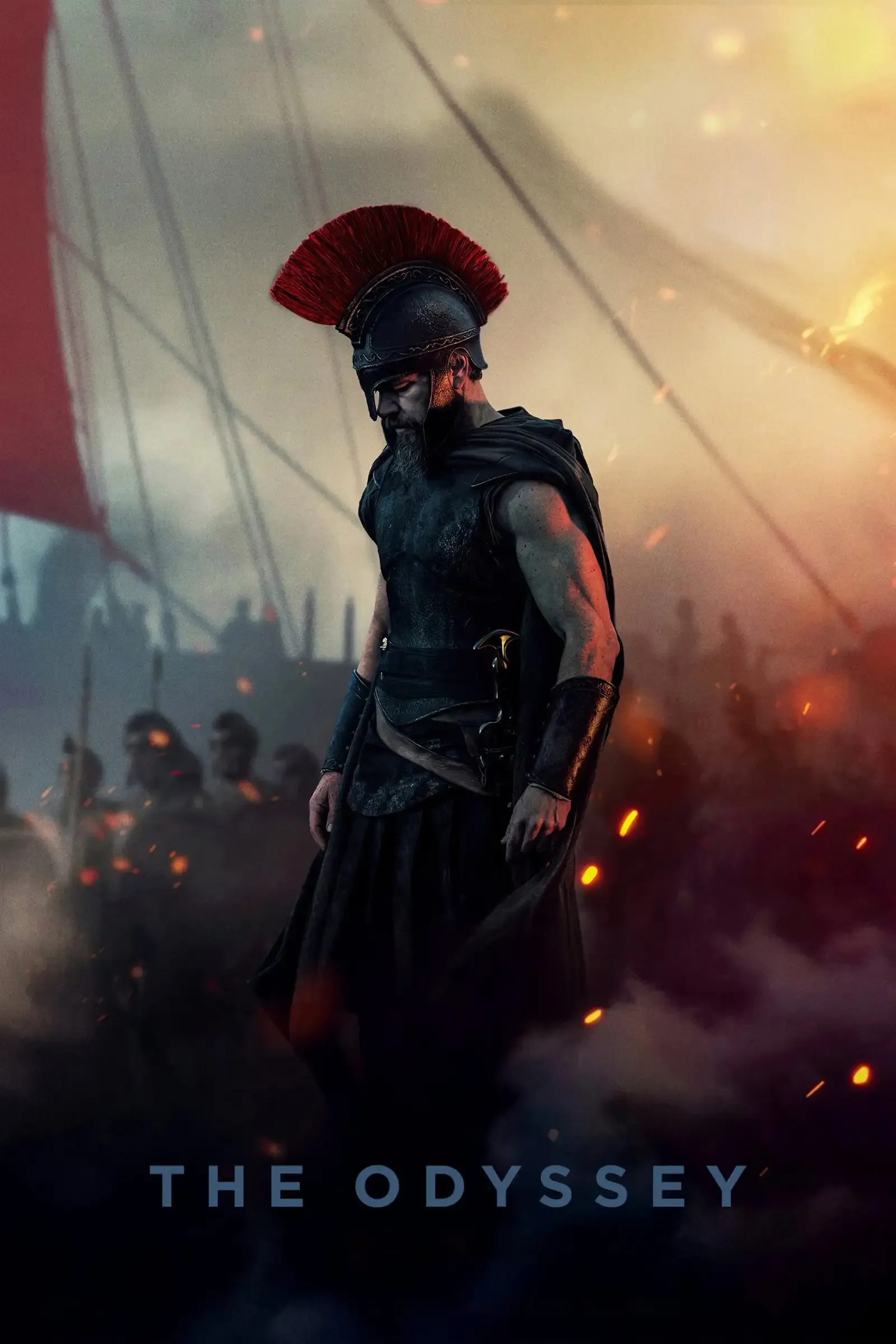
Christopher Nolan’s The Odyssey opened in theaters yesterday, and the early word suggests he’s pulled off something that shouldn’t work on paper: a direct, faithful adaptation of Homer’s ancient poem that somehow feels like the biggest thing he’s ever made.
The numbers alone are staggering. Shot over 91 days across six countries. More than 2 million feet of Kodak 65mm film stock. The first major motion picture captured entirely with IMAX cameras. A cast that reads like someone fed an algorithm the words “prestige” and “ensemble” and told it to go nuts: Matt Damon as Odysseus, Zendaya as Athena, plus Tom Holland, Anne Hathaway, Robert Pattinson, Lupita Nyong’o, Charlize Theron, Jon Bernthal, and Mia Goth.
And then there’s the Cyclops. Not a CGI creation composited in post. A 60-foot practical puppet, filmed inside an actual cave, because Nolan decided that a one-eyed giant needed to be physically present on set.
The six-country production spanned Morocco, Greece, Italy, Malta, the United Kingdom, and Iceland — a logistical undertaking that required coordinating permits, weather windows, and a crew of hundreds across thousands of miles. For a director who once made a entire film inside a single dream machine, the sheer geographic sprawl of The Odyssey represents a different kind of ambition entirely. It is, by any measure, the largest production of Nolan’s career.
The Kodak connection
In an era where most major releases are shot digitally, Nolan remains the industry’s most vocal advocate for celluloid. The Odyssey was shot on Kodak 65mm motion picture film manufactured in Rochester, New York — the same stock Kodak developed for Oppenheimer in 2023, including a custom black-and-white emulsion created specifically for that film.
Nolan explained his reasoning in a 2023 interview for Kodak’s YouTube channel: “The way a film camera records light onto its emulsion, that’s as close as you can get to the way the eye sees.” For a story about a man trying to find his way home across a mythic Mediterranean landscape, that kind of visual fidelity isn’t just a technical preference. It’s a storytelling choice. Every wave on the Aegean, every sun-bleached rock face, every close-up of a weathered face — the emulsion captures it differently than a digital sensor would, with a texture and depth that Nolan has spent his entire career arguing is worth the logistical headache.
Kodak has leaned into the partnership, promoting The Odyssey across its social channels and positioning the collaboration as a showcase for what film can still do when a director is willing to commit to it at this scale. The 2 million feet of stock figure works out to roughly 22,000 feet per shooting day — enough to capture roughly 200 minutes of raw footage daily across multiple cameras. For context, the final film runs somewhere in the neighborhood of three hours. The shooting ratio on this thing is enormous, and it speaks to Nolan’s willingness to let cameras roll while actors find moments that a tighter digital production schedule would never accommodate.
The IMAX gamble
The Odyssey is the first major motion picture shot entirely with IMAX cameras. Not partially. Not select sequences. The whole thing. IMAX cameras are famously loud, famously heavy, and famously unforgiving — they chew through film at roughly six feet per second, which means a single 1,000-foot magazine gives you about three minutes of footage before a reload. For dialogue scenes, this is borderline absurd. IMAX cameras sound like industrial sewing machines. Any scene with spoken lines requires ADR — automated dialogue replacement, where actors re-record their dialogue in a studio after filming.
Nolan has been pushing IMAX further with each project. The Dark Knight used it for six sequences. The Dark Knight Rises pushed it to about an hour of screen time. Dunkirk and Oppenheimer both used it extensively, but always alongside other formats. The Odyssey is the first time he’s committed to the format for every frame. The payoff, in theory, is a level of image clarity and immersive scale that no other film has attempted. Whether the audience notices the difference or just feels it is the whole experiment.
What the early reactions are saying
Polygon deputy editor Jake Kleinman posted on X that while The Odyssey is Nolan’s “most straightforward movie ever,” it’s “also maybe his most impressive.” His closest comparison wasn’t another Nolan film — it was Peter Jackson’s Lord of the Rings trilogy. That’s a high bar, and the comparison makes sense: both are adaptations of foundational texts in Western storytelling, both demanded practical filmmaking at a scale that seemed impossible before someone actually did it, and both hinge on a journey structure that could easily collapse into episodic randomness in less disciplined hands.
The “straightforward” note is interesting coming from Nolan, whose reputation rests largely on structural complexity — reverse chronology in Memento, nested dream layers in Inception, intersecting timelines in Dunkirk, the subjective-objective split in Oppenheimer. The Odyssey reportedly jettisons that playbook. It’s a linear telling of Odysseus’s ten-year attempt to get home after the Trojan War, with the narrative complexity coming from the encounters themselves rather than from temporal manipulation. For a filmmaker who’s spent two decades bending time, telling a story that simply moves forward might be his most unexpected move.
The practical Cyclops and why it matters
The detail most likely to circulate among film fans is the Cyclops. Nolan built a 60-foot puppet and filmed it in an actual cave rather than on a soundstage. IGN reported the production detail alongside interviews with Damon and Zendaya, who spoke about the unusual challenges of acting opposite something that was physically there rather than a tennis ball on a stick.
This matters beyond trivia. Practical effects change how actors perform. They change how light falls in a scene. They change how a camera operator frames a shot. When you can see the thing you’re supposed to be afraid of, your fear reads differently on screen. Nolan’s bet is that audiences can tell the difference even if they can’t articulate it — and given how the Cyclops reveal has become one of the film’s early talking points, it seems like a bet that paid off.
The cast and what they bring
Damon’s Odysseus is the anchor. He’s played reliable, physically capable men before — Jason Bourne, Mark Watney — but Odysseus requires something those roles didn’t: the ability to project intelligence through exhaustion. This is a man who’s been fighting for a decade, who’s lost crew members to monsters and gods and his own decisions, and who has to make you believe he’s still sharp enough to outthink whatever comes next.
Zendaya’s Athena is the film’s wildcard. In the original text, Athena is Odysseus’s divine patron, intervening at key moments and sometimes appearing in disguise. How Nolan handles the divine in a film otherwise committed to practical, tangible filmmaking is one of the more interesting questions the movie poses. Early reports suggest the gods are present but handled with restraint — visible, physically embodied, but not treated as special effects showcases.
The supporting cast is almost absurdly stacked. Tom Holland, Anne Hathaway, Robert Pattinson, Lupita Nyong’o, Charlize Theron, Jon Bernthal, and Mia Goth all appear in roles of varying size. For a director whose films have typically focused on one or two central performances, the ensemble approach is new territory — and it makes sense for source material that is fundamentally about encounters. Odysseus meets people. They matter for a scene or a sequence, then he moves on. The rotating cast of recognizable faces mirrors that structure.
The score comes from Ludwig Göransson, who won the Oscar for his Oppenheimer soundtrack and has become Nolan’s go-to composer since Hans Zimmer departed for Dune. Göransson’s work on Oppenheimer was built around the violin — tense, vibrating, unstable. For The Odyssey, he’s reportedly working with a broader palette: orchestral textures, choral arrangements, and instruments from the regions where the story takes place. IGN released a featurette showing Göransson in the studio, and early snippets suggest the score leans into the mythic scale without tipping into bombast. The man knows how to write music that makes a three-hour runtime feel like two.
What this means for Nolan
The Odyssey arrives at an interesting moment in Nolan’s career. He’s coming off Oppenheimer, which won Best Picture, made nearly a billion dollars, and proved that a three-hour historical drama about a physicist could compete with superhero movies at the global box office. The question after a success like that is always the same: what do you do next?
The answer, apparently, is to go bigger in every dimension except conceptual complexity. The Odyssey has a larger cast, more locations, more practical effects work, and a longer production timeline than anything Nolan has directed. But it’s also, by early accounts, his most accessible film — the one where you don’t need to diagram the plot afterward to understand what happened.
Whether that accessibility translates to Oppenheimer-level box office remains to be seen. Homer’s poem is famous but not exactly beloved in the way comic book properties or franchise IP are beloved. Still, the combination of Nolan’s name, the ensemble cast, and the sheer visual promise of an all-IMAX epic shot on film gives The Odyssey something most original blockbusters don’t have: a reason to see it in a theater that isn’t just “it’ll look better.”
There’s also the unspoken question of what Nolan does after this. He told IGN in a recent interview that he’d “love” to make a horror film — a genre he’s never touched — and explained that horror appeals to him because “it’s one where you’re really trying to give the audience a feeling of what the characters are experiencing.” That’s essentially the same principle he’s applied to war films, heist thrillers, and now epic mythology. If The Odyssey continues his commercial hot streak, a Nolan horror film might not be far off. The thought of the director who built a 60-foot practical Cyclops applying that same approach to whatever monsters lurk in his horror imagination is, at minimum, worth looking forward to.
The Odyssey is in theaters now. If you’re going, see it in IMAX — the format it was built for.
Share This Article
Comments