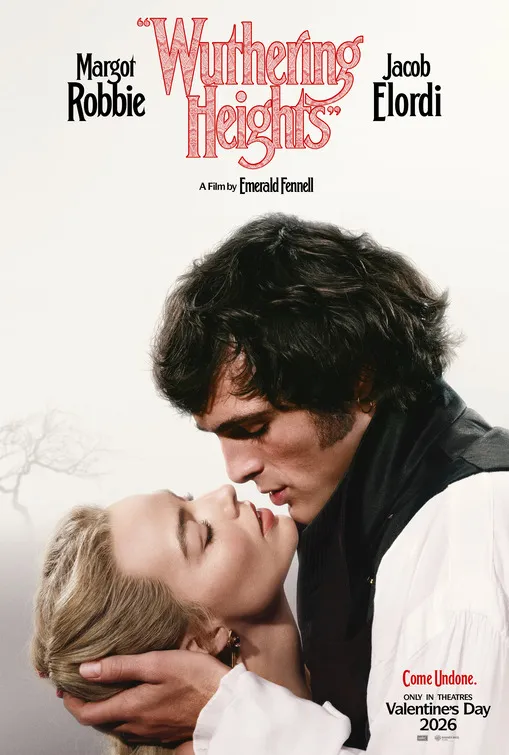
Wuthering Heights (2026) Review Roundup: Emerald Fennell's Brontë Splits the Critics
Emerald Fennell's Wuthering Heights, with Margot Robbie and Jacob Elordi, divided critics and became an $80 million hit. What reviewers said, the casting debate, how it was made and the box office.
Editor’s note: This review is a roundup of published critical reception and reporting, with analysis by the Bucket Movies Editorial Team. We did not attend a screening; plot and scene details are summarized from published reviews and official materials. See how we work.
Editor’s note: an earlier version of this article quoted unnamed critics and described scenes that could not be matched to a source. It has been rewritten from the published reviews and reporting linked below.
Our angle: Emerald Fennell’s Wuthering Heights is a film that critics argued about in pairs. For nearly every rave there is a pan aimed at the same feature. This roundup lines those opposing views up, then adds the production and casting facts behind them.
What the film is
Wuthering Heights, stylized with quotation marks, is a 2026 romantic period drama written, directed and produced by Emerald Fennell (Promising Young Woman, Saltburn). It is loosely based on Emily Brontë’s 1847 novel. Margot Robbie plays Catherine Earnshaw and Jacob Elordi plays Heathcliff. Hong Chau plays Nelly Dean, with Shazad Latif as Edgar Linton, Alison Oliver as Isabella, and Martin Clunes and Ewan Mitchell in supporting roles. Charlotte Mellington, Owen Cooper and Vy Nguyen play the young Catherine, Heathcliff and Nelly. Warner Bros. released it in the U.K. and U.S. on February 13, 2026, the eve of Valentine’s Day, after a January 28 premiere in Los Angeles. It runs 136 minutes and cost a reported $80 million.
Fennell has said she did not aim for a faithful retelling. Her stated intention was to “try and recreate the feeling of a teenage girl reading this book for the first time.”
The story
As in the novel, Mr. Earnshaw brings home a boy he has found on the streets. His daughter, Cathy, names him Heathcliff, and the two become inseparable. As adults, with Wuthering Heights falling into disrepair under Earnshaw’s drinking and gambling, Cathy sets out to court a wealthy new neighbour, Edgar Linton, even as she and Heathcliff realize they are in love. The film concentrates on this first-generation story rather than the novel’s full two-generation structure.
How it was made
- A bidding war. Fennell announced the project in July 2024, and Robbie and Elordi were cast that September. In October, according to Deadline, Netflix offered $150 million for the rights. Warner Bros., which has a first-look deal with Robbie’s LuckyChap and released Barbie, won with about $80 million by promising a theatrical release and a major marketing campaign.
- The shoot. Filming lasted 50 days, from mid-January to late March 2025, at Sky Studios Elstree and on location on Bridestones Moor above Todmorden and in the Yorkshire Dales, including Arkengarthdale and Swaledale.
- The look. Linus Sandgren, who also shot Saltburn, filmed mainly on 3-perf 35mm, using VistaVision cameras for wide shots and landscapes.
- The sound. Anthony Willis composed the score, and Charli XCX contributed an album of original songs, including “House” with John Cale and “Chains of Love.”
- The influences. Fennell cited a list of unconventional love stories as touchstones, including A Matter of Life and Death (1946), Donkey Skin (1970), Bram Stoker’s Dracula (1992), Romeo + Juliet (1996) and The Handmaiden (2016). The film’s poster paid homage to Gone with the Wind.
The casting debate
The choice of Elordi drew criticism before release. Brontë describes Heathcliff as a “dark-skinned gipsy” and calls him a “Lascar,” though the novel never settles his origins. Critics of the casting argued that a white actor erased that part of the character. In September 2025, Fennell defended the decision to Deadline, saying Elordi “looked exactly like the illustration of Heathcliff on the first book that I read.” The debate continued in reviews: Sarah Chihaya of The Nation argued that the film ignored “the novel’s very real and present concerns with class, race, and heredity.”
The critical split
Rotten Tomatoes lists a 57% approval rating from more than 350 reviews. Its consensus says the film “might not be the stuff of high literature but it is a visually vibrant pleasure.” Metacritic shows a weighted score of 55 from 59 critics, which it classifies as “mixed or average.” Audiences gave it a “B” CinemaScore. The BBC and The Hollywood Reporter both ran roundups on how sharply it divided critics.
For. David Sims of The Atlantic called it a “heaving, rip-snortingly carnal good time.” The BBC’s Caryn James acknowledged its excesses but called them “a small price to pay for such ambition.” She argued that however much Fennell “toys with the details,” she “captures the essential enduring passion of Wuthering Heights and its class-bound time.”
Against. Peter Bradshaw of The Guardian called it “an emotionally hollow, bodice-ripping misfire.” Mick LaSalle of the San Francisco Chronicle argued that by giving Cathy and Heathcliff an explicit sex life, Fennell “gives away all the story’s power of spiritual and sexual longing without gaining a thing.” Barry Hertz of The Globe and Mail wrote that “no amount of meticulously composed shots trained on aspic-entombed prawns or freakishly large glazed strawberries can distract from the gaping holes in absolutely everything else on the screen.”
The pattern is that the film’s carnality and stylization are both the case for it and the case against it. Critics who wanted the feeling of the novel tended to enjoy it, while those who wanted its structure, its cruelty or its politics did not.
The box office
Commercially, the bet on theaters paid off. Tracking pointed to a $50 million to $55 million four-day opening, and the film opened lower, at $37.5 million over the Presidents’ Day weekend, per Deadline. It still finished No. 1, ahead of fellow new releases Crime 101, Goat and Good Luck, Have Fun, Don’t Die, and earned $11 million on its first day, including $3 million from previews. It added $14.2 million in its second weekend and held well from there, reaching $84 million in the U.S. and Canada and $242 million worldwide, per Box Office Mojo. Variety estimated a profit of around $40 million for Warner Bros.
Where it sits among adaptations
Brontë’s novel has been filmed many times, and each version has made its own cuts. William Wyler’s 1939 film, with Laurence Olivier and Merle Oberon, also dropped the second generation and turned the story into a studio romance, much as Fennell’s does. Peter Kosminsky’s 1992 version, with Ralph Fiennes and Juliette Binoche, kept more of the novel’s structure. Andrea Arnold’s 2011 film cast James Howson, a Black actor, as the adult Heathcliff and stripped the material back to mud, weather and handheld camerawork.
That history explains part of the reaction to the 2026 film. Arnold’s version is the obvious comparison for the casting debate, and Wyler’s is the obvious comparison for a glossy, star-led romance. Fennell’s film is closer to Wyler’s in intent and closer to her own Saltburn in style. Critics who praised it generally judged it as a Fennell film, while critics who panned it generally judged it as a Wuthering Heights.
Fennell’s track record
The film is Fennell’s third feature as director. Promising Young Woman (2020) won her the Academy Award for Best Original Screenplay. Saltburn (2023), also produced by Robbie’s LuckyChap and starring Elordi, was itself divisive with critics but found a large audience after release. Wuthering Heights repeats that pattern on a bigger budget: a mixed critical reception alongside a commercial result well above its cost. For a studio, that combination makes a director bankable, whatever the reviews say.
Our read
Read together, the reviews suggest a film that succeeds on its own terms and fails on Brontë’s. Its strongest defenders praised its sensory ambition. Its sharpest critics argued that making the longing explicit removes what made the novel endure. Both camps agree that it looks extraordinary. The box office suggests a large audience wanted exactly what Fennell offered.
Where to watch
The film was released digitally on March 31, 2026, and on 4K Ultra HD, Blu-ray and DVD on May 5, 2026.
Who it is for
The reviews point to a clear dividing line. Viewers who liked Saltburn’s heightened style, or who want a lush, sensual romance, are the film’s natural audience. Readers attached to Brontë’s darker, more structurally complex novel may agree with Bradshaw and LaSalle. Anyone interested in adaptation debates will find the casting discussion and the Nation essay worth reading alongside the film. For another adaptation that split critics this year, see our Enola Holmes 3 roundup or browse the reviews section.
How this was compiled: credits, plot outline, production and release details come from Warner Bros. materials and the trade coverage linked above; critics’ quotes come from the linked reviews in The Atlantic, The Guardian, the San Francisco Chronicle, The Globe and Mail and The Nation, plus Caryn James’s review for the BBC; scores are from Rotten Tomatoes, Metacritic and CinemaScore; box office from Deadline, Variety and Box Office Mojo. Bucket Movies did not watch the film for this piece. See how we work.
worth a spot on the list?
Reader notes
Join the discussion
No account needed — leave your take on this film below.
Add these to your list

'The Dink' Review: Ben Stiller and Jake Johnson Serve Up the Year's Most Surprisingly Charming Sports Comedy
Apple TV+'s pickleball comedy shouldn't work — a 103-minute film about the world's most ridiculed sport, starring a guy who looks perpetually confused. Yet 'The Dink' lands its shots more often than it misses, thanks to a game cast and a script that knows exactly how silly its premise is.

Godzilla Minus Zero Review Roundup: What Critics Said About Takashi Yamazaki's Sequel
Takashi Yamazaki's Godzilla Minus Zero pits Godzilla against King Ghidorah in 1949 Japan. Critics praised its effects and scale and debated whether it tops Minus One. Reviews, production, box office.
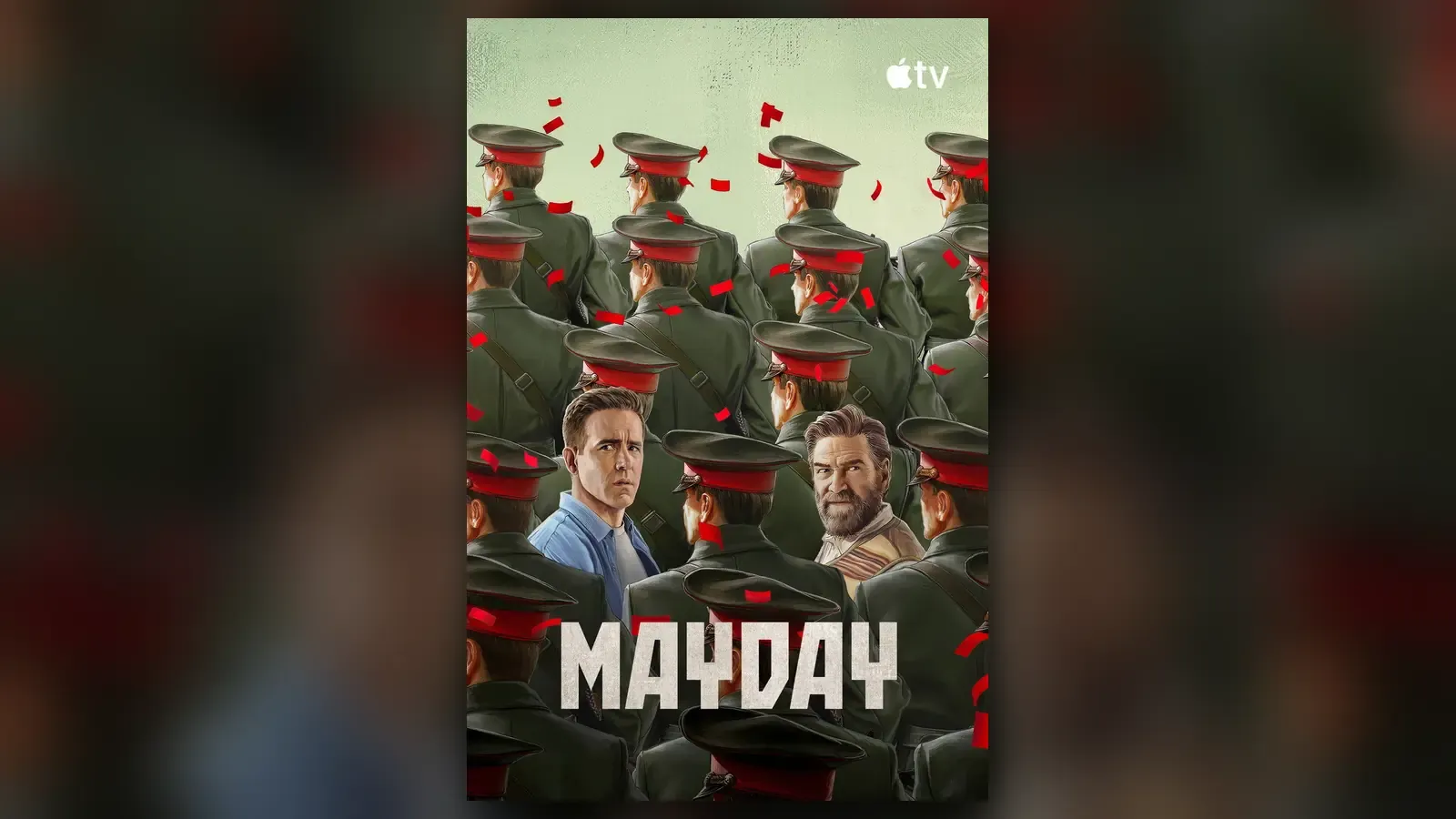
Mayday Review: Reynolds and Branagh Make a Cold War Buddy Movie Work
Apple TV's Mayday premieres September 4. Ryan Reynolds and Kenneth Branagh sell a silly Siberian escape better than the stealth-jet premise deserves.

The Burning Sea Review Roundup: Norway's Oil-Rig Disaster Film, Reconsidered
John Andreas Andersen's The Burning Sea (Nordsjøen), a 2021 Norwegian oil-rig disaster film from the team behind The Wave and The Quake. What critics praised, what they faulted, and why it still matters.
Loading comments...