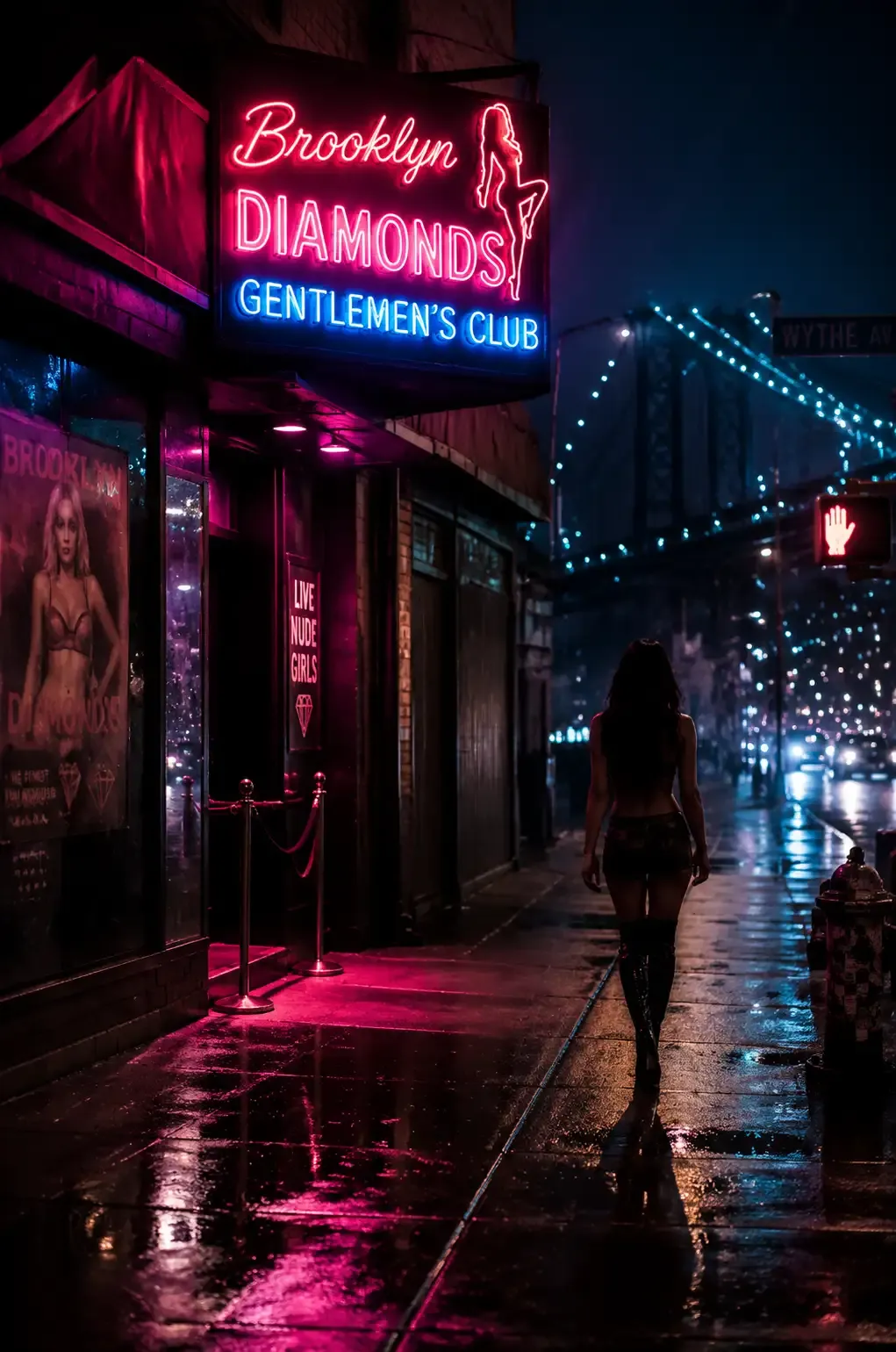
Anora Review: Sean Baker's Unflinching Masterpiece of Class, Desire, and the American Dream
Sean Baker's Anora is a ferocious, genre-bending dramedy that dissects class dynamics and romantic delusion through the lens of a Brooklyn stripper's whirlwind marriage to a Russian oligarch's son.
Editorial Notes
Anna edits BucketMovies criticism and essay packages, with a steady interest in classic Hollywood, literary adaptations, and repertory programming.
A Neon-Soaked Fairy Tale That Refuses Its Own Ending
There is a moment roughly halfway through Sean Baker’s Anora where the film’s entire thesis crystallizes in a single, unbroken shot. The camera follows its protagonist — a young Brooklyn stripper played with feral precision by Mikey Madison — as she stumbles through the dimly lit corridors of a sprawling Long Island mansion she has no business being in. She is simultaneously trespassing and entitled, lost and determined, and the camera never condescends to explain which. Baker simply observes, the way a documentarian might observe a force of nature: this woman is going somewhere, and the film will not look away.
Anora, which swept the 2024 Cannes Film Festival with the Palme d’Or and went on to claim the Academy Award for Best Picture, is the kind of film that arrives with the accumulated weight of a director’s entire career behind it. Baker, who has spent the better part of two decades chronicling the lives of people operating on the margins of the American economy — undocumented day laborers in Tangerine, sex workers in The Florida Project, small-time hustlers in Red Rocket — here trains his lens on the most American of delusions: the belief that love can cross any boundary if you want it badly enough.
The Setup: A Brooklyn Cinderella Story (That Isn’t)
The film’s premise is almost tabloid in its simplicity. Anora “Ani” Mikhalchenko — a twenty-something stripper working at a Brooklyn club under the stage name “Anora” — meets Ivan, the reckless, English-speaking son of a Russian oligarch. Their courtship is conducted in a blur of late-night diner conversations, limousine rides, and the kind of breathless intimacy that feels real precisely because it is unsustainable. Within days, they are in Las Vegas, exchanging vows in a chapel that has seen a thousand identical ceremonies and will see a thousand more.
What follows is not the expected romantic arc. Ivan’s parents, upon learning of the marriage, dispatch a team of fixers — including a weary Armenian-American handler named Garnik (played with devastating weariness by Vache Tovmasyan) and a pair of dimwitted enforcers — to annul the union and restore order to the family’s affairs. The film then becomes something closer to a screwball farce, a chase comedy, and finally a tragedy, often within the same scene.
Baker’s genius lies in his refusal to judge any of his characters. Ani is neither a gold-digger nor a victim; she is a working-class woman who recognizes an opportunity and takes it with the same pragmatic energy she brings to everything else in her life. Ivan is not a villain — he is a spoiled child who has never been told no, and whose inability to confront his parents mirrors the paralysis of an entire class of people born into wealth they did nothing to earn.
Mikey Madison’s Defining Performance
Mikey Madison, best known for her supporting role in Once Upon a Time in Hollywood, delivers what may be the defining performance of her generation’s young actresses. Her Ani is loud, profane, fiercely intelligent, and emotionally transparent in ways that make her both irresistible and exhausting. Madison gives the character a physical vocabulary that is entirely her own: the way Ani shifts her weight when she’s lying, the aggressive forward lean she adopts in confrontations, the sudden collapse of posture when the reality of her situation becomes too much to bear.
There is a scene in which Ani, having been separated from Ivan and stranded in the fixers’ car, delivers a monologue that manages to be simultaneously hilarious and devastating. Madison performs it without any of the self-conscious “acting” that lesser performers might bring to such a moment. She simply lets the words come out of her — angry, incoherent, desperate, funny — the way a real person speaks when the dam has broken. It is a performance of remarkable generosity: Madison is willing to look ugly, to be unlikable, to push the audience away, because that is what the character demands.
The supporting cast is equally strong. Mark Eydelshteyn’s Ivan is a masterclass in playing absence: his character is defined by what he cannot do, what he will not say, how he retreats into silence when confronted with consequences. The chemistry between Madison and Eydelshteyn in the film’s first act is electric precisely because it is built on mutual misunderstanding — each sees in the other what they want to see, and the tragedy is that neither is wrong about what they see, only about what it means.
Baker’s Craft: Street-Level Cinema
Baker’s directorial approach in Anora represents the full flowering of an aesthetic he has been refining since his early micro-budget features. He shoots on 35mm film, giving the images a grainy, tactile quality that feels like the visual equivalent of the world he’s depicting. The colors are saturated but never pretty — neon pinks and blues bleed into the murky grays of Brooklyn’s industrial zones, creating a palette that is as much a character as any of the people on screen.
The film’s sound design deserves special mention. Baker layers the audio track with an almost documentary-like density: overlapping conversations, distant traffic, the hum of fluorescent lights, the muffled bass of club music bleeding through walls. This sonic realism creates an environment that feels lived-in rather than constructed. When the film shifts into its more farcical second act, the sound design becomes almost musical — the rhythm of footsteps, slamming doors, and shouted arguments creating a kind of percussive score that drives the action forward.
Baker’s use of handheld camera work is disciplined rather than gratuitous. He understands that the camera’s movement should serve the emotional logic of each scene, not announce itself as a stylistic choice. In the film’s opening act, the camera is restless, mirroring Ani’s energy and the chaotic environment of the strip club. As the narrative tightens and the stakes become clearer, the camera becomes more stable, more observational — as if the film itself is growing up, maturing, learning to see its protagonist with the clarity she deserves.
Class, Power, and the Architecture of Constraint
At its core, Anora is a film about the architecture of constraint — the invisible walls that determine who gets to move freely in the world and who must fight for every inch. Ani’s body is both her commodity and her prison; she monetizes intimacy while being denied its genuine experience. Ivan’s wealth is both his freedom and his cage; he can buy anything except the authority to define his own life. The fixers who pursue them are themselves trapped in the machinery of service, executing the will of people who cannot be named.
Baker does not offer easy answers or moral clarity. The film’s power comes from its refusal to resolve the tensions it establishes. Is Ani a romantic who believed in the fairy tale, or a pragmatist who recognized a rare opportunity and was outmatched by forces beyond her control? The answer, the film suggests, is both — and the fact that those two identities are not mutually exclusive is what makes her such a fully realized character.
The film’s treatment of class is notably unsentimental. Baker avoids the trap of romanticizing poverty or demonizing wealth. Instead, he presents both as systems that produce their own forms of damage. Ani’s working-class world is characterized by hustle, improvisation, and a kind of creative survival that is both admirable and exhausting. Ivan’s world of inherited wealth is characterized by paralysis, silence, and an inability to act with any genuine agency. Neither is better; both are broken in their own ways.
The Screwball Turn
One of the most audacious choices Baker makes is the film’s mid-point shift from romantic drama to something approaching screwball comedy. When the fixers enter the narrative, the tone lightens, the pacing accelerates, and the film becomes a chase story populated by increasingly absurd characters. This shift is not a tonal misfire — it is a deliberate structural choice that reflects the way real life operates: tragedy and comedy are not separate genres but simultaneous experiences, and the moment you try to categorize one, the other is already happening.
The screwball section is genuinely funny — the kind of funny that comes from watching people try to maintain dignity in situations that systematically strip it away. The fixers, particularly the duo of enforcers, are written and performed with a comedic timing that recalls the Coen brothers at their most deadpan. But the comedy never becomes cruel; even the most ridiculous characters are granted their humanity, their own small moments of vulnerability and grace.
A Film That Demands to Be Seen
Anora is not an easy film to watch, and it does not ask to be. It is loud, messy, emotionally raw, and structurally unpredictable. It asks its audience to sit with discomfort, to resist the urge to categorize its protagonist, to accept that some stories do not end neatly because the lives they depict do not end neatly.
But it is also, undeniably, a triumph. It represents a filmmaker working at the peak of his powers, drawing on every tool in his arsenal to create something that feels both deeply personal and universally resonant. Mikey Madison gives the performance of the year — perhaps the decade — and Sean Baker confirms his status as one of the most important American filmmakers of his generation.
The film’s Best Picture Oscar was not a surprise to anyone who had seen it, but it was a vindication: a reminder that American cinema, at its best, can still tell stories about people the industry usually ignores, in a language that those people actually speak, with a honesty that refuses to flinch. Anora is the kind of film that changes the conversation about what movies can be and who they can be about. It is a neon-soaked, genre-defying, emotionally devastating masterpiece that will be discussed, analyzed, and argued about for years to come.
And it all starts with a young woman walking through a Brooklyn strip club, refusing to be invisible — and a director who was willing to follow her wherever she led.
Share This Article
Comments
Join the conversation
0 entriesRelated Articles
I Want Your Sex Review: Gregg Araki's Kinky Office Romance Is a Generational Cage Match

'The Dink' Review: Ben Stiller and Jake Johnson Serve Up the Year's Most Surprisingly Charming Sports Comedy