Dune: Part Three Trailer Breakdown — Denis Villeneuve Prepares to End His Epic Trilogy
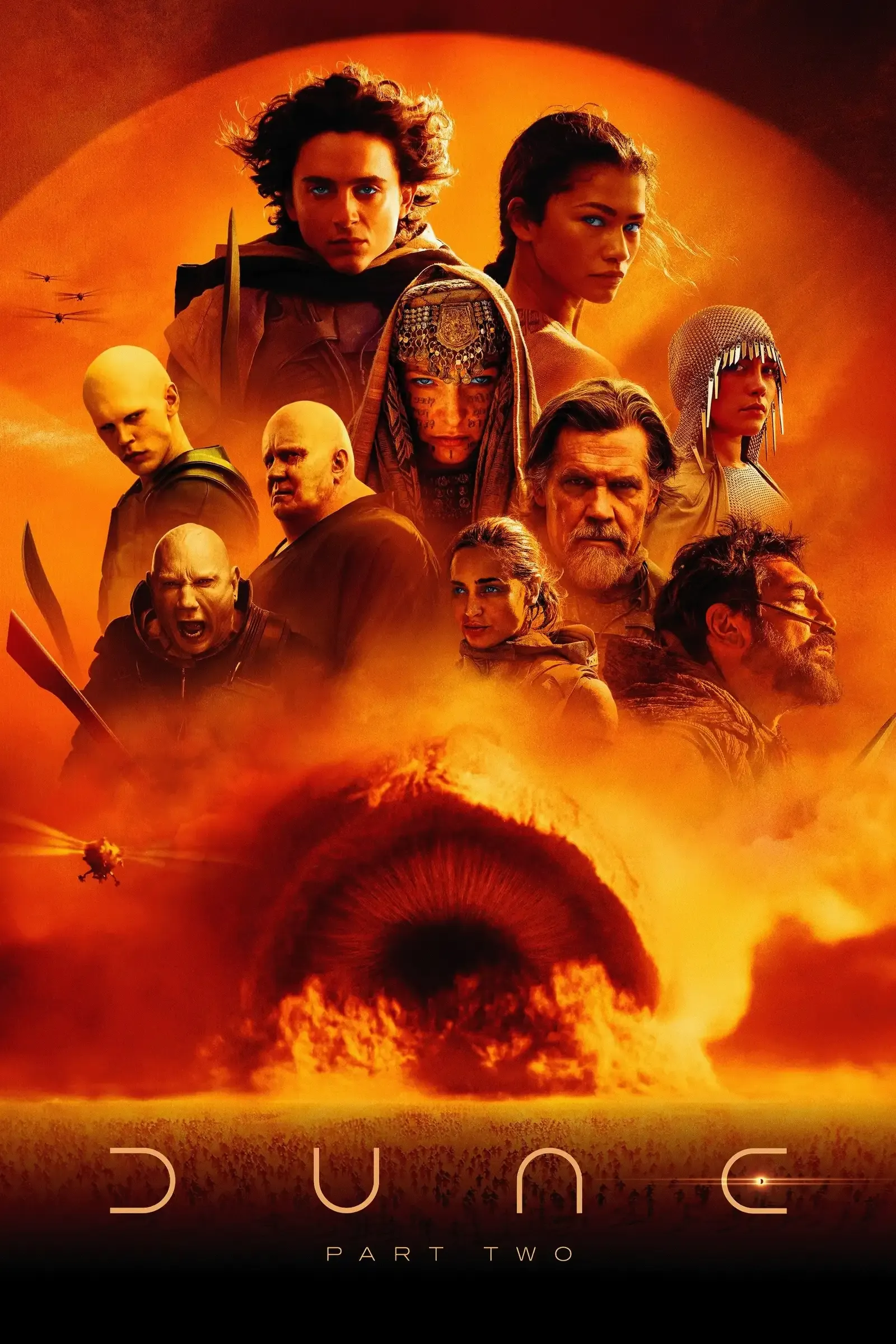
The first full trailer for Dune: Part Three has arrived, offering a stunning glimpse at the trilogy's December conclusion. We analyze what the footage reveals about Villeneuve's adaptation of Dune Messiah, the expanded cast, and why this might be the most ambitious science fiction film of the decade.
Editorial Notes
BucketMovies Editorial covers classic cinema, repertory discoveries, and context-rich film criticism with an emphasis on source-backed reporting and careful editorial review.
Three days ago, Warner Bros. dropped the official trailer for Dune: Part Three, and the internet has barely had time to catch its breath. Within 48 hours, the trailer had amassed over 3.6 million views on YouTube alone — a number that doesn’t account for the countless reaction videos, breakdown analyses, and frame-by-frame dissections spreading across social media. The message from audiences is unambiguous: Denis Villeneuve’s conclusion to his Dune trilogy is the cinematic event of 2026, and December 18 cannot arrive fast enough.
The trailer, unveiled at a special IMAX event in Los Angeles with Villeneuve and cast members in attendance, is the most comprehensive look yet at what the director has described as a “very different” film from its predecessors. If Dune (2021) was the introduction and Dune: Part Two (2024) was the ascension, Part Three promises to be the reckoning — and every frame of the new footage suggests Villeneuve is not interested in a triumphant victory lap.
What the Trailer Reveals
The trailer opens with a sequence that one early viewer described as having “a Saving Private Ryan in space vibe” — massive-scale warfare unfolding across alien landscapes, the chaos of the Fremen jihad rendered in Villeneuve’s signature monumental style. Paul Atreides, now Emperor of the Known Universe, surveys the destruction from a position of terrifying detachment. This is not the uncertain young duke of the first film, nor the vengeful guerilla leader of the second. This is Paul as Frank Herbert always intended him to be: a man who has become the very thing he once feared.
Timothée Chalamet, now 30, brings a weariness to Paul that feels earned across two films and nearly five years of real-world time. The boy who trembled before the Gom Jabbar has been replaced by a ruler whose prescient vision shows him every death carried out in his name. “Forgive me for all I’ve done,” Chalamet’s Paul says in the trailer’s most haunting line — words that belong not to a hero but to a tyrant grappling with the weight of his own mythology.
The footage also gives us our first substantial look at the expanded cast. Florence Pugh returns as Princess Irulan, now Paul’s consort and the chronicler of his reign — her voiceovers threading through the trailer like passages from a history being written in real time. Anya Taylor-Joy appears as Alia, Paul’s sister, whose pre-born abilities have rendered her something between a child and an oracle, unsettling and magnetic in equal measure.
But the most electrifying new presence belongs to Robert Pattinson, whose character — widely speculated to be the Tleilaxu Face Dancer Scytale, though Warner Bros. has been characteristically cryptic — radiates menace in every brief appearance. In one shot, he stands in shadow, his face half-illuminated, delivering a line that has already launched a thousand Reddit threads: “Even a god can be replaced.” It’s the kind of casting that signals confidence: Pattinson, fresh from The Batman and a string of daring indie roles, brings exactly the kind of strange, angular energy that Herbert’s universe demands.
Adapting the Unadaptable
Dune Messiah, the 1969 novel on which Part Three is based, has long been considered something close to unfilmable — not because of its scale, but because of its spirit. Where the original Dune follows the recognizable contours of the hero’s journey, Messiah systematically dismantles it. Paul Atreides, the liberator of Arrakis, presides over a jihad that has killed sixty-one billion people. His prescience has become a prison, showing him every possible future and leaving him paralyzed by the horror of choice. The novel is less an adventure than a political tragedy, a meditation on the corrupting nature of power rendered in Herbert’s characteristically dense prose.
That Villeneuve chose to end his trilogy here, rather than pushing forward to Children of Dune or beyond, is itself a statement of intent. This is not a director interested in franchise extension. This is a filmmaker committed to completing a singular artistic arc, and Dune Messiah provides the only ending that honors the moral complexity of what came before.
“The book is a masterpiece about the danger of charismatic leaders and the weight of prescience,” Villeneuve said at the trailer event. “I wanted to honor Herbert’s vision — which is not a comfortable one.” The director has acknowledged making changes to the source material, and the trailer hints at several: Zendaya’s Chani, whose role was significantly expanded in Part Two beyond her book counterpart, appears to be positioned as an active participant in the conspiracy against Paul rather than a passive observer. It’s a smart adjustment, giving emotional stakes to a character the audience has invested in across two films.
The Weight of Expectation
The stakes for Part Three extend beyond the narrative. Dune: Part Two earned $711 million worldwide and cemented Villeneuve’s reputation as perhaps the only working director who can make arthouse sensibilities work at blockbuster scale. The film’s six Oscars for the first installment, combined with near-universal critical acclaim for the second, have created expectations that would crush a lesser filmmaker. But Villeneuve has spent his entire career building toward this moment.
From Arrival through Blade Runner 2049 to the Dune films, he has demonstrated an almost perverse commitment to trusting his audience. His films are slow. They are serious. They privilege atmosphere over action, ideas over exposition. And yet audiences keep showing up — not despite these qualities, but because of them. In an era of algorithmic content and franchise fatigue, Villeneuve’s Dune films represent something increasingly rare: blockbusters made by an artist with something to say.
A December to Remember
Dune: Part Three arrives in theaters and IMAX on December 18, positioning itself as the definitive holiday-season event. The date places it in direct lineage with some of the most successful December releases in history — Avatar, The Force Awakens, Spider-Man: No Way Home — and Warner Bros. is betting heavily that audiences will turn out in comparable numbers.
The trailer’s final shot — Paul standing alone on a dune, the twin moons of Arrakis rising behind him as a sandworm breaches the surface — is pure Villeneuve: majestic, melancholic, and loaded with unspoken meaning. It’s the image of a man who has everything and has lost everything, a ruler whose empire stretches across the stars but whose soul is bound to a single desert planet. It is, in other words, the image of a tragedy reaching its final act.
The Technical Triumph
The trailer also confirms that Villeneuve and cinematographer Greig Fraser have pushed the visual language of the series into even more audacious territory. The footage alternates between the warm, spice-saturated oranges of Arrakis and the cold, geometric precision of the Imperial palace on Kaitain — a visual dialectic between the primitive and the civilized that has defined the series’ aesthetic from the beginning. But where Part Two emphasized the organic curves of Fremen culture, Part Three introduces a new visual register: the sterile, almost surgical environments of the conspiracy against Paul, shot in a palette of cold blues and institutional grays that evoke the Tleilaxu’s biological horrors without showing them.
Hans Zimmer’s score, audible in fragments throughout the trailer, continues its evolution from the throat-singing and bagpipes of the first film to something stranger and more ethereal. The composer, who famously turned down Christopher Nolan’s Tenet to work on Dune, has described his work on the trilogy as the most personally significant of his career. The trailer’s sound design — whispers layered over choral voices, percussive elements that feel carved from bone and sand — suggests Zimmer is saving his most ambitious work for the finale.
The IMAX sequences, reportedly comprising a significant portion of the film’s runtime, look absolutely staggering even on a laptop screen. Villeneuve has been one of cinema’s most vocal advocates for the format, and Part Three appears to vindicate his insistence that some films demand to be experienced at a scale that no home theater can replicate.
The End of an Era
When Dune: Part Three closes its final frame this December, it will mark the end of something genuinely rare in modern Hollywood: a trilogy conceived and executed by a single artistic vision, without committee-driven course corrections or franchise-extending compromises. The path from Dune to Part Three has taken five years — a compressed timeline by the standards of most blockbuster trilogies — and the result, if the trailer is any indication, will be one of the defining achievements of 2020s cinema.
It is also, perhaps, the end of a particular kind of blockbuster filmmaking. The Dune trilogy has succeeded by doing everything the conventional wisdom says you shouldn’t: trusting audiences with moral ambiguity, refusing to flatten its source material’s complexity, and insisting that spectacle can coexist with genuine intellectual ambition. If Part Three lands the way the first two films did, it will make a powerful argument that the smartest path forward for big-budget cinema is the path Villeneuve has been walking all along.
The spice must flow. But after December 18, it will flow for the last time in Denis Villeneuve’s hands. Based on everything the trailer shows us, he intends to make it count.
Share This Article
Comments