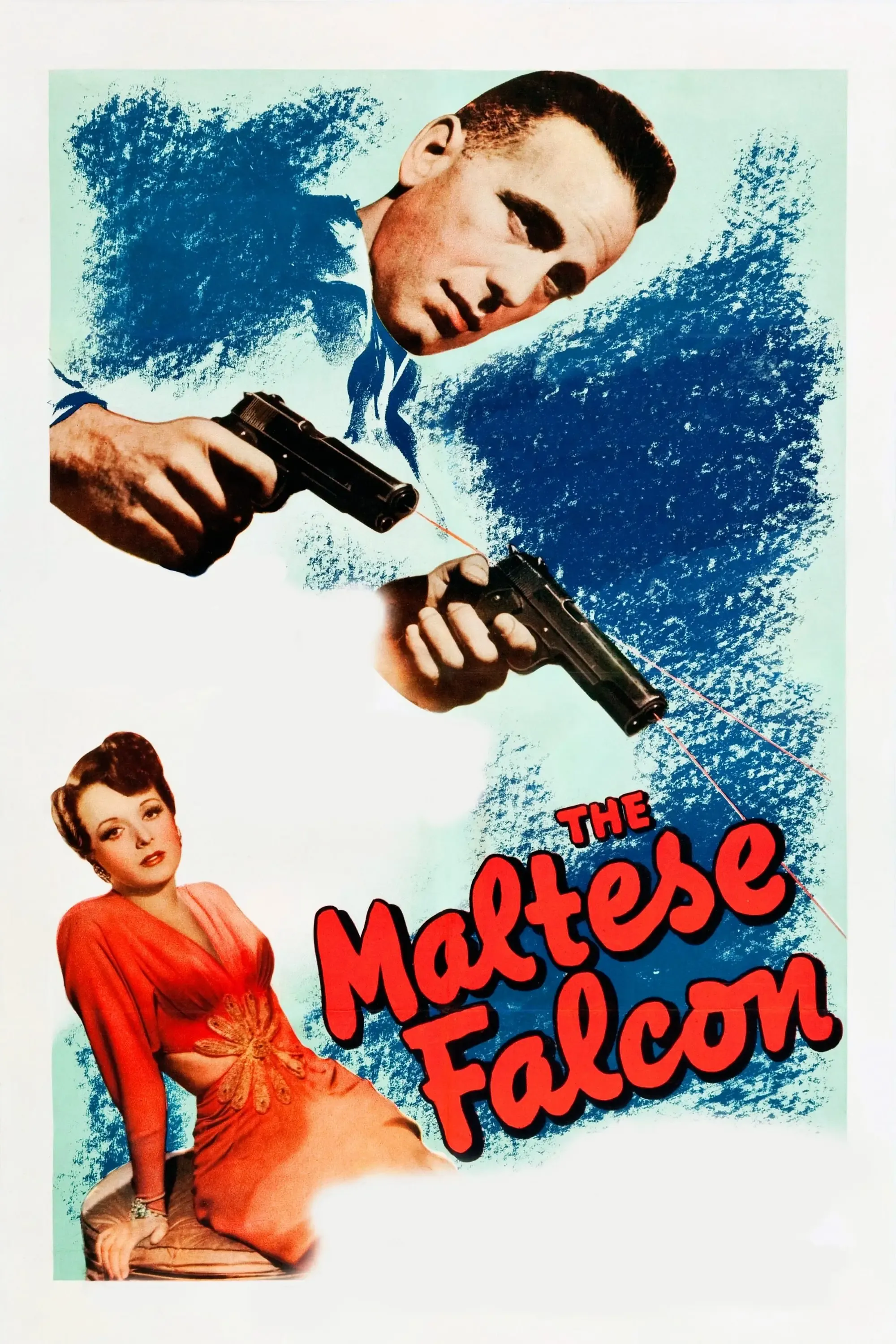
The Maltese Falcon Returns: Why This 85-Year-Old Masterpiece Still Defines Film Noir
John Huston's 1941 masterpiece returns to theaters for its 85th anniversary. We revisit the film that invented noir, featuring Humphrey Bogart's iconic Sam Spade and performances that set the standard for detective cinema.
Editorial Notes
Daniel covers repertory revivals, American genre films, and performance-led criticism across both new releases and older catalog titles.
Introduction
Some films do not just define a genre. They invent one. The Maltese Falcon, released in 1941 and returning to theaters for its 85th anniversary, did exactly that. It established the template for every detective film noir that followed, created an iconic character in Sam Spade, and launched the career of John Huston, who made his directorial debut with this masterpiece.
The film returns to theaters nationwide this December, with Fathom Events bringing the restored version to over 650 screens. This anniversary release includes exclusive insight from Leonard Maltin, providing context for why this film remains essential viewing 85 years later.
In this review:
- Why the film matters in film history
- Key performances that defined cinema
- The innovative storytelling techniques
- Why it still resonates today
What Is The Maltese Falcon?
The Maltese Falcon is a 1941 American film noir based on Dashiell Hammett’s 1929 novel. The story follows San Francisco private detective Sam Spade, who becomes entangled in a web of deception, murder, and greed while investigating the murder of his partner and the chase for a valuable statuette.
The film holds a unique place in cinema history. It was the third film made by Warner Bros. starring Humphrey Bogart, transforming him from supporting player to leading man. More significantly, it established the visual and narrative conventions of film noir that would dominate American cinema for the next decade.
Key specifications:
| Specification | Details |
|---|---|
| Release Date | October 5, 1941 (Original) |
| Director | John Huston |
| Runtime | 100 minutes |
| Studio | Warner Bros. |
| Based On | Novel by Dashiell Hammett |
| Oscar Nominations | Best Picture, Best Director, Best Screenplay |
The Cast: Icons Born
Humphrey Bogart as Sam Spade
Before The Maltese Falcon, Humphrey Bogart was primarily a supporting actor, often playing gangsters and villains. His performance as Sam Spade changed everything.
Bogart’s Spade is a revelation. He is morally ambiguous, willing to work with criminals while maintaining a personal code. He is cynical about humanity but still capable of feeling something for the dangerous femme fatale Brigid O’Shaughnessy. The famous final scene, where he delivers the line “I think I’m rotten at the heart,” remains one of cinema’s great moments of moral complexity.
The performance established Bogart as America’s hardboiled detective, a template he would refine in subsequent films like The Big Sleep and Key Largo.
The Supporting Ensemble
The film features three extraordinary supporting performances that elevate every scene they are in.
Sydney Greenstreet makes his film debut as Kasper Gutman, the bloated, menacing mastermind behind the falcon scheme. Greenstreet had been a stage actor for 30 years before this film, and his gravitas brings weight to every scene. His nomination for Best Supporting Actor was well-deserved.
Peter Lorre plays Joel Cairo with an eerie, unsettling precision. His scene with the Falcon replica, where he demonstrates exactly how he would kill someone with it, is both terrifying and darkly funny. Lorre’s career had been derailed by fleeing Nazi Germany, and this film helped establish him in Hollywood.
Mary Astor is perfectly cast as the duplicitous Brigid O’Shaughnessy. She manipulates everyone around her, and Astor plays her with intelligence and sensuality. The scene where she tries to seduce Spade while explaining her various crimes is legendary.
Why It Works: The Craft
John Huston’s Direction
At age 34, John Huston made his directorial debut with The Maltese Falcon. The confidence he displays is remarkable. Every shot is precisely composed, every performance carefully calibrated.
Huston’s approach was innovative for its time. He used deep shadows and stark lighting to create visual tension. He allowed long takes that let actors develop their characters organically. Most importantly, he trusted his audience to follow complex dialogue and layered character motivations.
The film’s famous closing sequence, where Spade explains to Brigid why he must turn her in, runs for several minutes without cutting. It is a masterclass in screen acting and editing restraint.
The Screenplay
Huston adapted the screenplay himself, and he made crucial decisions that improved on Hammett’s novel. He streamlined the plot, sharpened the dialogue, and created a more psychologically complex protagonist.
The dialogue crackles with wit and menace. Lines like “You won’t hold out for long, the way you look” and “I’m the guy who works alone” have become embedded in popular culture. The screenplay earned an Oscar nomination, one of the first times screenwriting received such recognition.
Visual Style
Cinematographer Arthur Edeson created the look that defined noir. His use of stark black-and-white contrast, low-angle lighting, and carefully composed frames established visual conventions that persist today.
The famous scene where Gutman’s silhouette appears in the fog, or the moment Spade examines the falcon in his office, demonstrate how lighting itself can tell a story. These images influenced countless filmmakers, from Orson Welles to the Coen brothers.
What We Loved
The Ensemble Chemistry
The three villains (Greenstreet, Lorre, and Astor) have impeccable chemistry. Their interactions crackle with tension and dark humor. Each brings a different flavor of menace: Greenstreet’s calculated menace, Lorre’s unpredictable violence, and Astor’s seductive manipulation.
Moral Ambiguity
Sam Spade is not a traditional hero. He works with criminals, manipulates everyone around him, and may have feelings for a murderer. Yet we root for him. This moral complexity was revolutionary in 1941 and remains compelling today.
The Dialogue
Every line in this film serves a purpose. The witty exchanges between Spade and Brigid, the tense negotiations between the criminals, the probing questions from police detective Dundy. The writing rewards attention.
Historical Significance
Watching The Maltese Falcon is witnessing the birth of a genre. Every detective film, every noir thriller that followed owes something to this picture. Understanding cinema means understanding this film.
What Could Be Improved
Honestly, there is little to criticize. Some modern viewers may find the pacing slower than contemporary thrillers, but this measured approach allows for character development that enriches the story.
Some may argue that the film noir elements are not as pronounced as in later examples, but that is precisely the point. This film created the template; later films could only refine it.
How It Compares
vs. The Big Sleep (1946)
Both films feature Bogart as a detective, but they represent different approaches. The Big Sleep is more stylized and mysterious. The Maltese Falcon is grittier and more grounded. Both are essential, but Falcon has greater historical significance.
Winner: The Maltese Falcon (for innovation)
vs. Chinatown (1974)
Roman Polanski’s neo-noir clearly draws from The Maltese Falcon, updating the formula for a new era. Both feature male protagonists entangled with dangerous women. Both end with bitter conclusions about human nature. Chinatown is more explicitly cynical, but it is building on foundations Falcon established.
Winner: The Maltese Falcon (for originality)
Final Verdict
The Maltese Falcon is not just a great film. It is a foundational work that changed cinema. Every detective story, every femme fatale, every shadowy thriller that followed has been shaped by this picture.
The 85th anniversary provides an excellent opportunity to experience it as intended: on a big screen, in a theater, sharing the experience with an audience. Films this important deserve to be seen communally.
Who should watch:
- Film students and cinema enthusiasts
- Anyone interested in understanding film history
- Fans of detective fiction and noir
- Viewers who appreciate classic Hollywood craftsmanship
Who should skip:
- Viewers who need constant action and modern pacing
- Those who prefer explicit content over suggestion
Rating Breakdown
| Category | Score |
|---|---|
| Performances | 10/10 |
| Direction | 10/10 |
| Screenplay | 10/10 |
| Historical Significance | 10/10 |
| Rewatchability | 9/10 |
Overall: 9.8/10
The Anniversary Screening
The 85th anniversary screening offers several features:
- Restored print with improved visual quality
- Exclusive Leonard Maltin introduction providing historical context
- Multiple showtimes across participating theaters
- Limited engagement making it a special event
Check local listings for showtimes at Fathom Events partner theaters. The screening runs through early December 2026.
Legacy and Influence
The Maltese Falcon established templates that continue to influence filmmaking today. Its impact can be seen in:
- Every detective procedural on television
- Neo-noir films like Chinatown, L.A. Confidential, and The Usual Suspects
- The morally ambiguous antihero archetype
- Ensemble crime films with multiple factions
John Huston would go on to direct The Treasure of the Sierra Madre and The African Queen, winning multiple Oscars. But his debut remains his most influential work.
Humphrey Bogart became the defining tough guy of American cinema. His career spanned decades, but his partnership with Huston and this performance established his legacy.
The film also demonstrated that sophisticated adult storytelling could succeed commercially. Studios noticed. More complex, morally ambiguous films followed.
Conclusion
Eighty-five years later, The Maltese Falcon remains essential viewing. It is a masterclass in screen acting, visual storytelling, and adaptation. It invented a genre while transcending genre.
The anniversary screening provides a rare opportunity to experience this masterpiece as audiences did in 1941. Do not miss it.
Where to watch: Check Fathom Events for theatrical showtimes
Related films:
- The Big Sleep (1946) - Bogart’s Other Classic
- Chinatown (1974) - Neo-Noir Masterpiece
- Double Indemnity (1944) - The Golden Age of Noir
The Maltese Falcon returns to theaters for a limited 85th anniversary engagement. Check local listings for showtimes.
Share This Article
Comments