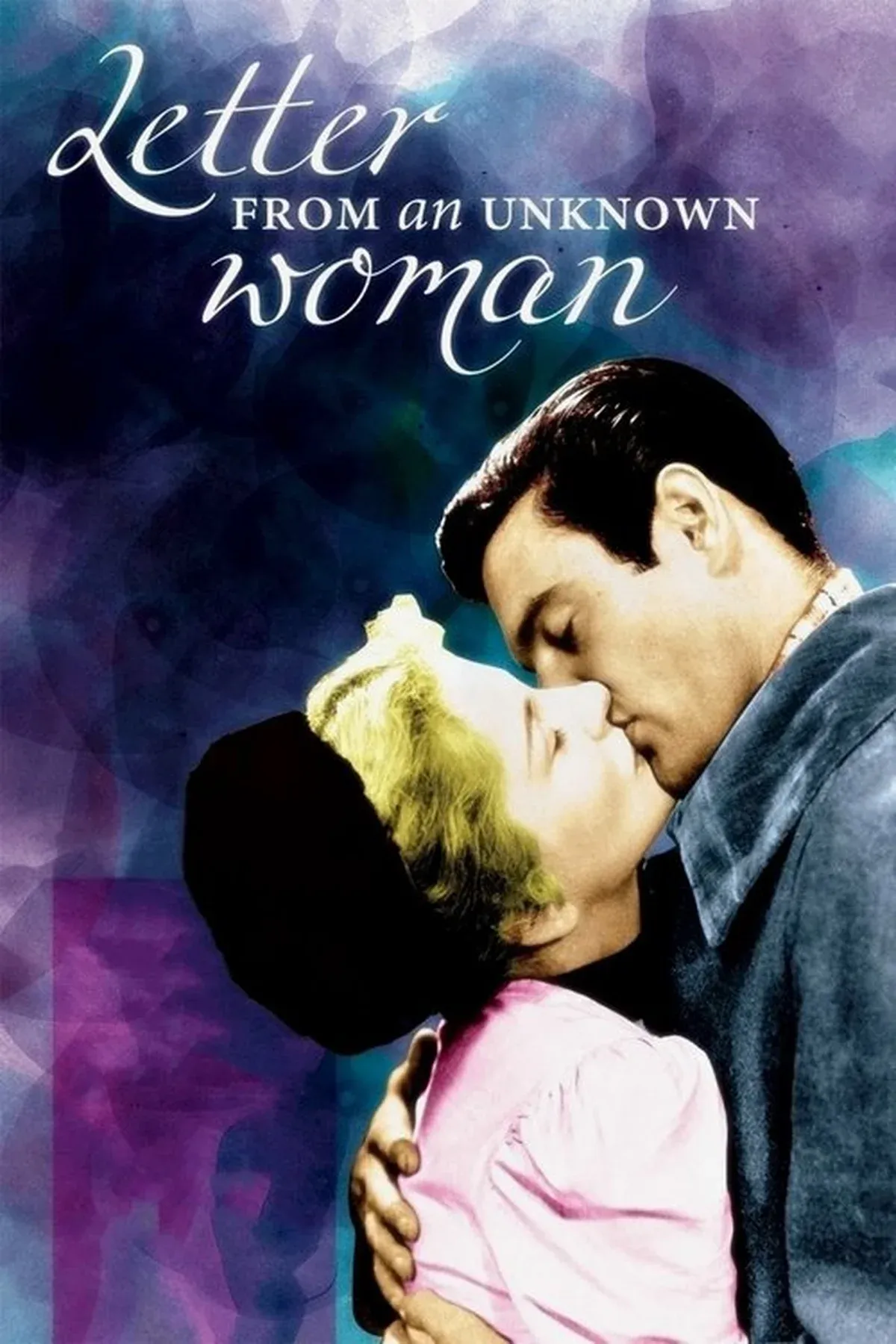
Letter from an Unknown Woman (1948): Memory, Movement, and the Woman He Never Learned to See
An in-depth analysis of Letter from an Unknown Woman, focusing on Joan Fontaine's devastating performance, Max Ophuls's flowing camera, and the film's painful idea of love remembered too late.
Editorial Notes
Anna edits BucketMovies criticism and essay packages, with a steady interest in classic Hollywood, literary adaptations, and repertory programming.
Leah Carter
Research Editor
Leah handles source checks, release-date verification, awards coverage, and the reporting framework behind BucketMovies news and industry pieces.
Any film that begins with a woman saying, “By the time you receive this letter, I may be dead,” is asking for trouble. It risks becoming tasteful tragedy, the sort of prestige melodrama that wants tears more than thought. Letter from an Unknown Woman does something harder. Max Ophuls takes that fatal opening and turns it into a machine for embarrassment, longing, self-invention, and belated shame. The movie hurts because it knows that memory is not neutral. Memory edits. Memory flatters. Memory turns one person into a destiny and another into a witness who arrives too late.
That is the film’s terrible joke. Lisa Berndle spends her life seeing Stefan Brand with painful clarity. Stefan barely sees Lisa at all until the letter forces him to. One life is built around devotion. The other glides from pleasure to pleasure so lightly that faces blur. By the time recognition comes, it has nowhere useful to go.
Charles Dennis, writing for Criterion, gets close to the film’s strange power when he describes its wintry light of memory and the way Ophuls uses theatrical studio Vienna to make life feel like illusion. BFI is also right to stress the director’s moving camera and his old-world Vienna recreated in Hollywood. Those two facts belong together. Letter from an Unknown Woman is a movie about how memory turns artifice into truth. The sets are not trying to fool us into documentary realism. They feel recollected, polished by yearning, and slightly unreal in the way important memories often are.
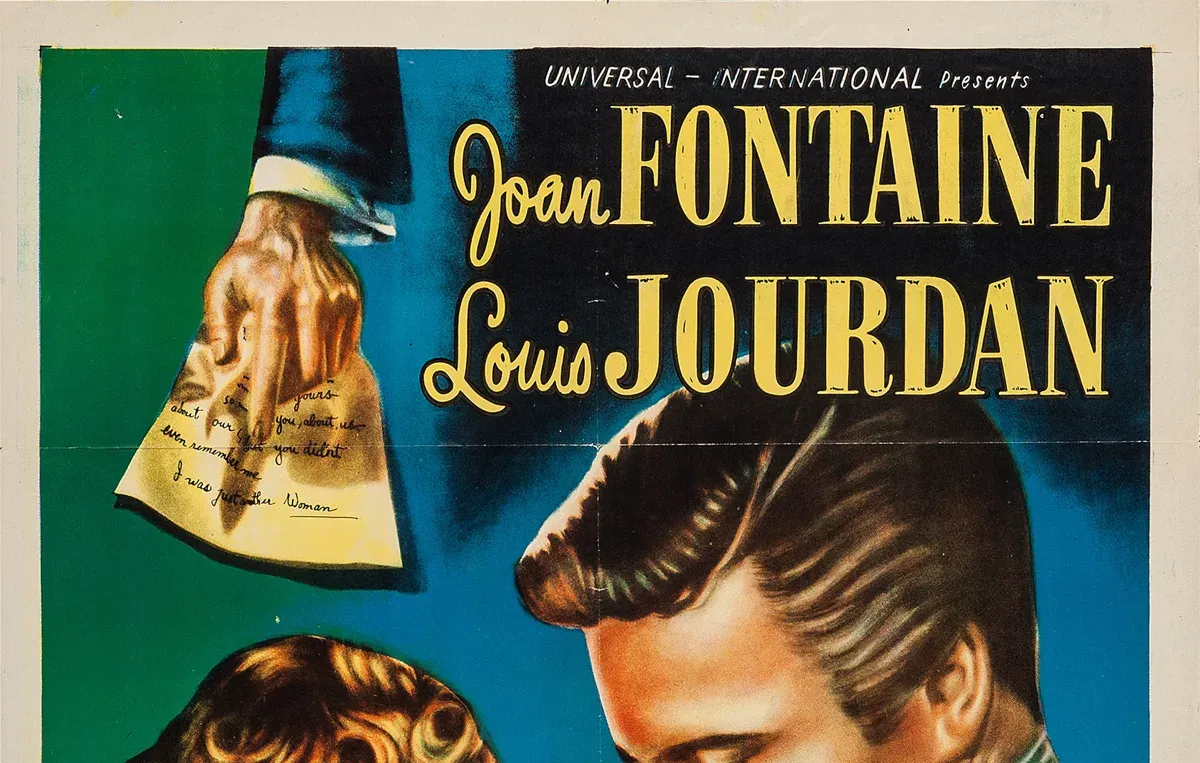 Upper section of the original release poster for Letter from an Unknown Woman, preserved via Wikimedia Commons.
The Letter Gives Lisa a Voice and a Prison
The first great move Ophuls makes is structural. Lisa narrates almost the entire film, but she does so from beyond ordinary life. Her letter arrives while Stefan is preparing to flee a duel. He opens it because he has time to kill, and the film slowly reveals that what he is opening is the evidence of his own failure to register another human being.
At first, the device seems generous to Lisa. She gets to tell her own story. She frames the past. She decides what Stefan will hear. But the form is cruel in another way. Lisa can speak only because she is already slipping out of the world. She becomes legible to Stefan at the moment she can no longer be answered. The whole film is organized around that delay.
That is why I do not see the letter as simple confession. It is also accusation, though a quiet one. Lisa does not write to expose a villain. Stefan is too shallow for that sort of grandeur. What she exposes instead is a style of male living built out of charm, appetite, and amnesia. Louis Jourdan plays Stefan beautifully because he does not overplay the damage. He is elegant, seductive, amused by himself, and morally light in the worst possible way. Nothing monstrous. That would make things easier.
The wound is smaller than monstrosity and harder to shake. Stefan forgets.
He forgets the girl next door listening through the wall. He forgets the young woman who gives him a night of manufactured happiness in Vienna. He forgets the mother of his child. He forgets because forgetting costs him nothing until the letter arrives. Ophuls understands that memory is political at the scale of intimacy. One person gets to move on. The other gets left behind with the full archive.
Ophuls Turns Camera Movement Into Feeling
People talk about Ophuls’s camera because they should. It glides, circles, tracks, hesitates, arrives a second too late, then keeps moving. But the camera in Letter from an Unknown Woman is not there to show off elegance. It is the film’s emotional method.
BFI’s note on the film points to Ophuls’s elaborate movement and his taste for old Vienna, and that pairing is exactly right. Movement is how Vienna is felt here. Hallways stretch. Staircases curve. Apartment landings become stages for longing. The city does not feel mapped so much as remembered in passes and returns. Lisa sees Stefan, loses him, finds him again, and the film keeps repeating that rhythm spatially.
I keep coming back to the way Ophuls photographs thresholds. Doors, windows, stair rails, carriage openings, restaurant entrances, theater spaces. Lisa is always nearing something or watching it recede. The camera rarely lets a room settle into dead stillness. Even when people stop, the film remembers momentum. Desire has already moved through the frame.
This is one reason the artificiality of the Vienna sets works so well. Dennis notes the cyclorama ride, the waxworks, the snow, the opera, the cafés, all of it built on a backlot and openly theatrical. Instead of weakening the emotion, the artifice sharpens it. Lisa’s great night with Stefan is built on a fake journey through Europe inside an amusement ride. Venice, Switzerland, moonlit romance, all reduced to painted movement and mechanical illusion. It sounds almost comic when described flatly. On screen, it breaks your heart because Lisa chooses to believe in it completely.
The BFI list on films set in Vienna catches this beautifully when it points to the city’s cluttered interiors, cafés, opera houses, and the cyclorama itself. Ophuls is not showing us Vienna as a historical record. He is showing Lisa’s private Vienna, the city as organized by attention. That matters. She does not live in the same city as anyone else in the film.
Joan Fontaine Refuses to Let Lisa Become a Pure Victim
The movie would collapse if Lisa were only pathetic. Joan Fontaine saves it by making Lisa’s devotion intelligent enough to hurt and stubborn enough to unsettle. She is not a fool in the cheap sense. She sees more than the film’s men do. The problem is that insight does not protect her from fantasy. If anything, it helps her build a more intricate one.
Fontaine plays Lisa across years without turning the character into a sequence of costumes. The young Lisa watching Stefan through a crack in the world is already recognizable as the older woman who writes the letter. What changes is not the core of feeling but its weight. Early infatuation has light in it. Later devotion has mass.
That continuity is what makes the performance so painful. Lisa keeps recognizing patterns that should warn her away, yet she also keeps converting those patterns into proof of meaning. Stefan’s carelessness becomes mystery. His absence becomes destiny. His failure to remember her becomes one more test that her feeling must survive. That is not innocence. It is work.
The movie knows this. It does not laugh at her, but it does not let her off either. Lisa chooses erasure again and again. She gives Stefan the authority to name the experience even when he has not earned that authority. Her great romantic fidelity is also a long training in self-disappearance.
That is where Fontaine is superb. She never asks for easy sainthood. There is pride in Lisa. There is secrecy. There is a dangerous willingness to prefer the imagined version of life over the life directly in front of her. When she marries another man, she does not escape Stefan. She reorganizes her life around the impossibility of escaping him. Fontaine makes that feel less like nobility than habit turned into fate.
Stefan’s Forgetfulness Is the Film’s Most Cruel Idea
Plenty of melodramas are built on betrayal. Letter from an Unknown Woman is built on something pettier and, in its way, more devastating: insufficient attention.
Stefan is not a melodramatic tyrant. He is worse for the purposes of this story. He is a man who has spent years treating his own charm as a complete moral system. Jourdan gives him enough warmth that we understand why Lisa falls for him, but never so much that we mistake him for depth. He loves being desired. He loves being forgiven in advance. He loves the elegant surface of feeling without its demands.
That is why the film’s central question is not whether Stefan loved Lisa once. It is whether he was ever capable of the form of attention that love would have required. The answer keeps coming back no. He meets women as episodes. Lisa experiences him as structure.
The duel at the beginning suddenly matters in this light. It looks like a familiar bit of romantic-pastel danger, one more complication in a libertine’s life. By the end, it becomes something else. Stefan is finally forced into duration. He has to sit still and read. He has to reconstruct a woman he failed to notice in real time. He has to understand that the grand gestures of male honor mean little next to a lifetime of casual disregard.
I do not think the film offers redemption in any comfortable sense. Stefan’s recognition matters, but it also comes too late to repair anything. Ophuls refuses the cheap consolation in which a final pang of guilt balances the scales. It doesn’t. The letter gives Stefan knowledge. It does not give Lisa back her life.
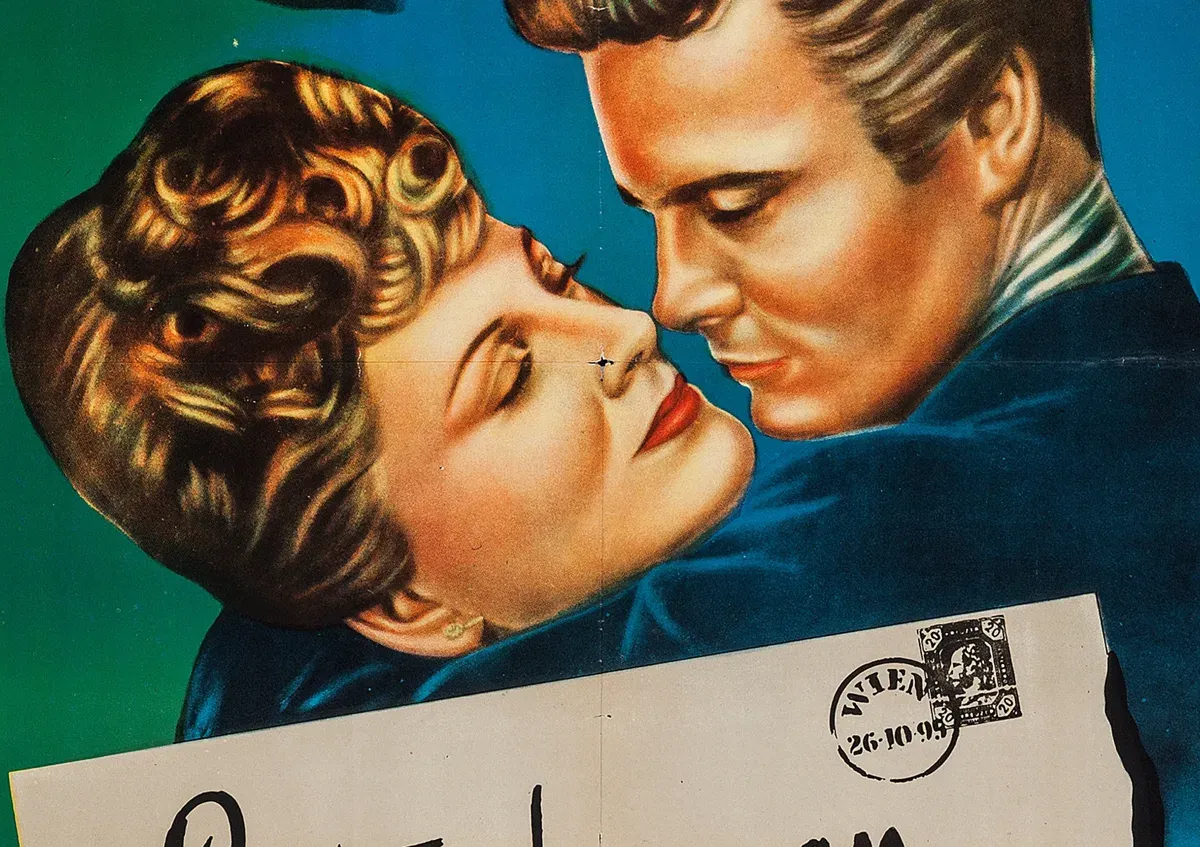 Midsection detail from the original poster, showing the film’s romantic imagery in concentrated form.
The Funfair Scene Contains the Whole Film in Miniature
If I had to pick one sequence that explains the whole movie, it would be the Prater amusement ride.
BFI’s list of films at the funfair highlights that scene for good reason. Lisa and Stefan sit together and travel nowhere. Painted scenery rolls by. Europe becomes scenery. Romance becomes machinery. The whole thing is fake, and yet it is also one of the most emotionally precise scenes Ophuls ever made.
Lisa understands the ride as miracle because she wants to. Stefan understands it as flirtation because that is what he does with everything. They occupy the same bench and live through different events. That gap is the film.
I love how lightly Ophuls handles the irony. He does not stop the scene so we can admire the symbolism. He lets the rhythm carry it. The false motion, the enclosed intimacy, the impossible destinations passing by on cue, the little pocket of suspended time, all of it feels joyful and faintly doomed at once. Lisa is receiving the memory she will live inside for years. Stefan is collecting another charming evening.
The scene also says something nasty about cinema itself. Movies manufacture proximity, memory, and emotional weather out of controlled illusion. Ophuls knows that better than almost anyone. Here he turns that knowledge inward. Lisa falls in love partly through surfaces arranged to move her. The film asks whether artifice can still hold truth when the people inside it want different things from the same image. Ophuls’s answer, I think, is yes, but the truth may not be the one the characters want.
Why the Film Still Feels Sharp in 2026
The Library of Congress added Letter from an Unknown Woman to the National Film Registry in 1992, and the choice still looks right. The film has not survived because it is an elegant relic. It has survived because it remains unpleasantly current in its understanding of asymmetrical feeling.
It knows how easily one person can become the custodian of an entire emotional history while the other drifts on untouched. It knows how desire can attach itself to repetition and call that attachment destiny. It knows that being “seen” is not a romantic cliché but a moral question. Who pays attention? Who gets remembered? Who gets to move through the world without storing the damage they cause?
For readers moving through our run of films about projection and impossible intimacy, this makes a strong companion to Sunrise: A Song of Two Humans (1927): Temptation, Motion, and the Last Silent Dream and Leave Her to Heaven (1945): Possession, Color, and the Cruelty of Perfect Love. Sunrise turns love into motion and visual rapture. Leave Her to Heaven turns love into possession. Letter from an Unknown Woman turns it into memory disciplined so hard that it becomes a private religion.
That is why the film still stings. It is romantic, yes, but it is never naive about romance. It knows devotion can hollow out the person doing the devoting. It also knows that late recognition, while moving, is not justice.
Final Thought
What stays with me in Letter from an Unknown Woman is how calmly it handles disaster. Ophuls does not need melodramatic shrieking to show ruin. He needs a moving camera, a remembered room, a letter opened too late, and Joan Fontaine’s face holding on to the idea that meaning might still be gathered from a life spent waiting.
That restraint is what gives the film its afterlife. Lisa’s story is not grand because Stefan finally understands it. It is grand because the movie refuses to confuse recognition with repair. Memory arrives. Feeling arrives. Knowledge arrives. Too late, all of it. Ophuls leaves us with that lateness and trusts it to do the damage.
Sources and Further Reading
- Letter from an Unknown Woman - The Criterion Collection
- Letter from an Unknown Woman (1948) - BFI
- 10 Great Films Set in Vienna - BFI
- 10 Great Films at the Funfair - BFI
- National Film Registry Titles Selected 1989-2017, Listed Alphabetically - Library of Congress
- National Film Registry Titles 1989-2017: Listed by Year of Release - Library of Congress
- File:Letter from an Unknown Woman (1948 film poster).jpg - Wikimedia Commons
Share This Article
Comments
.jpg)