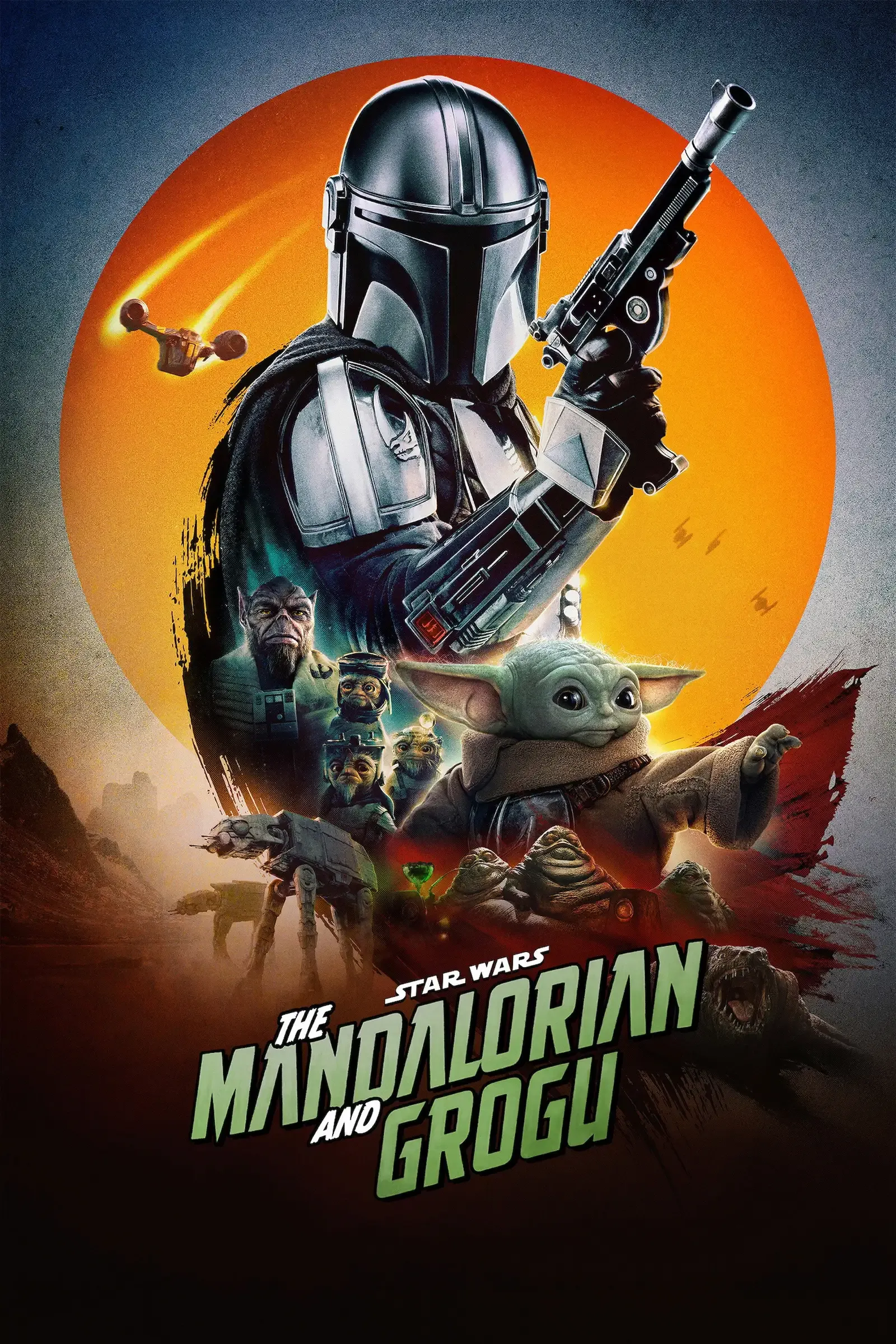
Mandalorian and Grogu Review: A Second Chance on Streaming
Star Wars: The Mandalorian and Grogu hits digital streaming July 21 after a troubled $342M theatrical run. Our review examines whether the film deserved its box office fate — and whether it's worth your $30 rental.
Editorial Notes
BucketMovies Editorial covers classic cinema, repertory discoveries, and context-rich film criticism with an emphasis on source-backed reporting and careful editorial review.
The Mandalorian should have been a sure thing. It had everything: the most beloved new Star Wars character since the original trilogy, a charismatic lead in Pedro Pascal, a director (Jon Favreau) who’d already proven he could make this universe sing, and a fanbase that turned Baby Yoda into a cultural phenomenon before he even had a name.
Instead, Star Wars: The Mandalorian and Grogu opened to $98 million domestically over Memorial Day weekend — the lowest debut for any Disney-era Star Wars film, trailing even the much-maligned Solo. By its second weekend, it had collapsed 70%. After nine weeks in theaters, the global total sits at $342.2 million against a $165 million production budget. For context, that’s not a bomb in the Masters of the Universe sense. But for a franchise that once opened The Force Awakens to $248 million, it’s a flashing red light.
Now, on July 21, the film arrives on digital platforms — $29.99 to buy, $24.99 to rent. A 4K Ultra HD physical release follows on August 25. The question isn’t really whether people will watch it. The question is whether the movie deserved better than it got, or whether the box office actually got it right.
What Works
Let’s start with the good news, because there is some — though you have to look harder than you should for a Star Wars movie.
Grogu remains a genuine miracle of practical effects. Werner Herzog famously shamed the Mandalorian production team into using a puppet instead of CGI during the show’s first season, and that decision continues to pay dividends five years later. Every blink, every head tilt, every tiny three-fingered wave carries weight that pixels simply cannot replicate. There’s a moment early in the film where Grogu reaches toward a bowl of broth with the same expression of intense concentration he wore in the show’s earliest episodes, and it lands because the puppet is physically present in the scene — lit by the same lights, casting the same shadows as the actors around it.
The Anzellan Droidsmiths, those tiny creatures who first appeared repairing IG-11, are also practical puppets. Their scenes provide some of the film’s few moments of unforced charm, and Favreau clearly enjoys cutting to their deadpan reactions. When one of them delivers a line about the structural integrity of Mando’s helmet with complete seriousness, you remember why practical creature work will always beat digital.
The gladiator pit sequence is the standout set piece and the only stretch where the film genuinely earns your attention. Mando and Grogu are thrown into an arena reminiscent of Attack of the Clones, but where that film’s Geonosis sequence felt weightless — too many Jedi, too much digital chaos — Favreau stages this as a survival gauntlet with real physical stakes. Grogu uses the Force in ways that feel inventive rather than convenient, flipping a charging beast mid-stride and redirecting a thrown spear in a single fluid motion. The creature designs are appropriately monstrous, and for about ten minutes, you stop checking your watch.
Pedro Pascal does what he can. His voice work remains compelling, and the physicality of Din Djarin — the way he moves under the weight of the armor, the pauses that say more than dialogue ever could — is still the best argument for keeping the helmet on. There’s a scene where Mando kneels to adjust Grogu’s robe before a dangerous mission, and Pascal communicates more tenderness in that silent gesture than the script manages in all its exposition combined. The problem is that these moments are scattered. The ratio of father figure to bounty hunter checking off mission objectives tilts too far toward the latter.
What Doesn’t
The structural problem is glaring: nothing in this movie matters.
The plot sends Mando and Grogu to rescue Rotta the Hutt and apprehend an Imperial warlord. They go to one planet. Something happens. They go to another planet. Something similar happens. They go back. Repeat. There is no escalation, no deepening of stakes, no sense that any outcome would meaningfully change anything about these characters or their world. When the credits roll, you could describe what happened but you’d struggle to explain why any of it should matter to anyone who wasn’t in the room.
As the review on Cinema from the Spectrum put it, the film “offers no high stakes and fails to engage with audiences. It goes from point A to point B and back to point A and back to point B.” That’s not hyperbole. It’s a diagnosis. The narrative is a series of fetch quests dressed up in Star Wars iconography, and the script never finds a reason for the audience to invest in the outcome.
The nostalgia problem is worse here than in almost any recent franchise entry. Stormtroopers show up because Star Wars has stormtroopers. TIE fighters scream across the sky because TIE fighters are cool. Familiar alien species populate every cantina and marketplace with the predictability of a theme park attraction. None of these references serve the story. They’re set dressing designed to trigger recognition, and recognition is not the same thing as emotion. The film mistakes familiarity for resonance, and the result is a hollow experience that feels less like a movie and more like a tour through a Star Wars museum where the exhibits occasionally shoot at each other.
The unavoidable comparison is Andor. Tony Gilroy’s series exists almost entirely outside the Skywalker saga — no Jedi, no Sith, no legacy characters, barely any recognizable iconography — and it’s the best Star Wars storytelling in decades. Andor works because it asks what the Empire actually feels like to ordinary people, and it answers with the specificity of a historical drama: the grinding bureaucracy of fascism, the moral compromises of resistance, the way institutions corrupt the people inside them. You could strip every Star Wars reference from Andor and still have a compelling story about authoritarianism and the cost of fighting it.
The Mandalorian and Grogu asks what Star Wars looks like, and it answers with a checklist. Strip the references and there’s nothing left but a travelogue.
The Box Office Context
Let’s sit with the numbers, because they’re worse than the headline suggests.
A $98 million opening on Memorial Day weekend from 4,300 North American theaters isn’t catastrophic in a vacuum. For context, The Flash opened to $55 million and was considered a disaster. But context is everything. Memorial Day is historically one of the most lucrative frames on the calendar — Solo opened to $103 million in the same slot in 2018 and was widely considered a failure that killed Lucasfilm’s “A Star Wars Story” spinoff strategy. The Mandalorian and Grogu opened lower.
The 70% second-weekend drop is the real smoking gun. Blockbusters typically drop 50-60% in their second frame — even poorly reviewed ones. A 70% plunge means audiences actively warned each other off. Word of mouth wasn’t mixed. It was negative, and it spread fast.
The ultimate global tally of $342.2 million — $177.4 million domestic, $164.8 million international — barely doubles the production budget. Hollywood accounting says a film needs to earn roughly 2.5 times its budget to break even when marketing costs are factored in. The Mandalorian and Grogu fell significantly short.
Why did this happen? Part of it is franchise fatigue, though that word gets thrown around too easily. The real issue isn’t that audiences are tired of Star Wars — it’s that Disney has conditioned them to treat Star Wars as content rather than event. Five theatrical films and six live-action series since 2015. The Mandalorian was special in 2019 because it felt like a side door into a universe we loved, a glimpse of the galaxy’s frontier that the Skywalker saga never had time to explore. In 2026, after Ahsoka, The Acolyte, Skeleton Crew, and multiple seasons of interconnected narratives, the side door has become a revolving one. Nothing feels essential because nothing is allowed to feel final.
The transition from television to film is the deeper wound. The Mandalorian works as episodic television because each adventure has room to breathe, and the relationship between Din and Grogu develops across hours of screen time, accruing weight through repetition and familiarity. Compressing that dynamic into a two-hour movie — with a plot that needs to feel “cinematic” — loses what made the show distinctive. The film doesn’t feel bigger. It feels like three episodes stitched together, and the seams show. The show’s rhythm — quiet moment, action beat, quiet moment — becomes exhausting when sustained without commercial breaks.
Should You Watch It on Streaming?
At $30 to buy or $25 to rent, this is an expensive bet. PVOD pricing has crept upward over the past few years, but $25 is effectively a movie ticket for two people — and you don’t get the theater experience. For a film that already struggled to justify its theatrical run, that math is hard to swallow.
If you’re a completionist who has watched every episode of The Mandalorian and wants to see how the story continues, you already know whether you’re that person. The rental price will annoy you, but the completionist itch is real, and nobody can talk you out of it.
If you’re a casual Star Wars viewer who enjoyed the early seasons of the show but fell off somewhere around the Book of Boba Fett crossover, this movie won’t bring you back. It doesn’t function as a standalone entry point, and it doesn’t reward the time investment with anything you haven’t seen done better elsewhere — often in the very show that spawned it.
The honest recommendation: save your $25. Rewatch the first two seasons of The Mandalorian, when the show felt like it was building toward something rather than circling a parking lot forever. Or watch Andor if you haven’t. Andor is what happens when Star Wars trusts its audience to care about characters more than references. The Mandalorian and Grogu is what happens when it doesn’t — and $342 million later, the audience has made its verdict clear. Maybe Disney will listen. Based on the seven Star Wars films currently in development, probably not.
Share This Article
Comments