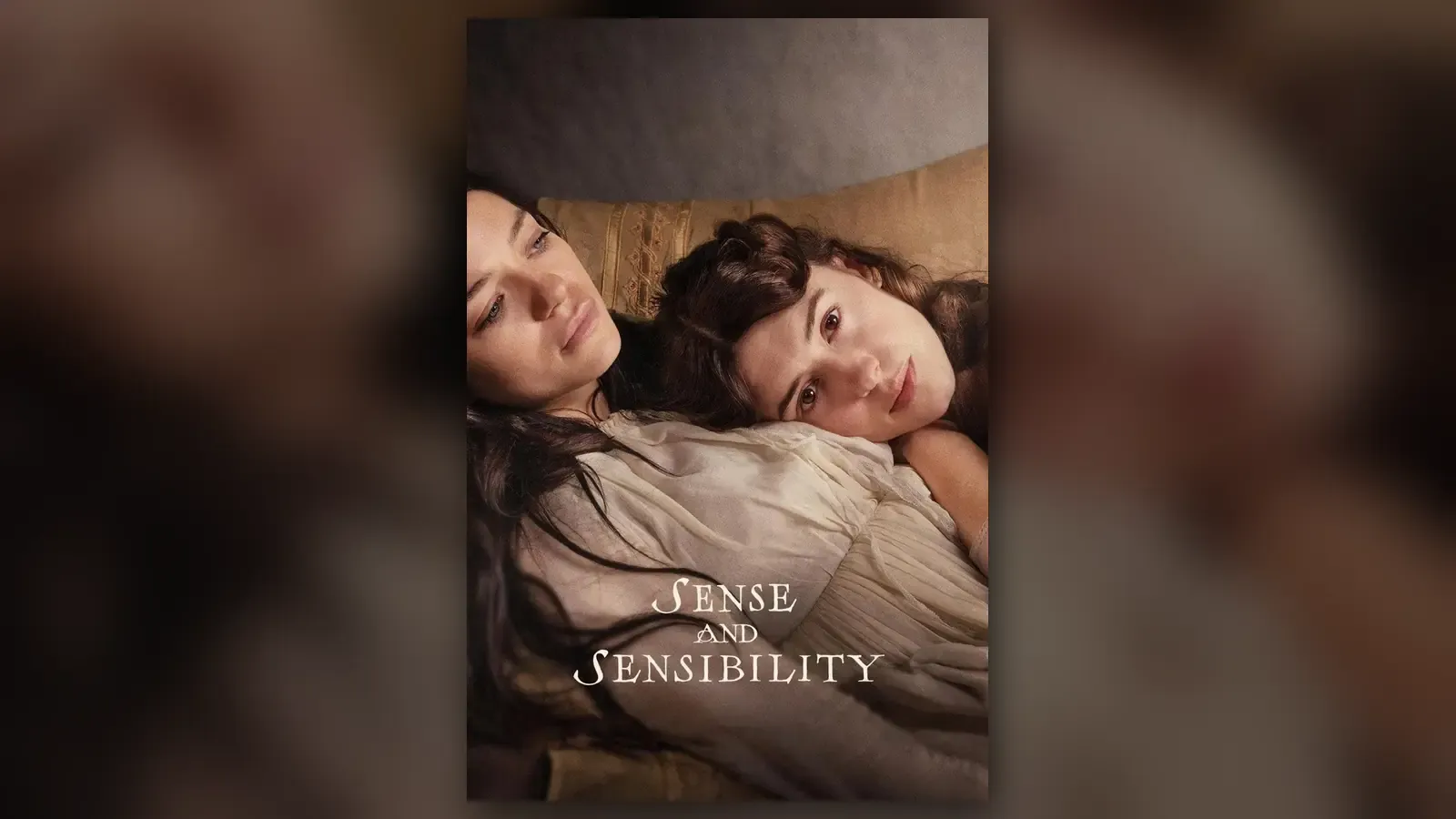
Sense and Sensibility (2026) Review Roundup: Is Georgia Oakley's Austen Adaptation Worth Seeing?
Georgia Oakley's Sense and Sensibility, starring Daisy Edgar-Jones and Esmé Creed-Miles, opened Oct. 16 to mostly positive reviews. What critics said, the hairstyling debate, how it performed, how it compares with the 1995 film, and who should see it.
A new Sense and Sensibility opened in theaters on October 16, 2026. Directed by Georgia Oakley (Blue Jean) from a screenplay by novelist Diana Reid, its cast includes Daisy Edgar-Jones as Elinor, Esmé Creed-Miles as Marianne, Caitríona Balfe, Frank Dillane, Herbert Nordrum, George MacKay and Fiona Shaw. It runs 132 minutes and was released by Focus Features in the U.S. after opening in the U.K. on September 25. Bucket Movies did not attend a screening; this is a summary of the critical response with our analysis, updated through early November.
Our angle: this Sense and Sensibility is less interesting as a challenger to the 1995 film than as a test of a particular strategy for adapting Austen now, one that puts the sisters ahead of the suitors and texture ahead of polish. The reviews, the box office and even the arguments about hair all reflect that choice.
What critics said
Reviews were generally positive, with some notable reservations. By early November, Metacritic’s weighted average stood at 71 out of 100 (“generally favorable”) from about 40 critics, and Rotten Tomatoes listed a 78% approval rating from about 140 reviews. The Rotten Tomatoes consensus credits Oakley for “elevating the Dashwood sisters’ relationship to the forefront” and concludes that the film “may not best previous adaptations but achieves a wistful identity of its own.” Audiences gave it an A- CinemaScore, half a grade below the A earned by the 1995 version.
-
ScreenRant gave it 8/10.
-
The Globe and Mail named it a Critic’s Pick, framing it as a satisfying Austen adaptation.
-
The Film Stage praised Oakley’s keen eye and found the pacing brisk.
-
The Spokesman-Review described it as lush and earthy, and compared it with the 1995 version.
-
The A.V. Club was cooler, with a C+.
-
The Guardian’s Peter Bradshaw gave it three stars, concluding that the film “always looks and sounds perfectly good, though some of the sensibility is lacking.”
IndieWire also reviewed it ahead of release. Esmé Creed-Miles later received a Gotham Award nomination for Outstanding Supporting Performance, with the winners to be announced on November 30.
The box office
Focus opened the film in about 2,545 theaters on October 16, the same weekend as Street Fighter and the Elizabeth Holmes documentary You Can See Everything. It debuted fifth with about $7.3 million, which Deadline noted was close to the $6.6 million opening of Focus’s Conclave, though in more theaters. The audience was about 84% female, and 56% were between 18 and 34, a younger crowd than Austen adaptations usually draw, which suggests Daisy Edgar-Jones’s following from Normal People and Twisters mattered. The reported budget was $20 million to $25 million before marketing.
The second weekend fell about 53% to $3.4 million (Deadline). By November 8 the film had grossed about $18 million in the U.S. and Canada and about $24 million internationally, including roughly $9 million in the U.K., for a worldwide total near $42 million. That is a modest, likely profitable result for a mid-budget period drama, though well short of the 1995 film’s $43 million domestic run in unadjusted dollars.
The hair debate
One of the most discussed aspects of the film had nothing to do with the script. From the first trailer, viewers and some critics objected to the loose, tangled hairstyles, which they saw as historically inaccurate. The Wall Street Journal grouped the film with other recent period adaptations, including Emerald Fennell’s Wuthering Heights, that favor a deliberately unkempt look. The film’s hair and makeup designer, Nadia Stacey, told British Vogue that the “wild, unruly, rain-soaked hair” was intentional, a contrast to the stiff up-dos of traditional Austen films meant to make the sisters feel relatable to a modern audience. Others have read the choice as characterization: Marianne’s untamed hair against Elinor’s controlled waves. Either way, it is a small, visible sign of the film’s larger strategy. The same argument has followed nearly every recent period adaptation, and it tends to divide audiences along the same line as the reviews: viewers who want Austen preserved as a period piece, and viewers who want the emotions to feel immediate even if the surface is anachronistic. Oakley has clearly chosen the second camp.
The shadow of 1995
Any new version has to contend with Ang Lee’s 1995 film, written by and starring Emma Thompson, which won the Oscar for Best Adapted Screenplay and is often ranked among the finest Austen adaptations. That film emphasised wit and restraint. The reviews suggest Oakley’s version takes a more tactile, naturalistic approach — “earthy” is a recurring idea — in the tradition of Joe Wright’s Pride & Prejudice (2005), which brought mud and windswept landscapes to Austen.
Why Oakley is an interesting choice
Oakley’s debut, Blue Jean (2022), was a quiet, closely observed drama about a woman forced to hide her identity in 1980s Britain. That interest in social pressure and private feeling maps naturally onto Elinor Dashwood, whose story is about the cost of keeping emotions hidden. Diana Reid, a bestselling Australian novelist, brings a contemporary novelist’s eye to the dialogue.
A short history of Sense and Sensibility on screen
Jane Austen’s first published novel (1811) follows sisters Elinor and Marianne Dashwood — one guarded and practical, the other impulsive and romantic — after their father’s death leaves the family in reduced circumstances. It has been adapted several times:
- 1971 and 1981 BBC serials, faithful television versions that introduced the novel to TV audiences.
- Ang Lee’s 1995 film, with Emma Thompson, Kate Winslet, Hugh Grant and Alan Rickman. Thompson’s screenplay won the Oscar, and the film was nominated for Best Picture.
- Andrew Davies’s 2008 BBC miniseries, with Hattie Morahan and Charity Wakefield, which restored subplots the 1995 film cut.
- From Prada to Nada (2011), a loose modern Latina retelling set in Los Angeles.
Each version tends to reflect its moment: the 1995 film emphasised wit and restraint, the 2008 series gave more weight to the sisters’ financial precarity. A 2026 version arrives in the wake of several adaptations — including Autumn de Wilde’s Emma. (2020) and Netflix’s Persuasion (2022) — that tried to modernise Austen’s tone, with mixed reception.
About the director and writer
Georgia Oakley’s debut feature, Blue Jean (2022), about a closeted PE teacher in 1988 Britain under Section 28, won several British Independent Film Awards. Its focus on a woman managing what she can and cannot show in public has obvious parallels with Elinor Dashwood. Screenwriter Diana Reid is an Australian novelist whose debut novel was Love & Virtue (2021).
Where to watch the earlier versions
If the new film sends you back to the source, Ang Lee’s 1995 version is widely available to rent digitally, and the 2008 BBC miniseries appears periodically on streaming services. Reading the novel first is also rewarding: it is short by Austen’s standards, and much of its humour lives in the narrator’s voice, which no adaptation fully captures.
Why Austen keeps getting adapted
Jane Austen’s six completed novels have been adapted for film and television dozens of times. Pride and Prejudice alone has the 1940 MGM film with Laurence Olivier, the 1995 BBC serial with Colin Firth and Jennifer Ehle, and Joe Wright’s 2005 film with Keira Knightley, which earned four Oscar nominations. Austen’s appeal to filmmakers is practical as well as literary: her books are in the public domain, have strong dialogue and clear romantic arcs, and come with a large readership on both sides of the Atlantic.
Recent adaptations have tried different strategies. Emma. (2020) leaned into colour and comedy; Netflix’s Persuasion (2022) added direct-to-camera asides and modern phrasing, which many Austen readers disliked; Love & Friendship (2016), Whit Stillman’s version of the novella Lady Susan, was widely praised for its dry wit. Reviews of each tend to divide along the same line — whether the adaptation trusts Austen’s tone or tries to update it — which is also where opinion on this Sense and Sensibility seems to split.
Reading the reviews
When a film’s grades are split, it helps to read reviews from critics whose taste you know. Austen devotees often weigh fidelity heavily, while critics who come to the film fresh may value its performances or style more. Checking several reviews from both camps, rather than just an aggregate score, gives a better sense of whether this version will suit you.
Who should see it
- Austen fans and admirers of recent period adaptations such as Emma. (2020) or Persuasion-style romances should find plenty to enjoy.
- Viewers who love the 1995 film may want to treat this as a different interpretation rather than a replacement.
- Families: it was rated PG in Ireland; check your local rating, but it is one of the few new releases this autumn suited to a multigenerational outing.
For a broader look at how classic novels are being reimagined on screen this year, see our analysis of Wuthering Heights adaptations and our Wuthering Heights (2026) review roundup.
worth a spot on the list?
Reader notes
Join the discussion
No account needed — leave your take on this film below.
Add these to your list
Play House: Why a $100,000 Horror Film Sold to Focus and Blumhouse
Focus Features and Blumhouse-Atomic Monster bought Nicolas Curcio's micro-budget horror film Play House in a seven-figure deal. What the film is about, how a pitch contest got it made, and what the sale says about low-budget horror.

Nuisance Bear Is in Theaters After Its Critics Choice Win as Josephine Sets November 20
Nonfics says Nuisance Bear is in theaters after the Critics Choice science and nature prize. Josephine, a Sundance double prize winner, is dated for select theaters on November 20.

Cliff Booth Trailer: Fincher, Tarantino, and IMAX Details
Netflix released the official Cliff Booth trailer for David Fincher and Quentin Tarantino's 1977 neo-noir, confirming a 141-minute runtime and IMAX dates.
Weekend Box Office (Oct. 23–25): Clayface Wins, but You Can See Everything Steals the Story
Clayface opened at No. 1 with about $24.5 million, while Nathan Fielder's Elizabeth Holmes documentary grew 25% in its second weekend. The full top ten, the holdovers, what happened the following weekend and what it all means.
Loading comments...