
Street Fighter Box Office: Paramount's Video Game Adaptation Opens Below Expectations
Street Fighter opened at No. 1 with $31 million, below Paramount's hopes, then fell 72%. Who showed up, what critics said, how it compares with other video game movies and where it stands now.
The live-action Street Fighter opened in North America on October 16, 2026, and won its first day without quite delivering the start its studio wanted. Variety and The Hollywood Reporter both reported $13 million on Friday (THR notes that includes Thursday previews) from 3,575 theaters, with a weekend estimate of about $31 million. That is where it landed: a No. 1 opening of about $31 million.
This report was first published on opening weekend; it has been updated with the final weekend data, the second-weekend result and the film’s worldwide total. Our angle: Street Fighter is a useful case study in why a fan-driven opening does not guarantee a franchise, and the audience data from the first weekend predicted most of what followed.
The film
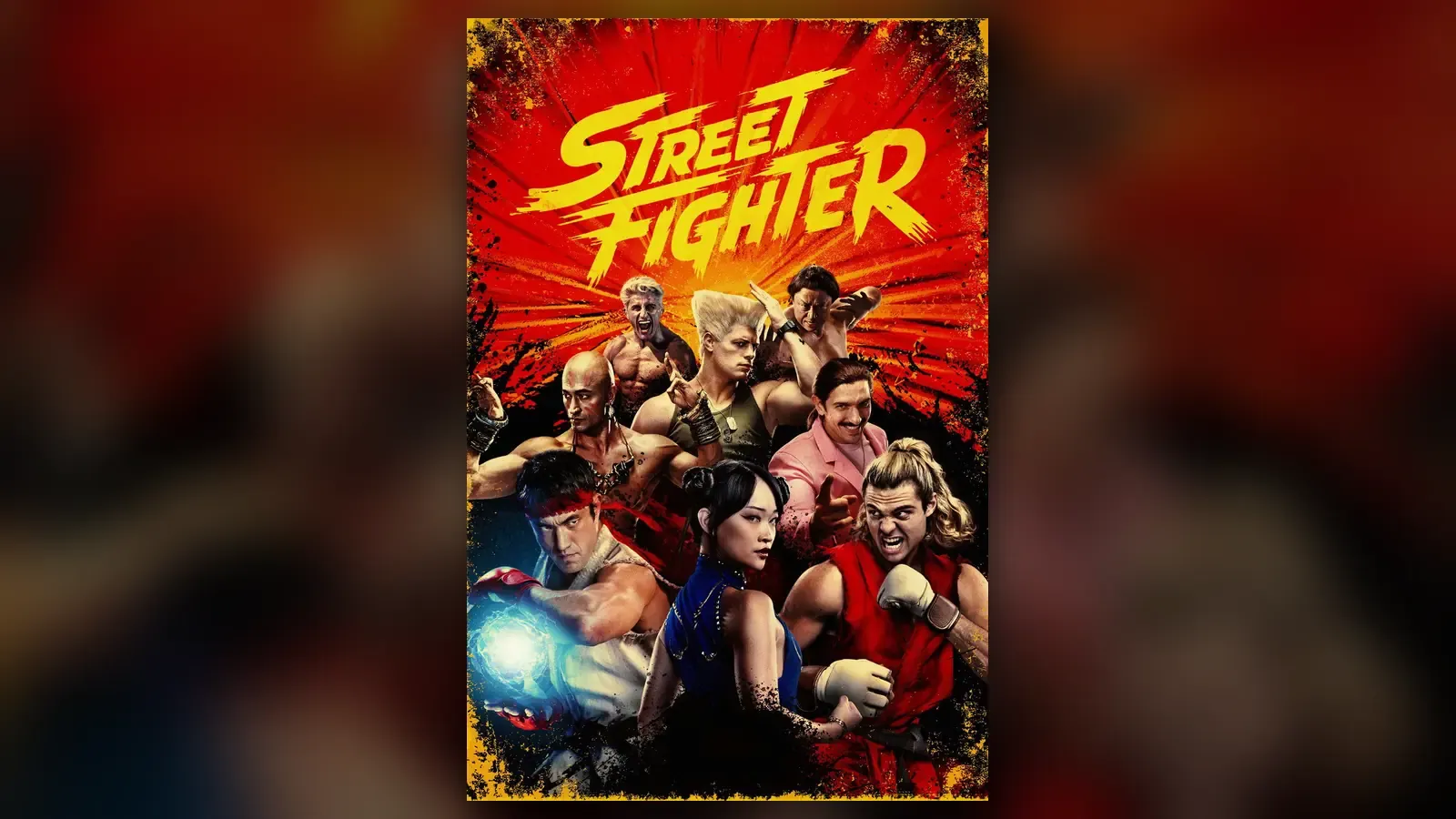
Directed by Kitao Sakurai (The Eric Andre Show, Twisted Metal), Street Fighter stars Noah Centineo, Andrew Koji and Callina Liang. THR reports an $82 million budget and notes it is the first release under Paramount’s distribution deal with Legendary. Media Play News highlighted it as Skydance-Paramount’s first theatrical release since their merger. It’s rated PG-13. The story is set in 1987 and opens with Ryu’s defeat of Sagat at the first World Warrior tournament, and the ensemble mixes actors with wrestlers and comedians, including Joe “Roman Reigns” Anoa’i, Cody Rhodes, David Dastmalchian, Eric André, Andrew Schulz, Orville Peck and Jason Momoa, who is also a producer.
Below the studio’s hopes
THR reported that Paramount had hoped for an opening in the mid-$30 millions, so a $31 million start is on the lighter side. Boxoffice Pro framed the film’s prospects around whether it could rekindle millennial nostalgia for the Capcom fighting game, and projected a debut around $30 million — close to where it landed. Against an $82 million budget, the film will need solid international results and steady holds to break even.
Reviews were middling: THR cited a 47% Rotten Tomatoes score during opening weekend. A mid-October school break, with about a fifth of K–12 schools off according to Comscore data cited by THR, may have helped weekday business.
Who showed up
Deadline’s weekend report gave a detailed picture of the audience. About 45% of ticket buyers were men over 35, the millennial and Gen X players who grew up with Street Fighter II, while parents with children under 12 made up just 11%. Latino and Hispanic moviegoers were the largest group at about 30%, followed by white (29%), Black (21%) and Asian American (14%) audiences. Premium large-format and IMAX screens accounted for about 58% of the weekend gross.
Exit scores were lukewarm. Audiences gave the film a B- CinemaScore, below both 2021’s Mortal Kombat (B+) and this May’s Mortal Kombat 2 (B), and 65% said they would definitely recommend it. Deadline noted that the opening was about 19% below Mortal Kombat 2’s $38.5 million start. Those numbers describe a film that reached its core audience and not much further.
What critics said
The critical consensus settled lower than the opening-weekend figure. By November, Rotten Tomatoes listed a 41% approval rating from about 145 reviews, and Metacritic’s weighted average was 43 out of 100. Reviews split along a clear line between affection for the cast and frustration with the storytelling:
- Positive: Brandon Yu of The New York Times wrote that the script was sturdy enough to bear the load “even if it buckles a bit by the end,” crediting the cast and the fight sequences. Tom Jorgensen at IGN praised the fighters and the comedians, calling Eric André and Andrew Schulz a “big surprise,” and concluded it could be fun with the right group of friends.
- Negative: Frank Scheck at The Hollywood Reporter found it only sporadically entertaining. Jake Kleinman at Polygon called it one of the sloppiest and most incoherent films of the year, while praising Dastmalchian and Rhodes. The Associated Press’s Jake Coyle argued it was a step backward for game adaptations, compared with Zach Cregger’s Resident Evil.
The Rotten Tomatoes consensus summed up the split: plenty of affection for the source material and stylish fights, undercut by incoherent storytelling and juvenile humor (Rotten Tomatoes).
How it compares with other game adaptations
Video game movies have become one of Hollywood’s most reliable sources of hits since The Super Mario Bros. Movie (2023) and A Minecraft Movie (2025) passed the billion- and near-billion-dollar marks. But those were family films with broad appeal. A closer comparison for Street Fighter is Mortal Kombat (2021), another fighting-game adaptation with an older target audience, which launched during the pandemic alongside a streaming release. Fighting games are harder to adapt than adventure games: their stories are thin, and the appeal lies in characters and combat, which a film must build a plot around.
The franchise also carries baggage. The 1994 Street Fighter, with Jean-Claude Van Damme, is remembered mostly as a campy curiosity, and 2009’s Street Fighter: The Legend of Chun-Li flopped. A $31 million opening is the best start the property has had in theaters.
The game and its legacy
Capcom’s Street Fighter II (1991) defined the one-on-one fighting game and helped revive arcades in the early 1990s. Its characters — Ryu, Ken, Chun-Li, Guile, M. Bison and others — became some of gaming’s most recognisable figures, and the series has continued through Street Fighter 6 (2023), which was well received and has sold several million copies. The franchise is also central to competitive gaming, with the annual Evo tournament and Capcom Cup.
Earlier adaptations
- Street Fighter (1994), starring Jean-Claude Van Damme and Raúl Juliá in one of his final roles, was panned by critics but earned around $99 million worldwide and has since gained a cult following, largely for its camp value.
- Street Fighter II: The Animated Movie (1994), a Japanese anime film, is generally considered the best adaptation of the series.
- Street Fighter: The Legend of Chun-Li (2009) was a critical and commercial failure.
- Street Fighter: Assassin’s Fist (2014), a fan-favourite web series, focused on Ryu and Ken’s training and was praised for its faithfulness.
About the director
Kitao Sakurai came up through comedy, as a director on The Eric Andre Show and Bad Trip (2021), a hidden-camera comedy for Netflix. He also directed episodes of Peacock’s Twisted Metal, another video-game adaptation that leaned into comedy and action. That background suggests his Street Fighter is meant to be energetic and self-aware rather than grim.
Who it suits
The film is aimed at longtime fans of the games and viewers who enjoy martial-arts action with a light tone. Viewers looking for a serious action drama may prefer something like The Raid (2011) or John Wick (2014) instead.
Video game adaptations in the 2020s
The past few years transformed the reputation of video game films. Key results, according to Box Office Mojo:
| Film | Year | Worldwide gross (approx.) |
|---|---|---|
| Sonic the Hedgehog | 2020 | $320 million |
| Mortal Kombat | 2021 | $84 million (also on HBO Max) |
| Uncharted | 2022 | $407 million |
| The Super Mario Bros. Movie | 2023 | $1.36 billion |
| Five Nights at Freddy’s | 2023 | nearly $300 million |
| A Minecraft Movie | 2025 | $958 million |
Television has done well too: HBO’s The Last of Us (2023–) and Amazon’s Fallout (2024–) won critical praise and major audiences. The pattern suggests that faithfulness to a game’s spirit and a clear appeal beyond gamers matter more than the brand name alone.
Fighting games present a particular challenge. Their stories are thin, their rosters are large, and the appeal lies in playing rather than watching. Successful adaptations have usually focused on a few characters — as Assassin’s Fist did with Ryu and Ken — rather than trying to include everyone.
What the opening meant, and what happened next
An opening in the low $30 million range is respectable for a mid-budget film but tough for a franchise launch, and the second weekend answered the question of whether audiences beyond the core fan base were interested. Street Fighter fell about 72% to $8.6 million and fourth place, behind Clayface, You Can See Everything and Laika’s Wildwood (Deadline). IMAX screens, which it kept, delivered about 21% of that weekend.
By early November the film had grossed roughly $99 million worldwide against its reported $82 million production budget. After marketing costs and theaters’ share of ticket sales, that is unlikely to be profitable in theatrical release, though home entertainment and licensing will narrow the gap. Director Kitao Sakurai said in October that a sequel was being written, with development depending on audience reception, and the cast is reported to have signed for multiple films; the box office makes that decision harder than it looked at the start of the year. Our October 23-25 weekend report covers the second weekend in context.
The rest of the weekend
The documentary You Can See Everything opened second with about $15 million from just 855 theaters, a record-setting start for a nonfiction film, and the sea-survival thriller Whalefall opened in the high single millions against a reported $60 million budget. See our Whalefall guide and weekend chart overview.
Related coverage
More on 2026 openings and weekend results:
- Spider-Man: Brand New Day Shatters Opening Day Record With $168 Million — the record Spider-Man opening
- Spielberg Sets New Personal Record With ‘Disclosure Day’ Opening — Disclosure Day’s opening
- Why Masters of the Universe Became One of 2026’s Biggest Box Office Bombs — why a $200 million nostalgia film opened weakly
- Practical Magic 2 Opened at $30 Million. Spider-Man Is One Weekend From the Record — Practical Magic 2’s No. 1 weekend
- Wildwood Box Office: $12.2M Launch Against $100M Budget — Laika’s opening against a $100 million stop-motion budget
- Why Ridley Scott’s The Dog Stars Disappeared From Theaters So Quickly — how quickly a wide release lost its screens
- Street Fighter’s Tracking Looks Like a Bomb in Slow Motion — pre-release tracking for Street Fighter six weeks out
- Weekend Box Office (Oct. 16–18): Street Fighter Leads, a Documentary Breaks Out — the full chart for Oct. 16–18
- You Can See Everything: Why Nathan Fielder’s Elizabeth Holmes Documentary Became a Box Office Hit — a documentary’s record-scale platform release
- Weekend Box Office (Oct. 23–25): Clayface Wins, but You Can See Everything Steals the Story — the full chart for Oct. 23–25
- Clayface Box Office: DC’s $24.5 Million Horror Experiment, Explained — DC’s mid-budget horror opening and its holds
- Avengers: Endgame Encore Tops the Box Office: Why the Re-Release Worked — a re-release that beat new films
- If I Go Will They Miss Me: How a Small Sundance Film Reached $1 Million — a Sundance film’s route to $1 million on few screens
How this was compiled: box office figures are studio estimates as reported by the trade outlets linked above and are subject to revision; review quotes are from published reviews. See how we work.
worth a spot on the list?
Reader notes
Join the discussion
No account needed — leave your take on this film below.
Add these to your list
Street Fighter's Tracking Looks Like a Bomb in Slow Motion
The Quorum has Street Fighter at 39% awareness and 39% interest six weeks before October 16. That is where Masters of the Universe sat before it opened to $29 million.
Weekend Box Office (Oct. 16–18): Street Fighter Leads, a Documentary Breaks Out
Street Fighter opened at No. 1 with about $31 million, A24's You Can See Everything debuted to $15 million in 855 theaters, and Whalefall and Sense and Sensibility opened in the top five. Results and analysis.
Weekend Box Office (Oct. 23–25): Clayface Wins, but You Can See Everything Steals the Story
Clayface opened at No. 1 with about $24.5 million, while Nathan Fielder's Elizabeth Holmes documentary grew 25% in its second weekend. The full top ten, the holdovers, what happened the following weekend and what it all means.

Clayface Box Office: DC's $24.5 Million Horror Experiment, Explained
Clayface opened at No. 1 with about $24.5 million in North America and $43 million worldwide. How the weekend unfolded, how it compares with DC and horror openings, and what the holds since then say about DC's mid-budget gamble.
Loading comments...