
Wildwood Box Office: $12.2M Launch Against $100M Budget
Laika's Wildwood box office run launched with $12.2 million across 2,942 theaters, testing a $100 million budget after six years of physical stop-motion work.
Our angle: This is one of several Bucket Movies pieces on 2026 openings and weekend results. It focuses on Laika’s opening against a $100 million stop-motion budget; the others are listed under Related coverage at the end.
Laika released its sixth stop-motion feature on October 23, 2026, pairing a $100 million production investment with an opening gross that landed near one-tenth of that expenditure. The initial domestic Wildwood box office returns came in at $12.2 million according to distributor reporting, placing the title in third place behind Warner Bros. and DC Studios’ comic book horror entry Clayface and the expanding documentary You Can See Everything, as tracked on our weekend box office chart. While early industry tracking had leaned cautious, the three-day debut outpaced those preliminary projections against a reported $100 million production cost. The release tests the economics of physical stop-motion animation, supported by verified tallies across reporting agencies and six years of physical stage shooting at the studio’s Oregon facility.
Comparing Wildwood box office reporting across industry trackers
The initial box office estimates recorded by industry trackers diverged in theater counts and precise dollar tallies. Cartoon Brew’s opening weekend report, published by Jamie Lang on October 27, 2026, recorded a domestic debut of $12.2 million across 2,942 theaters. The coverage noted that the film outpaced many of the industry’s more cautious estimates. Cartoon Brew also reported that the release achieved an average of $4,162 per theater across its opening footprint, supported by steady attendance, an exit grade of A from CinemaScore surveys, and a five-star rating in Rentrak exit polling.
In global tracking, Rentrak initially calculated the worldwide opening frame at $14.7 million, which placed the title fourth globally based on an early domestic projection of $11.8 million. Adjusting for distributor Fathom Entertainment’s confirmed $12.2 million North American figure brought the worldwide total to approximately $15.2 million. Over the course of the domestic weekend, Cartoon Brew recorded a 13 percent ticket sales decline between Saturday and Sunday.
A parallel tracking update from The Numbers box office database recorded a domestic total of $12,273,561 based on an exhibitor sample of 2,596 theaters, with broader theater tracking reaching 2,616 locations. The database listed the official production budget at $100,000,000 and calculated that North American ticket sales accounted for 91.3 percent of the film’s total box office during the opening window. The 2,596 theaters reported by The Numbers differed by 346 locations from the 2,942 theaters reported by Cartoon Brew.
The Numbers also published a daily box office accounting for the domestic opening run. The release took in $1,325,000 from Thursday evening preview screenings on October 22. On Friday, October 23, the film grossed $4,352,252 across 2,616 theaters. On Saturday, October 24, daily sales reached $4,214,473, a change of negative 3.2 percent from Friday. On Sunday, October 25, ticket sales totaled $3,706,836, down 12.0 percent from Saturday. In addition to North American receipts, The Numbers documented early international rollouts starting on October 22 in territories including Italy (screened under the title Wildwood: I Segreti del Bosco Proibito), Australia, New Zealand, the Netherlands, and Serbia and Montenegro.
| Reporting Outlet | Domestic Opening Gross | Theater Count | Reported Average Per Theater | Production Budget |
|---|---|---|---|---|
| Cartoon Brew | $12.2 million | 2,942 | $4,162 | $100 million |
| The Numbers | $12,273,561 | 2,596 | Not calculated | $100 million |
The two trackers agree on the general magnitude of the opening weekend despite differences in their venue counts. Both platforms place the three-day gross above $12.2 million, and both confirm the $100 million production expenditure that frames the project’s financial threshold. When assessing theatrical returns for independent releases, identifying the venue count used by each agency explains why per-theater metrics fluctuate across trade summaries.
Historic comparisons within the Laika catalog and industry benchmarks
Evaluating the opening weekend of Wildwood requires contextualizing the numbers against Laika’s historical releases and comparable animated titles. As noted in Cartoon Brew’s comparative analysis, the $12.2 million opening more than doubled the domestic debut of the studio’s previous feature, Missing Link, which opened to $5.9 million in April 2019. The $12.2 million gross also closely mirrored the start achieved by Kubo and the Two Strings, which opened to $12.6 million in August 2016.
Beyond Laika’s own catalog, Cartoon Brew compared Wildwood’s opening weekend to other studio animation releases, specifically noting that the $12.2 million start aligned closely with Illumination’s Migration, which opened to $12.5 million, and 20th Century Studios’ The Bob’s Burgers Movie, which debuted with $12.4 million. While computer-animated studio releases often benefit from multi-layered television campaigns and broad licensing agreements, independent stop-motion titles rely heavily on multi-week theatrical holds to accumulate box office totals.
The theatrical environment for specialized animation presents distinct challenges, an issue discussed in our survey of animation box office trends. Mainstream computer-animated films frequently rely on major studio marketing systems and broad youth demographics to secure wide theatrical debuts. In contrast, stop-motion productions occupy an artisanal corner of the market where opening figures tend to be lower and financial outcomes depend on theatrical holds.
The primary financial distinction between Kubo and Wildwood lies in their cost structures. While Kubo carried a lower capital commitment, The Numbers confirms a $100 million budget for Wildwood. By doubling that baseline, Wildwood places itself in a stronger theatrical position.
Laika’s financial structure differs from traditional Hollywood animation houses. The studio is owned by Phil Knight, the billionaire co-founder of Nike and the father of director and chief executive Travis Knight. Private backing from the Knight family has funded Laika’s Oregon facility, allowing the studio to spend years developing physical animation assets without answering to outside shareholders or quarterly earnings demands. This arrangement gave the studio the financial cushion to commit another $100 million budget to Wildwood.
The studio’s catalog also retains lasting theatrical value, as evidenced by recent theatrical re-releases. In August 2024, the 15th-anniversary re-release of Coraline grossed $52.4 million worldwide in a theatrical partnership with Fathom Events. That performance demonstrated that Laika’s stop-motion titles can generate substantial cumulative box office across multiple exhibition cycles, providing a long-tail commercial path that extends well beyond an initial October opening frame.
Six years of physical shooting and human-crafted scale
The financial requirements of Wildwood originate directly from its manufacturing methodology. While modern animation studios rely primarily on digital computer software, Laika builds miniature physical worlds inside its Oregon production facility. Behind-the-scenes reporting in Forbes by contributor Tim Lammers documented the timeline behind the project. Screenwriter Chris Butler began adapting Colin Meloy’s 500-page fantasy novel in 2012, immediately after completing work writing and directing ParaNorman. The project spent 14 years in development before reaching completion.
Once sets and characters were greenlit, practical fabrication and stage shooting spanned six continuous years. Adapting a 500-page fantasy novel into a physical production required years of planning before puppets stood on a stage. Butler and the creative team had to decide which environments could be constructed as miniature sets and how complex battle sequences could be broken down into practical stop-motion shots.
The scale of physical fabrication reached unprecedented levels during the production. In Forbes, Lammers detailed a climactic battle sequence featuring 3,000 handcrafted puppets and weapons placed across a chaotic physical battlefield. Animators posed these thousands of figures one frame at a time under physical studio lights, creating a sequence that Lammers compared in logistical scale to the battle of Helm’s Deep from The Lord of the Rings: The Two Towers. Over a multi-year schedule, labor expenditures accumulated across model makers, mold makers, armature machinists, costumers, painter crews, and lighting technicians.
In the Forbes feature, director and studio chief executive Travis Knight explained the philosophy that dictates this workflow: “When you’re looking at a stop-motion film, it is an art form that wears its humanity openly… In many ways, it is a celebration of artistry over algorithms and human touch over the automated.” Lammers reported that Laika’s studio slogan is “Handmade in Oregon,” which ensures that the company will never use AI in their productions. This operational commitment preserves specialized artisan employment, but it prevents the studio from adopting automated digital shortcuts that could shorten production schedules and lower overall payroll expenses.
Replacement facial animation and physical fabrication
The technical demands of the production reflect decades of evolving replacement animation practices at the Oregon studio. Stop-motion characters convey emotion through interchangeable facial components that crew members switch between individual frames. The scale of this practice is cataloged in the Guinness World Records entry for stop-motion fabrication, which notes that Laika holds the official milestone with 106,000 3D-printed faces manufactured for Missing Link in 2019. That total surpassed the studio’s earlier record of 64,000 facial models produced for Kubo and the Two Strings in 2016.
Replacement animation involves modeling hundreds of thousands of facial expressions in computer software, 3D printing them in full color with photopolymer resin, cataloging each piece in physical inventory trays, and snapping them onto puppet armatures during filming. The process requires microscopic tolerances to prevent visible seam lines or color shifts under camera lenses. Animators change these facial pieces by hand between exposures, aligning subtle brow twitches and mouth movements to match recorded vocal tracks.
Because each facial component is an individual physical object, fabrication costs scale directly with the variety of expressions written into the screenplay. A story set across expansive forests and populated by diverse communities demands thousands of distinct physical components for each character. When combined with mechanical steel armatures, ball-and-socket joints, and silicone skinning, the physical manufacturing footprint creates high baseline costs before a single scene is animated on stage. Maintaining an extensive machine shop and resin printing facility in Oregon establishes an operating budget that differs fundamentally from digital software rendering pipelines.
Exhibition variables: A 132-minute runtime and PG-13 rating
Two operational factors directly influence daily ticket sales for Wildwood: an expanded running time and a PG-13 certification. According to The Numbers box office database, Wildwood carries an official running time of 132 minutes. The extended running time limits the total number of screenings an exhibitor can schedule within a standard operating day, as each showtime occupies a longer block on multiplex screens.
The film’s rating creates an additional commercial dynamic. Cartoon Brew confirmed that Wildwood entered theaters as “Laika’s PG-13 stop-motion feature,” and Forbes similarly noted that the picture was rated PG-13. According to official classifications cataloged by The Numbers, the MPAA assigned the PG-13 rating for “strong fantasy violence/bloody images, thematic material, suicide-related material, brief partial nudity, and language.”
This rating shifts the theatrical audience profile away from families with very young children and toward teenagers, young adults, and older animation fans. Courting an older demographic links Wildwood to the commercial conditions discussed in our analysis of mid-budget theatrical releases. Without automatic attendance from family groups with young children, ticket sales depend on critical appraisal and organic word-of-mouth recommendations. The CinemaScore A grade reported by Cartoon Brew, alongside the five-star exit polling recorded by Rentrak, indicates that early attendees received the picture favorably.
Independent theatrical distribution through Fathom Entertainment
The theatrical rollout of Wildwood highlights an evolving distribution strategy for independent animation. As reported by Cartoon Brew, Fathom Entertainment handled the domestic theatrical release across 2,942 locations. In an industry analysis of the release, IndieWire noted that Wildwood represents “one of Fathom Entertainment’s first truly wide releases for an original film after having big success re-releasing ‘Coraline’.”
Operating outside the distribution pipelines of major Hollywood conglomerates requires Laika to approach cost recovery through multiple revenue channels. Independent studios rely on a layered release model across domestic box office longevity, international licensing pacts, premium digital video-on-demand sales, physical 4K Ultra HD and Blu-ray collector editions, and domestic streaming auctions. For an independent studio funding its own physical infrastructure, these post-theatrical windows provide essential capital return across multi-year cycles.
Wildwood began its theatrical run with an opening weekend of $12.2 million from 2,942 venues logged by Cartoon Brew and $12,273,561 recorded by The Numbers, alongside early international grosses in Italy, Australia, New Zealand, the Netherlands, and Serbia and Montenegro.
Related coverage
More on 2026 openings and weekend results:
- Spider-Man: Brand New Day Shatters Opening Day Record With $168 Million — the record Spider-Man opening
- Spielberg Sets New Personal Record With ‘Disclosure Day’ Opening — Disclosure Day’s opening
- Why Masters of the Universe Became One of 2026’s Biggest Box Office Bombs — why a $200 million nostalgia film opened weakly
- Practical Magic 2 Opened at $30 Million. Spider-Man Is One Weekend From the Record — Practical Magic 2’s No. 1 weekend
- Why Ridley Scott’s The Dog Stars Disappeared From Theaters So Quickly — how quickly a wide release lost its screens
- Street Fighter’s Tracking Looks Like a Bomb in Slow Motion — pre-release tracking for Street Fighter six weeks out
- Street Fighter Box Office: Paramount’s Video Game Adaptation Opens Below Expectations — Street Fighter’s opening and steep second-week drop
- Weekend Box Office (Oct. 16–18): Street Fighter Leads, a Documentary Breaks Out — the full chart for Oct. 16–18
- You Can See Everything: Why Nathan Fielder’s Elizabeth Holmes Documentary Became a Box Office Hit — a documentary’s record-scale platform release
- Weekend Box Office (Oct. 23–25): Clayface Wins, but You Can See Everything Steals the Story — the full chart for Oct. 23–25
- Clayface Box Office: DC’s $24.5 Million Horror Experiment, Explained — DC’s mid-budget horror opening and its holds
- Avengers: Endgame Encore Tops the Box Office: Why the Re-Release Worked — a re-release that beat new films
- If I Go Will They Miss Me: How a Small Sundance Film Reached $1 Million — a Sundance film’s route to $1 million on few screens
worth a spot on the list?
Reader notes
Join the discussion
No account needed — leave your take on this film below.
Add these to your list
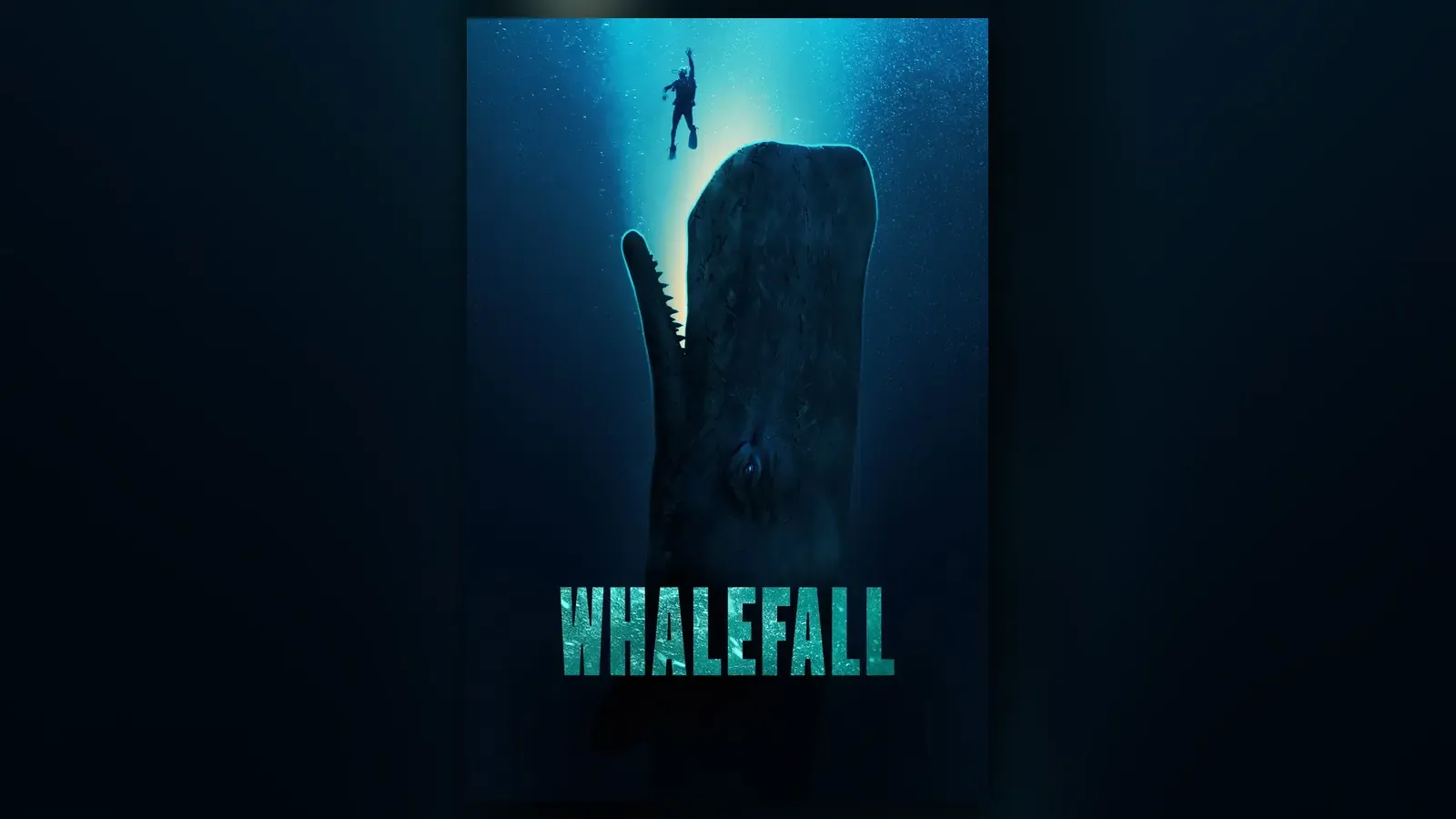
Whalefall: Brian Duffield's Survival Thriller, What Critics Said and Who It's For
Whalefall, Brian Duffield's adaptation of Daniel Kraus's novel about a diver swallowed by a sperm whale, opened to $8 million against a $60 million budget. Story, production, what critics said, box office and who it suits.

You Can See Everything: Why Nathan Fielder's Elizabeth Holmes Documentary Became a Box Office Hit
A24's You Can See Everything opened to $15.6 million in 855 theaters, the second-biggest documentary debut ever. How the platform release worked, who showed up, and what its climb to No. 1 means for theatrical documentaries.

Klara and the Sun: Why Taika Waititi's Ishiguro Adaptation Struggled With Critics and at the Box Office
Taika Waititi's Klara and the Sun, starring Jenna Ortega and Amy Adams, drew harsh reviews and opened to about $700,000. What the film is, what critics said, why the release shrank, and whether fans of the novel should see it.
IMAX's Record Summer and Why Premium Screens Are Reshaping Moviegoing
IMAX earned a record $728 million in summer 2026, 5.8% of global box office from about 1,800 screens, while Cinemark added premium auditoriums and motion seats. What the premium-format boom means for audiences.
Loading comments...