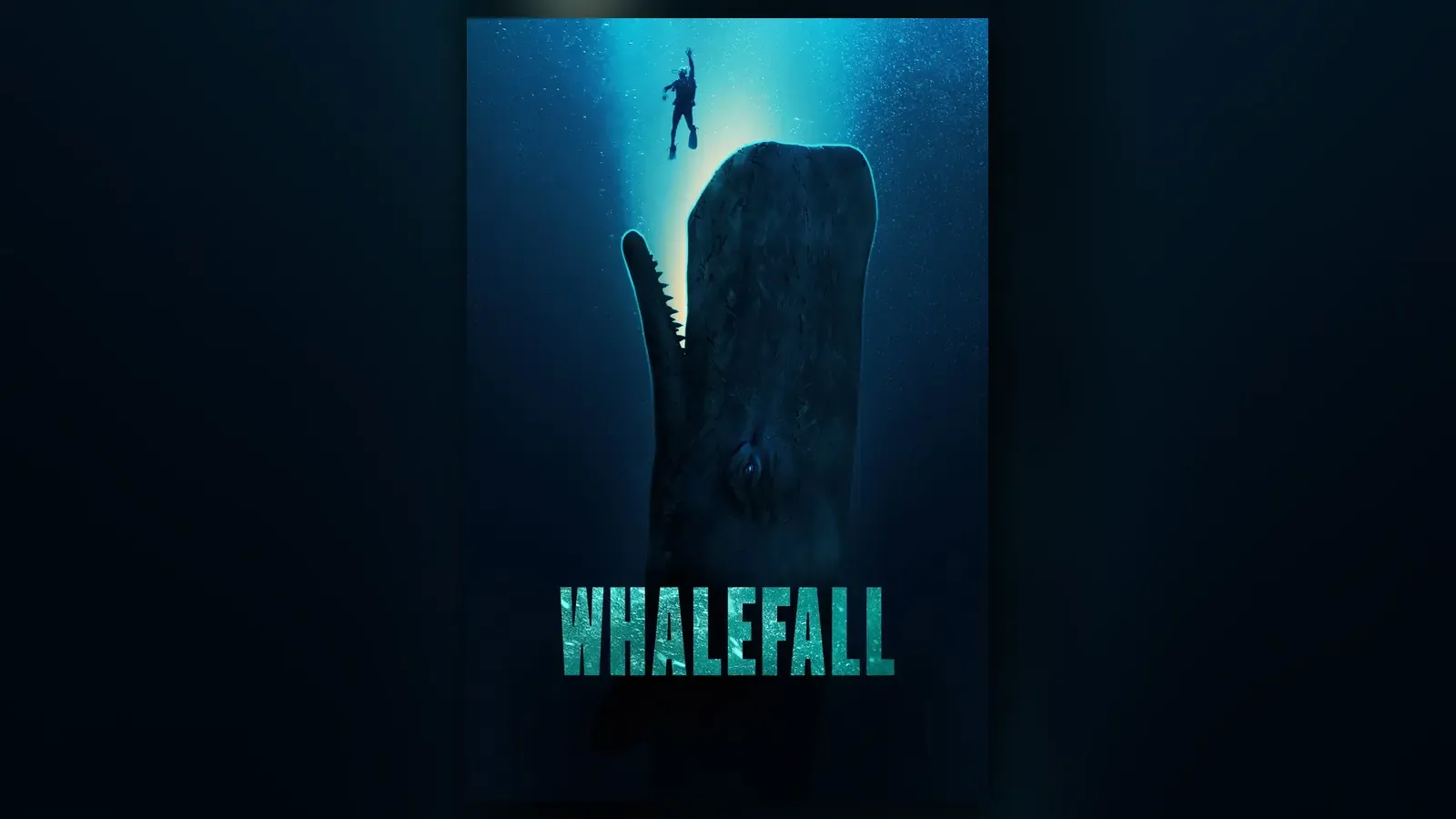
Whalefall: Brian Duffield's Survival Thriller, What Critics Said and Who It's For
Whalefall, Brian Duffield's adaptation of Daniel Kraus's novel about a diver swallowed by a sperm whale, opened to $8 million against a $60 million budget. Story, production, what critics said, box office and who it suits.
Whalefall has one of the most memorable premises of the year: a scuba diver searching for his father’s remains is swallowed by a sperm whale and has about one hour of air to find a way out. The film premiered in London on October 5, 2026 and opened in North America on October 16 from 20th Century Studios.
Our angle: Whalefall is a well-reviewed, technically ambitious film that ran into a crowded weekend, and its story says as much about how mid-budget thrillers are released now as about the film itself. This guide has been updated with reviews and box office through early November.
The story and the team
Brian Duffield, writer-director of No One Will Save You (2023) and writer of Love and Monsters, adapts Daniel Kraus’s 2023 novel, working with the author on the script, according to Moviefone. Austin Abrams plays Jay Gardiner, a college student who returns home to California a year after his father, a dive-boat captain played by Josh Brolin, disappeared at sea. Elisabeth Shue plays Jay’s mother, with John Ortiz, Jane Levy and Emily Rudd in supporting roles. Brian Grazer’s Imagine Entertainment produced, and the film runs 106 minutes. The tagline: “Hold your breath.”
Kraus’s novel is as much about a son reckoning with a difficult father as it is about survival, which gives Duffield room to blend his two strengths: high-concept genre and emotional storytelling. No One Will Save You, which told its alien-invasion story almost without dialogue, showed he can sustain tension around a single character.
How it was made
The film’s path to the screen was fast. Imagine struck a pre-emptive rights deal in August 2023, just before the novel was published, and in March 2024 20th Century Studios won the distribution rights and attached Duffield. Abrams was cast in 2025, with Brolin following.
Production was unusual for a film of this scale in one respect: it stayed in California. Principal photography began in Los Angeles in June 2025 and lasted 62 days, with scenes on the Monterey Peninsula, and the production received about $10.4 million in state tax credits on roughly $48.7 million of local spending. The producers told Deadline they had weighed Louisiana, where incentives are slightly higher, but chose Los Angeles so cast and crew could stay close to home. Rather than rely entirely on digital effects, the team built a practical whale-stomach set about 12 feet tall and 18 feet wide for Abrams to perform inside. Joseph Trapanese composed the score, and Oscar-winning editor Pietro Scalia cut the film.
What critics and audiences said
Reception has been positive but not ecstatic. By November, Rotten Tomatoes listed a 74% approval rating from about 190 reviews, with a consensus that praised the film as “unforgettably visceral whenever it isn’t getting mired in flashbacks,” and Metacritic’s weighted average was 59 out of 100. Audiences gave it a B CinemaScore.
- Nikki Baughan at Screen Daily praised Abrams for carrying the film through its increasingly outlandish developments and credited its emotional core.
- Phil de Semlyen of Time Out gave it four stars out of five, calling it a fast, claustrophobic underwater thriller with effective body-horror moments.
- The Financial Times admired the visual effects and the imagined interior of the whale but found the father-son storyline overly sentimental, a complaint the Rotten Tomatoes consensus echoes.
- Moviefone’s review scored it 69 out of 100.
The pattern is consistent: the survival sequences and Abrams’s physical performance work for most critics, and the flashbacks to Jay’s father divide them. That is the same balance the novel strikes, so readers of the book will know what to expect.
Box office
Bloody Disgusting reported an opening of about $8 million domestically and $9.5 million internationally, for $17.5 million worldwide, against a reported $60 million budget. Pre-release forecasts had pointed to $10 million to $15 million, so it came in below expectations. Deadline’s analysis blamed audience overlap: the over-25 crowd the film needed was split between Street Fighter and the Elizabeth Holmes documentary You Can See Everything, and sea thrillers have struggled for a decade, from In the Heart of the Sea to The Finest Hours.
The second weekend did not reverse the trend. Whalefall fell about 59% to roughly $3.2 million, for a domestic total of about $14 million (Deadline). By early November it had grossed about $17.4 million in the U.S. and Canada and about $37.8 million worldwide, with international markets contributing more than half (The Numbers tracks the running totals). Against a $60 million production budget before marketing, it will lose money in theaters and depend on streaming and home entertainment to recover. See our October 16-18 weekend report for the full chart.
How it compares
Whalefall sits in a line of single-location survival thrillers: 127 Hours, The Shallows, Buried and 47 Meters Down. Its literal setting — inside a whale — also invites comparison with Jonah and Pinocchio, which the novel plays with. Fans of claustrophobic, one-against-nature stories will find it in their wheelhouse.
The novel
Daniel Kraus’s Whalefall (2023) was praised for combining a survival thriller with a father–son drama: Jay’s hour inside the whale is intercut with memories of his difficult father. Kraus is also known for co-writing The Shape of Water novel with Guillermo del Toro and for completing George A. Romero’s unfinished zombie novel The Living Dead (2020). The book drew attention for its detailed research into sperm whale anatomy, which is a big part of what makes its premise plausible.
The science
The idea of surviving inside a whale has a long history — from the biblical story of Jonah to the 19th-century tale of the sailor James Bartley, which historians regard as unverified. In reality, sperm whales do swallow large prey such as giant squid whole, but a human would face extreme pressure, darkness, lack of oxygen and the whale’s digestive system. The novel and film use Jay’s scuba tank to make the scenario survivable for a limited time.
Brian Duffield’s career
Duffield wrote the screenplay for The Babysitter (2017) and Love and Monsters (2020), which earned an Oscar nomination for Visual Effects. As a director, he made Spontaneous (2020) and No One Will Save You (2023), a nearly dialogue-free alien-invasion thriller on Hulu that became a word-of-mouth hit. No One Will Save You showed his skill at telling a story with one character and very little dialogue — exactly what Whalefall demands.
Where to watch
Whalefall opened in theaters on October 16, 2026. As a 20th Century Studios release, it is expected to stream on Disney’s platforms after its theatrical and digital windows, though no date had been announced at the time of this update. As with most studio releases, a digital rental date usually follows several weeks after the theatrical run; check the distributor’s announcements for streaming plans.
Single-location survival films
Whalefall belongs to a small subgenre: survival stories confined to one place and often one character. The best known include:
- Buried (2010) — Ryan Reynolds trapped in a coffin with a phone and a lighter, for the whole film.
- 127 Hours (2010) — Danny Boyle’s film about climber Aron Ralston, trapped by a boulder; it earned six Oscar nominations, including Best Picture.
- Gravity (2013) — Alfonso Cuarón’s space-survival film with Sandra Bullock, which won seven Oscars including Best Director.
- The Shallows (2016) — Blake Lively stranded on a rock near a shark.
- Fall (2022) — two climbers stuck atop a 2,000-foot radio tower.
These films work when the premise creates a clear goal, a ticking clock and practical problems the audience can follow. Whalefall’s one hour of oxygen supplies all three.
Making it convincing
Films like this depend on technical craft as much as performance: sound design, lighting and production design have to make a confined space feel real. Underwater and water-tank shoots are notoriously difficult and slow, as the productions of Jaws (1975) and The Abyss (1989) famously showed. For viewers interested in that side of filmmaking, behind-the-scenes features released with the digital edition are usually where studios document how such sequences were achieved.
Reading before watching
Kraus’s novel contains more of Jay’s backstory than any feature-length film could include. Readers may want to see the film first and then read the book, since the novel’s details deepen rather than spoil the experience.
Who should see it
- Yes: survival-thriller fans, readers of the novel, and admirers of Duffield’s previous work.
- Maybe: viewers who are sensitive to claustrophobia or underwater peril — it is the whole film.
- On the big screen? Reviews single out the scale of the whale and the sound design, which are the strongest arguments for seeing it in a theater while it is still playing.
How this was compiled: production details come from trade reports linked above; reviews are summarized from published criticism; box office figures are studio estimates and subject to revision. Bucket Movies did not attend a screening. See how we work.
worth a spot on the list?
Reader notes
Join the discussion
No account needed — leave your take on this film below.
Add these to your list

Wildwood Box Office: $12.2M Launch Against $100M Budget
Laika's Wildwood box office run launched with $12.2 million across 2,942 theaters, testing a $100 million budget after six years of physical stop-motion work.
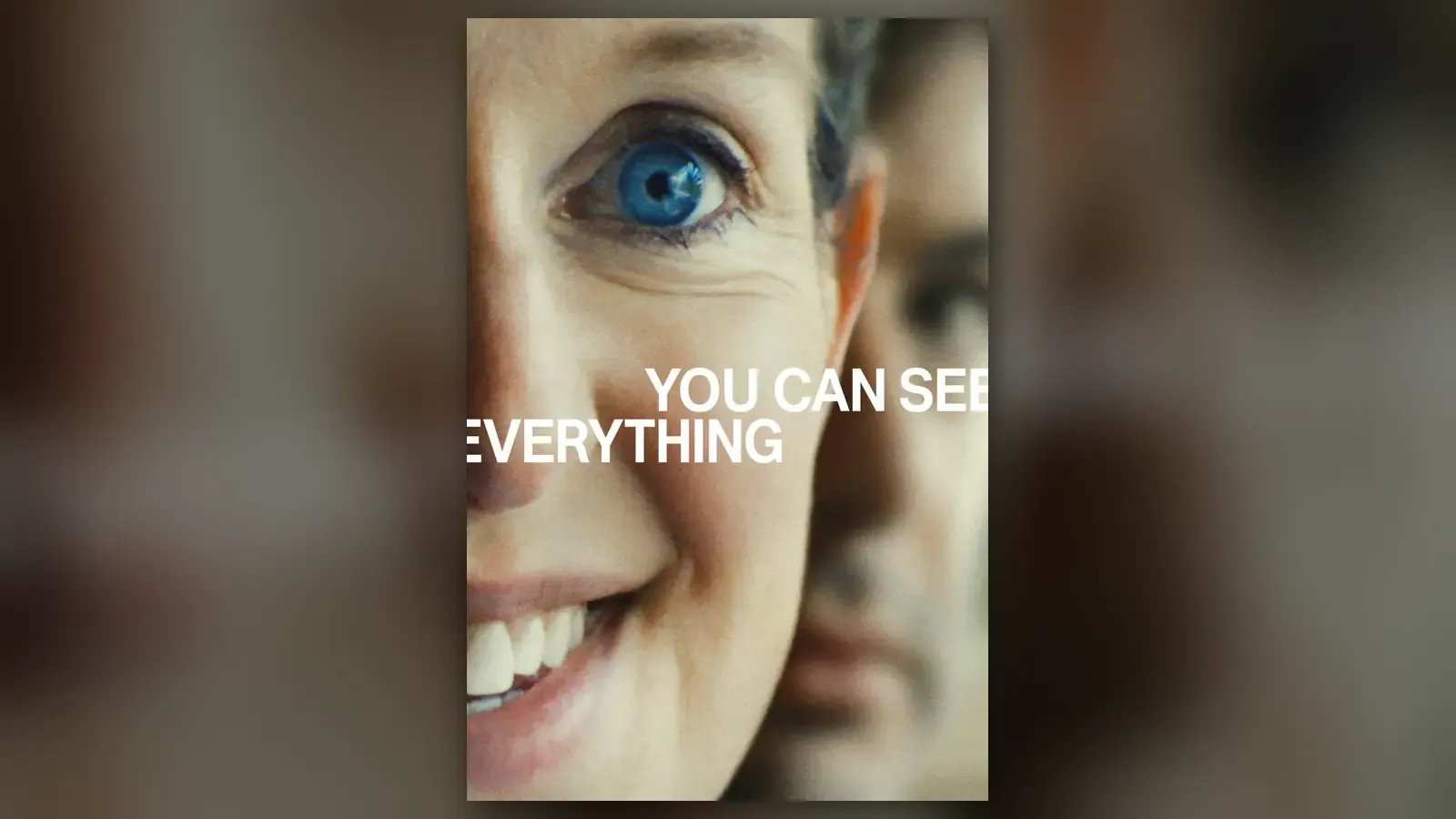
You Can See Everything: Why Nathan Fielder's Elizabeth Holmes Documentary Became a Box Office Hit
A24's You Can See Everything opened to $15.6 million in 855 theaters, the second-biggest documentary debut ever. How the platform release worked, who showed up, and what its climb to No. 1 means for theatrical documentaries.

Klara and the Sun: Why Taika Waititi's Ishiguro Adaptation Struggled With Critics and at the Box Office
Taika Waititi's Klara and the Sun, starring Jenna Ortega and Amy Adams, drew harsh reviews and opened to about $700,000. What the film is, what critics said, why the release shrank, and whether fans of the novel should see it.
IMAX's Record Summer and Why Premium Screens Are Reshaping Moviegoing
IMAX earned a record $728 million in summer 2026, 5.8% of global box office from about 1,800 screens, while Cinemark added premium auditoriums and motion seats. What the premium-format boom means for audiences.
Loading comments...