The Last House Review: Moura and Lee Can't Fully Rescue Netflix's Lockdown Thriller
Louis Leterrier's The Last House traps a family in their home during an apocalyptic rainstorm. Wagner Moura anchors the claustrophobic thriller, but the script never quite justifies its premise.
Editorial Notes
BucketMovies Editorial covers classic cinema, repertory discoveries, and context-rich film criticism with an emphasis on source-backed reporting and careful editorial review.
Louis Leterrier made his name on spectacle. Clash of the Titans. The Incredible Hulk. Now You See Me. His films move fast, hit hard, and do not ask you to think too hard about what you are watching. The Last House, his new Netflix thriller, asks for something different: patience, stillness, and a willingness to sit with a family while the world outside goes wrong.
It mostly works. But not because of the premise.
The setup
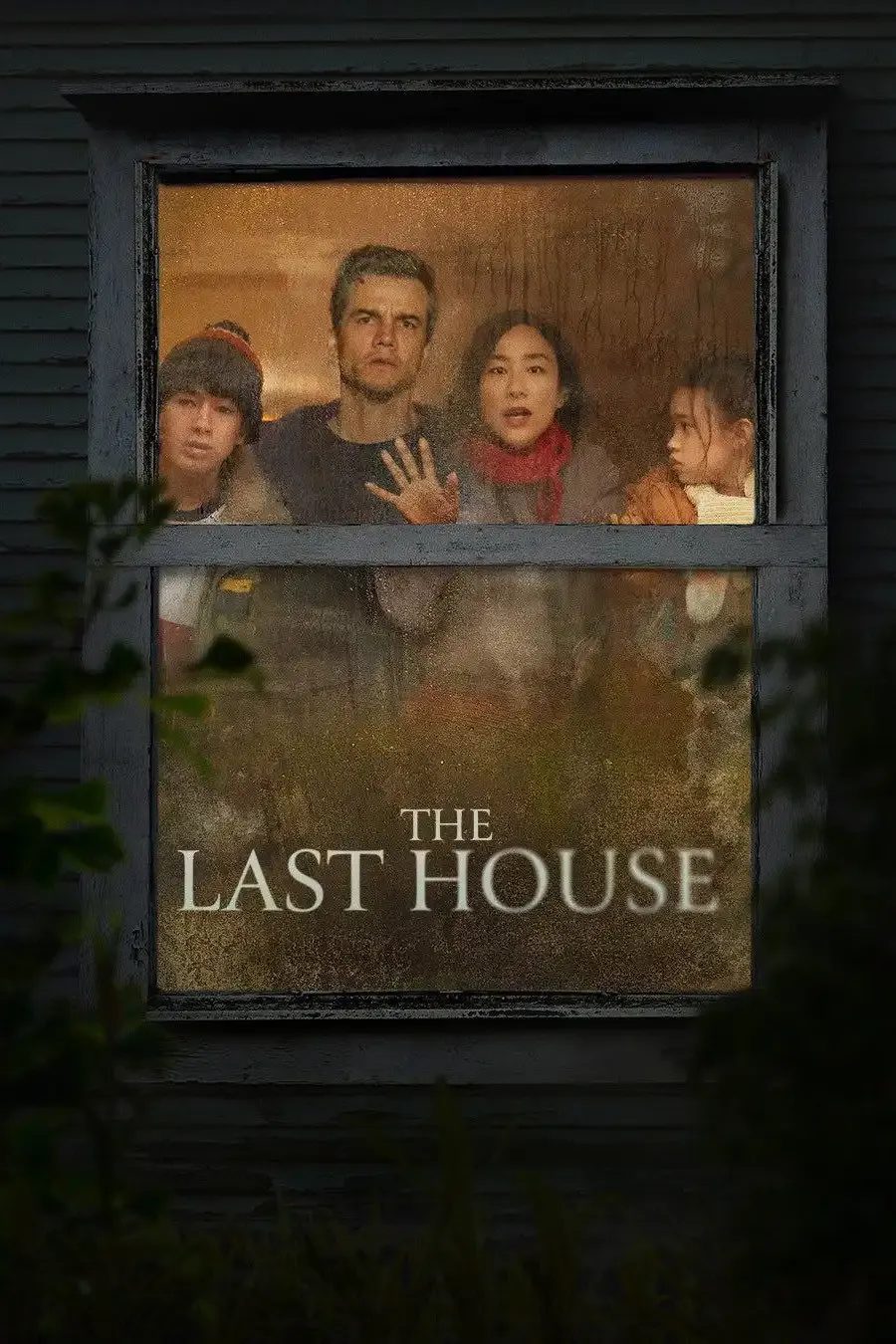
The Delgado family lives in a roomy midcentury home in Seattle. Jason (Wagner Moura) is an engineer between jobs. Ann (Greta Lee) worries about signs of structural damage in the house. Their pre-teen children, Graham (Noah Alexander Sosnowski) and Ruth (Riley Chung), do what siblings do: bicker, ignore each other, and occasionally team up against their parents.
Then a November rainstorm arrives. Not an ordinary one. This rain seems to seal the house shut. Doors will not open. Windows will not break. The family is trapped inside, and whatever is happening outside is getting worse.
The script, by Chris Sparling, does not rush to explain why. For the first act, the Delgados deal with the mundane reality of being stuck: the dog needs to go out, the Wi-Fi is dead, the DVD collection is thin. These small, domestic moments are the film’s strongest material. You feel the claustrophobia not through horror but through the slow accumulation of irritation and fear that comes from being confined with people you love but also need a break from.
The family’s initial denial mirrors how real people process crisis. Jason tries to fix the door. Ann checks the windows. The kids argue about whose turn it is to pick a movie. Nobody wants to acknowledge that something fundamentally wrong has happened because doing so would mean admitting they have no control. Leterrier lets these scenes breathe, and the result is a first act that feels genuinely unsettling precisely because nothing overtly frightening happens.
There is a specific quality to the fear in these early scenes that sets The Last House apart from typical horror. The threat is not a person or a creature. It is the absence of choice. The Delgados cannot leave, cannot call for help, cannot even open a window to feel fresh air. The script understands that this kind of constraint is more psychologically damaging than any monster because it attacks the fundamental human need for agency. You watch a family of four slowly realize that their home, the place that is supposed to represent safety and control, has become the thing that is keeping them imprisoned.
Moura carries the weight
Wagner Moura earned an Oscar nomination recently, and you can see why in every scene here. He plays Jason as a man who wants to fix things but cannot figure out what is broken. When the situation escalates, Moura does not go big. He gets quieter, more controlled, which makes the rare moments when he does lose it land harder.
There is a scene where Jason tries to break a window with a chair. The chair bounces off. He tries again. And again. Each attempt is slightly more desperate, and Moura plays the progression with a precision that borders on clinical. You watch a practical man realize that the rules he understands no longer apply. It is a small moment, but it carries the weight of the entire film.
Moura also excels at the quiet moments between crises. When the family sits down for a meal they know might be one of their last normal dinners, he manages to convey both the weight of what he knows and the desperate normalcy he is trying to maintain for his children. A fork pauses halfway to his mouth. A glance at his wife that says everything words cannot. These micro-expressions are what separate a good performance from a great one, and Moura delivers them consistently throughout.
The dynamic between Moura and Lee is uneven, partly because of the script and partly because of chemistry. They work better as two people sharing a crisis than as a couple in love, which might be intentional. When you are trapped in a house with someone, romance takes a back seat to survival. But the film would have benefited from at least one scene that showed us why these two people chose each other in the first place, a moment of connection that would make their later conflicts land harder.
The Guardian’s reviewer noted that Moura keeps viewers onboard with “confident leading man command,” and that is exactly right. He is the reason to watch. Every time the script starts to wobble, Moura grounds it. He understands that in a film about people trapped in a house, the most important thing is making you believe these people would actually behave this way.
Greta Lee has a harder job. Ann is written as the more anxious parent, the one who sees danger first and reacts emotionally. Lee oscillates between too small and too big, sometimes in the same scene. The script does not give her much to work with beyond worry and occasional bursts of anger, which is a shame because Lee showed in Past Lives that she can do subtlety when the material supports it. Here, she is often reduced to the role of concerned mother, and the film suffers for it.
The children, though, are surprisingly good. Sosnowski and Chung play Graham and Ruth with an authenticity that adult actors sometimes fake. Their arguments feel real, and when the situation forces them to grow up, the transformation does not feel like a movie trick. There is a moment where Ruth asks her mother a question about what is happening outside, and Lee’s inability to answer honestly is more devastating than any creature or monster could be.
The house as character
The production design deserves its own discussion. The Delgado home is a midcentury modern gem: large windows, open floor plan, clean lines. In normal circumstances, it would be aspirational. In this film, it becomes a prison with good lighting.
Leterrier uses the architecture against the family. The windows that would normally flood the space with natural light now serve as reminders of what they cannot reach. The open floor plan that would normally encourage togetherness now means there is nowhere to hide from each other. The house is beautiful, well-maintained, and utterly inescapable.
The sound design amplifies this effect. The constant drumming of rain on the roof becomes a kind of white noise that the characters (and the audience) eventually stop noticing, which is exactly when the film introduces a new sound: something moving outside the house, something that is not rain. The contrast between the familiar and the unfamiliar is deeply effective, and it works because Leterrier has spent enough time establishing the baseline normalcy of the house’s soundscape.
The color palette shifts subtly as the situation worsens. Early scenes are warm, with the golden tones of the midcentury furniture and the soft light from table lamps. As days pass (the film compresses time effectively), the light becomes cooler, more institutional. The house begins to feel less like a home and more like a facility. This visual progression is easy to miss on first viewing, but it reinforces the emotional arc of the family without a single line of dialogue.
The cinematography by Paul Cameron reinforces this. Shots from inside the house looking out show the rain as a curtain, impenetrable and constant. Shots from outside looking in (which are rare) make the family look small and vulnerable, trapped in a glass box while something terrible happens around them. The visual language is consistent and effective, even when the plot is not.
What works and what does not
The film works best when it stays indoors and focuses on the family dynamics. Leterrier knows how to shoot confined spaces. The midcentury house becomes a character: its large windows show you the storm outside but keep you locked in, its rooms feel simultaneously spacious and suffocating.
What does not work is everything outside the house. The explanation for what is happening arrives late and does not hold together. The creature design, when it finally appears, is immediately forgettable. For a film that most resembles A Quiet Place, it lacks that film’s commitment to making the threat feel visceral and real. The monster in A Quiet Place was terrifying because you understood its rules. The threat in The Last House remains vague and unconvincing.
The pacing also sags in the middle act. Once the initial shock of being trapped wears off and before the final escalation, there is a stretch where the family argues, makes plans, and argues again. Some of this is intentional character development. Some of it feels like the film is killing time. A tighter edit could have trimmed twenty minutes without losing anything essential.
The pandemic echo
It is impossible to watch The Last House without thinking about lockdown. A family trapped in their home. A threat outside that they cannot see or understand. The slow erosion of routine, the arguments that spiral from nothing, the desperate search for normalcy in abnormal circumstances.
The film does not belabor this connection, which is to its credit. But it is there, and it gives the domestic scenes an extra layer of resonance. When Jason and Ann argue about whether to conserve food or eat normally, they are really arguing about how to maintain the illusion of safety for their children. That tension, more than any creature or mystery, is what makes the film worth watching.
The pandemic parallel also explains why the first act works so well. During actual lockdowns, the hardest part was not the danger. It was the boredom, the repetition, the feeling that time had stopped while the world continued without you. The Last House captures that feeling better than most pandemic-era films, probably because it is not trying to. It is telling a genre story, and the lockdown feelings come along for free.
The film also touches on class in ways that feel organic rather than preachy. Jason is out of work. The family lives in a nice house, but it is clear that the financial pressure is real. When they are trapped, the practical concerns about food and supplies hit differently because they were already living on the edge. This economic anxiety adds another layer to the tension without ever becoming the focus.
The verdict
The Last House is a solid Netflix thriller that does not quite reach the heights its cast and premise promise. Moura is excellent, the children are surprisingly strong, and the first act is genuinely tense. But the script’s refusal to fully commit to its own logic, combined with a weak third act, keeps it from being more than a good night in rather than a great one.
If you liked A Quiet Place but wished it were more domestic and less action, this is worth your time. Just do not expect the answers to satisfy you as much as the questions do.
The Last House is streaming on Netflix now.
Share This Article
Comments