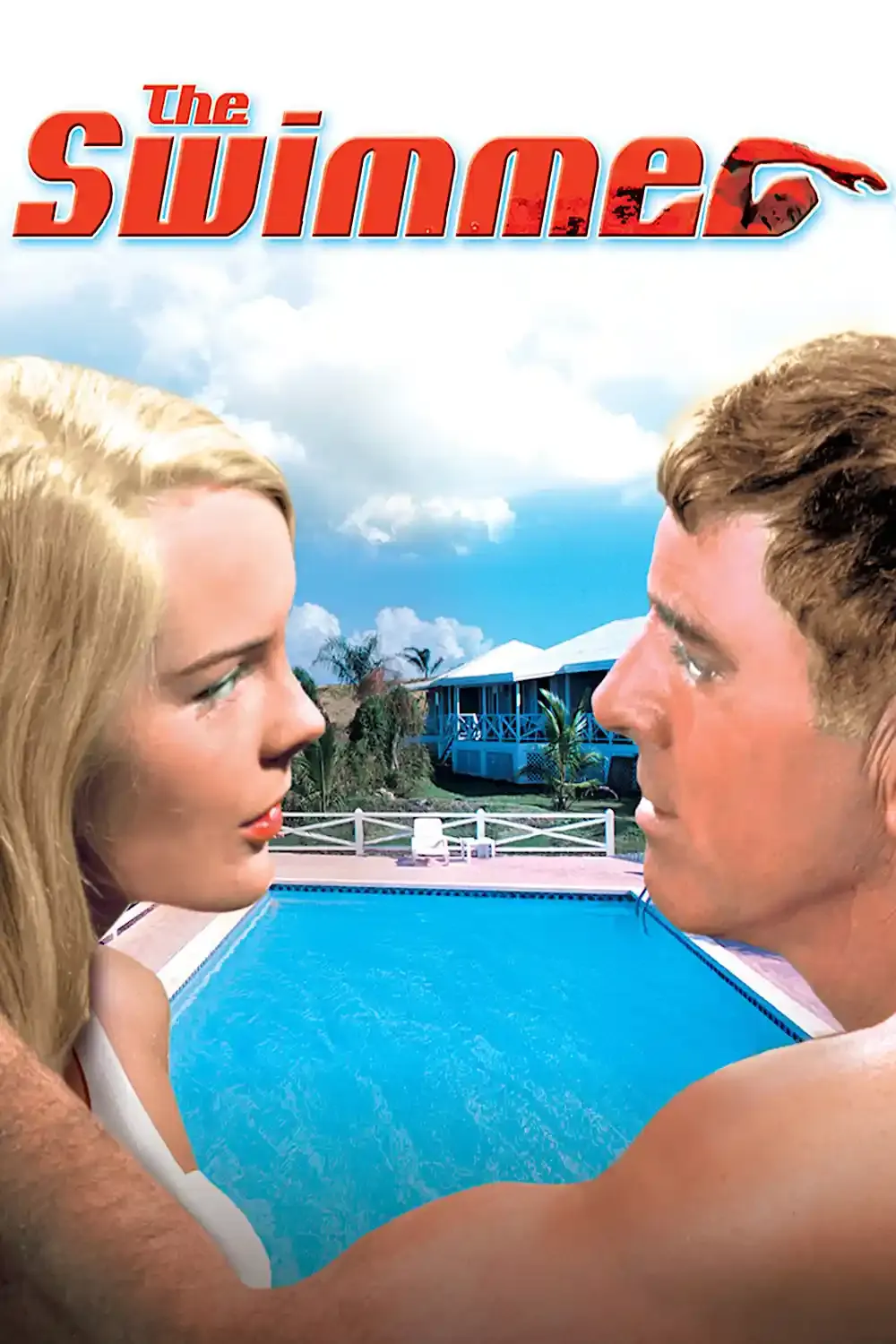
The Swimmer (1968): Burt Lancaster's Suburban Odyssey Into American Emptiness
Frank Perry's 1968 adaptation of John Cheever's story, with Burt Lancaster swimming home across Connecticut pools: the troubled production, what critics said then and now, and why it became a cult film.
Editor’s note: This article is a retrospective built from published reviews, production histories and other reporting, with analysis by the Bucket Movies Editorial Team. See how we work.
Editor’s note: an earlier version of this article placed the story in the wrong county, misdescribed who ordered the reshoots and how Lancaster responded to them, and included scene and visual details we could not check against a source. It also included first-person impressions, a numerical rating and a reference list that did not point to specific sources. It has been rewritten from the sources linked below.
Our angle: The Swimmer is often presented as a lost masterpiece that audiences rejected. The record is more mixed. Several major critics praised it in 1968, but its troubled production left a film made by more than one director, and that history helps explain both its odd texture and its long road to cult status.
What the film is
The Swimmer is a 1968 American drama directed by Frank Perry and adapted by Eleanor Perry from John Cheever’s short story, first published in The New Yorker on July 18, 1964. Burt Lancaster stars as Ned Merrill, with Janet Landgard, Janice Rule, Kim Hunter, Marge Champion, Diana Muldaur and, in her first acting role in a feature, Joan Rivers. Sam Spiegel produced it through Horizon Pictures, and Columbia released it in New York on May 15, 1968. It runs 95 minutes. The score was the first film score by Marvin Hamlisch, then 24.
The premise (no ending)
On a summer day in an affluent Connecticut suburb, Ned Merrill, a New York advertising man, appears out of the woods wearing only swim trunks. At a friend’s pool party, he realizes that the backyard pools of the neighborhood form a chain, a “river,” that could take him all the way home. He decides to swim it. Along the way he meets old friends, a former babysitter, a wealthy nudist couple, a lonely boy, a hostile hostess and a former lover. Each encounter reveals a little more about what Ned’s life has actually become, and the warm summer day starts to change.
C.H. Newell of Film Inquiry described the effect in a 2016 retrospective: “what starts as a summer begins to feel as if it goes on for years.” By the end, Newell wrote, “Ned literally stands at the foot of his broken dreams after a surrealist voyage through time and space.”
How it was made
- Location. Perry shot the film largely in Westport, Connecticut, his hometown, from July to September 1966.
- Lancaster in the water. Although Lancaster was a trained athlete, he was afraid of the water. He took swimming lessons from Bob Horn, a former Olympian and water polo coach, to prepare.
- The supporting cast. Janet Landgard, who plays Julie Ann Hooper, had worked mainly in television, and this was her first featured film role. Kim Hunter, who joined in the reshoots, had won an Academy Award for A Streetcar Named Desire. Rivers had previously appeared only as herself in a 1965 music film.
- A cameo by Cheever. Cheever appears briefly, greeting Ned and Julie at a party.
- Joan Rivers. Rivers later wrote in her autobiography Still Talking that her short scene took a long time to film because Lancaster “redirected every line.” Perry, she said, wanted one reading and Lancaster another, and “trying to please both men… nothing made sense.”
- The firing. After principal photography, Perry expected to shoot additional transition scenes, but Spiegel fired him. The producers brought in Sydney Pollack, a friend of Lancaster’s, and cinematographer Michael Nebbia for reshoots in California in January 1967.
- The reshoots. Pollack reportedly shot several transitions and scenes, including the horse-jumping sequence. Several roles were recast. Kim Hunter replaced Sally Gracie, Charles Drake replaced Larry Haines, Bernie Hamilton replaced Billy Dee Williams, and Janice Rule replaced Barbara Loden as Shirley Abbott, Ned’s former lover. According to Eleanor Perry, Spiegel and Elia Kazan both wanted a scene between Ned and Julie toned down, and each later blamed the other for Loden’s replacement.
- Lancaster’s money. Far from fighting the extra work, Lancaster said that when the film needed one more day of shooting, he paid $10,000 for it himself.
- Spiegel’s name. Spiegel, a three-time Best Picture winner, ultimately took his name off the film, though Horizon Pictures remained credited.
The music
Hamlisch got the job after Spiegel hired him to play piano at one of his parties. The score, orchestrated by Leo Shuken and Jack Hayes, combines passages for small orchestra with a mid-1960s pop sound. CBS Records issued a soundtrack LP in 1968, and Film Score Monthly released the complete score in 2006. Hamlisch went on to win three Academy Awards in 1974.
What critics said in 1968
The box office was weak, but the major reviews were not.
- Roger Ebert gave the film four stars and called it “a strange, stylized work, a brilliant and disturbing one.”
- Vincent Canby of The New York Times wrote that “although literal in style, the film has the shape of an open-ended hallucination. It is a grim, disturbing and sometimes funny view of a very small, very special segment of upper-middle-class American life.”
- Variety predicted a divided response: “a lot of people are not going to understand this film; many will loathe it; others will be moved deeply. Its detractors will be most vocal; its supporters will not have high-powered counter-arguments.”
Variety’s forecast proved accurate. The film did not find a large audience on release, and its reputation grew slowly over the following decades.
How it is seen now
In the 21st century The Swimmer has become a cult film. Rotten Tomatoes lists a 100% approval rating from 27 reviews. Its consensus says the film “dives into its penetrating indictment of 1960s suburbia with a career highlight performance from Burt Lancaster and evocatively lensed imagery.” Newell called Ned “perhaps the finest performance of Burt Lancaster’s impressive career,” and read him as representing “the death of the American Dream.”
Lancaster’s casting is central to that reading. In 1968 he was one of Hollywood’s most physically commanding stars, an Oscar winner for Elmer Gantry (1960). The film places that image of strength in a story about a man whose confidence is not matched by his circumstances.
The restoration
In 2014, Grindhouse Releasing, working with Columbia, released the film on Blu-ray in high definition, after earlier VHS (1985) and DVD (2003) releases that reviewers found visually poor. The set includes The Story of the Swimmer, a five-part documentary by Chris Innis with interviews with Landgard, Rivers, Champion, Horn, members of the crew and Lancaster’s daughter Joanna, along with archival interviews with Hamlisch and editor Sidney Katz. It also includes Frank Perry’s storyboards, production stills including Loden’s deleted scene, and a recording of Cheever reading the story. The restoration won a Satellite Award in 2015 for Outstanding Overall Blu-Ray/DVD.
That documentary is now one of the main sources for the production history above. Its interviews helped turn the story of the reshoots, once a footnote, into part of how the film is understood.
The story and the film
Cheever’s story is short, around a dozen pages, and the film had to expand it to feature length. It did so mostly by adding encounters and conversations. Newell noted that the film is “adapted at length” from the story. Readers can compare the two directly, since The New Yorker has the original text online. The central image is the same in both: a man swimming home through his neighbors’ pools, gradually discovering how much has changed.
Where it fits
The Swimmer belongs to a group of late-1960s American films that turned a critical eye on suburban affluence, and it arrived a year after The Graduate. Frank and Eleanor Perry, who had worked together on David and Lisa (1962), were among the most literary filmmaking teams of the period. For more retrospectives of films whose reputations grew after release, see our pieces on Frenzy, Charley Varrick and Keep Cool, or browse the reviews section.
Our read
The sources point to a film that divided audiences but impressed several leading critics on release, and then gained a following once it could be seen in good condition. The production history matters. Some of what viewers notice about its uneven texture may come from a film finished by a second director, with recast roles. Its central performance, its premise and its source story have kept it in circulation, and the 2014 restoration gave new viewers a chance to judge it for themselves.
How this was compiled: credits, production and release details come from Columbia release records, published production histories and the 2014 Grindhouse Releasing edition; contemporary critics’ quotes come from Roger Ebert, The New York Times and Variety; later assessments come from Film Inquiry and Rotten Tomatoes. Bucket Movies did not watch the film for this article. See how we work.
Sources & further reading
- 1. The Swimmer (short story) — The New Yorker
- 2. THE SWIMMER: Decadence, Decay & The American Dream — Film Inquiry
- 3. The Swimmer — Rotten Tomatoes
- 4. The Swimmer — Grindhouse Releasing
worth a spot on the list?
Reader notes
Join the discussion
No account needed — leave your take on this film below.
Add these to your list

Anora Review: Sean Baker's Unflinching Masterpiece of Class, Desire, and the American Dream
Sean Baker's Anora, the Palme d'Or and Best Picture winner, is a screwball fairy tale about a Brooklyn stripper who marries an oligarch's son. What critics praised, where they pushed back, and how it was made.
The Conversation (1974): Coppola's Paranoid Masterpiece of Surveillance and Isolation
A deep dive into Francis Ford Coppola's 1974 masterpiece 'The Conversation,' exploring its haunting portrayal of surveillance expert Harry Caul and its enduring relevance in our modern surveillance society.

Bob & Carol & Ted & Alice (1969): The Satire That Loved Its Targets Too Much
Paul Mazursky's 1969 debut about two couples and the Esalen-era promise of total honesty: how it was made, what critics said, its four Oscar nominations, and why its ending still divides viewers.

Godzilla Minus Zero Review Roundup: What Critics Said About Takashi Yamazaki's Sequel
Takashi Yamazaki's Godzilla Minus Zero pits Godzilla against King Ghidorah in 1949 Japan. Critics praised its effects and scale and debated whether it tops Minus One. Reviews, production, box office.
Loading comments...